Showing posts with label Alison Sudol. Show all posts

December 16, 2020

PIXAR'S 22 RULES OF STORYTELLING: ILLUSTRATED

Pixar’s 22 Rules of Storytelling, as originally brought forth by story artist Emma Coats, serves as a litany of "tests" for really any story from a writer's perspective. Here are the 22 rules (in bold) and my examples and takes on applying them.

#1: You admire a character for trying more than for their successes.

Any teacher (or other professional) will tell you how important effort is to the final result. Comedies in general make fodder out of failure, but while humor can certainly be mined from a character not trying or failing epically, a character is far more endearing if they act with effort, earnestness, and the best of intentions, regardless of failure or success.

Bless him for trying (no pun intended), but Father Maurice's attempt
(and the next ones) to ditch Giuditta in Il Piccolo Diavolo ultimately fails.

#2: You gotta keep in mind what’s interesting to you as an audience, not what’s fun to do as a writer. They can be very different.

After all, you may be fascinated by the idea of a sprawling epic with long shots and landscapes, but this may not get such a warm reception from you, the viewer. Or you want to tackle a topic you have some insight in, but you find your starting point preachy to listen to. Keep the overall writer/audience dichotomy in mind.

#3: Trying for theme is important, but you won’t see what the story is actually about til you’re at the end of it. Now rewrite.

Fortunately, themes are in everything, regardless of the work's actual quality. By the time you've finished your first draft (or even before), you'll already have a fair idea of what parts of your script to revise.

#4: Once upon a time there was ___. Every day, ___. One day ___. Because of that, ___. Because of that, ___. Until finally ___.


"Once upon a time, there was Charley Varrick. Every day, he and his gang would rob banks to survive in a post-crop duster world. One day, they robbed a bank that was a money laundering front for the mob. Because of that, Charley had to go on the run from both the mob and the cops. Because of that, he hatched a slow-burn plan to leave his old life, make a clean break, and dispatch his pursuers. Until finally, his plan's final phase comes together, and he successfully gets away."

#5: Simplify. Focus. Combine characters. Hop over detours. You’ll feel like you’re losing valuable stuff but it sets you free.

Having read In the Heat of the Night in ninth grade, I was disappointed at the time to see the 1967 film skip over a lot of things I appreciated about the book, but in hindsight it was best for the film to focus on the more contrasting partnership of Virgil Tibbs and Bill Gillespie instead of the developing friendship between Tibbs and Sam Wood. And of course, Stirling Silliphant's screenplay rightfully updates Tibbs from a smart but only subtly snarky character to his equally accomplished but (understandably) firmer and more straightforward film version.

#6: What is your character good at, comfortable with? Throw the polar opposite at them. Challenge them. How do they deal?

Exactly as it says.

And in this case, not well.

#7: Come up with your ending before figuring out your middle. Seriously. Endings are hard, get yours working up front.

Relating to my previous post on plot twists, foreshadowing and "breadcrumbs" will generally come to you after deciding your twist and end result. Therefore, aim for the twist/ending first, and try to build the rest around it.

#8: Finish your story, let go even if it’s not perfect. In an ideal world you have both, but move on. Do better next time.

Whether it's giving yourself a break from your hard work, seeing a project through, or letting your finished work be after any possible chance of revision.

#9: When you’re stuck, make a list of what WOULDN’T happen next. Lots of times the material to get you unstuck will show up.

"I told that idiot to slice my sandwich!"

It's all about contrast and playing on viewer expectations (within logical, in-universe reason, of course).

#10: Pull apart the stories you like. What you like in them is a part of you; you’ve got to recognize it before you can use it.

What do you like about your favorite movies? Is it a performance? A twist? The cinematography? The subverted archetypes? This is one of the more fun rules from this list.

In addition to warmth and charm, I am also a sucker for epic death glares.

#11: Putting it on paper lets you start fixing it. If it stays in your head, a perfect idea, you’ll never share it with anyone.

First rule of anything: get it out of your head. If it's good, putting it out will help it develop. If it's bad, it won't be taking up valuable space in your mind anymore (and won't come back to drag down any of your good ideas).

#12: Discount the first thing that comes to mind. And the second, third, fourth, fifth – get the obvious out of the way. Surprise yourself.
Again, subverted expectations (see Rule #9). As a viewer, you are definitely experienced enough to know what the above would be in your favorite genre.

#13: Give your characters opinions. Passive/malleable might seem likable to you as you write, but it’s poison to the audience.

Granted, you could write around this, in that your passive character does have opinions, but simply chooses not to share them. However, to not give a character any opinions at all could seriously doom them to being a blank slate.

Charley Varrick's mouthy, greedy, and trigger-happy Harman (Andrew Robinson)
is a serious liability to the title character's chances of escape.

#14: Why must you tell THIS story? What’s the belief burning within you that your story feeds off of? That’s the heart of it.

In short, what is your story's "something to say"?

The world (or at least NYC in 1974) is full of snarky, cynical people,
but at least this guy still cares a little.

#15: If you were your character, in this situation, how would you feel? Honesty lends credibility to unbelievable situations.

This is certainly an aspect where the emotional side of things comes into play. What emotion is present in a given situation? How would you handle it vs. how a given character would handle it? 

When his wife Nadine bleeds to death from a gunshot wound, Charley Varrick
is crushed emotionally, but mourns her death only somewhat briefly before
getting down to business in escaping with cohort Harman.

#16: What are the stakes? Give us reason to root for the character. What happens if they don’t succeed? Stack the odds against.

Too many films nowadays make the mistake of building up the objective, physical, world-at-risk stakes at the risk of sacrificing character, emotions, and the human elements. Don't make the journey easy, but also don't forget to give your audience a reason to care.


Superman has both the catastrophe element and the human element
in showing the countless people impacted by Lex Luthor's missile strike.

#17: No work is ever wasted. If it’s not working, let go and move on - it’ll come back around to be useful later.

Remember to save all of your ideas, after all.

#18: You have to know yourself: the difference between doing your best & fussing. Story is testing, not refining.

Because sometimes, being too finicky will bite you in the ass.

If you're prone to overanalyzing and perfection-obsessed anxiety like me, it's imperative to know the difference between revising and fueling your anxiety. You can worry too much about what your audience will think, especially if you have zero evidence to back it up.

#19: Coincidences to get characters into trouble are great; coincidences to get them out of it are cheating.


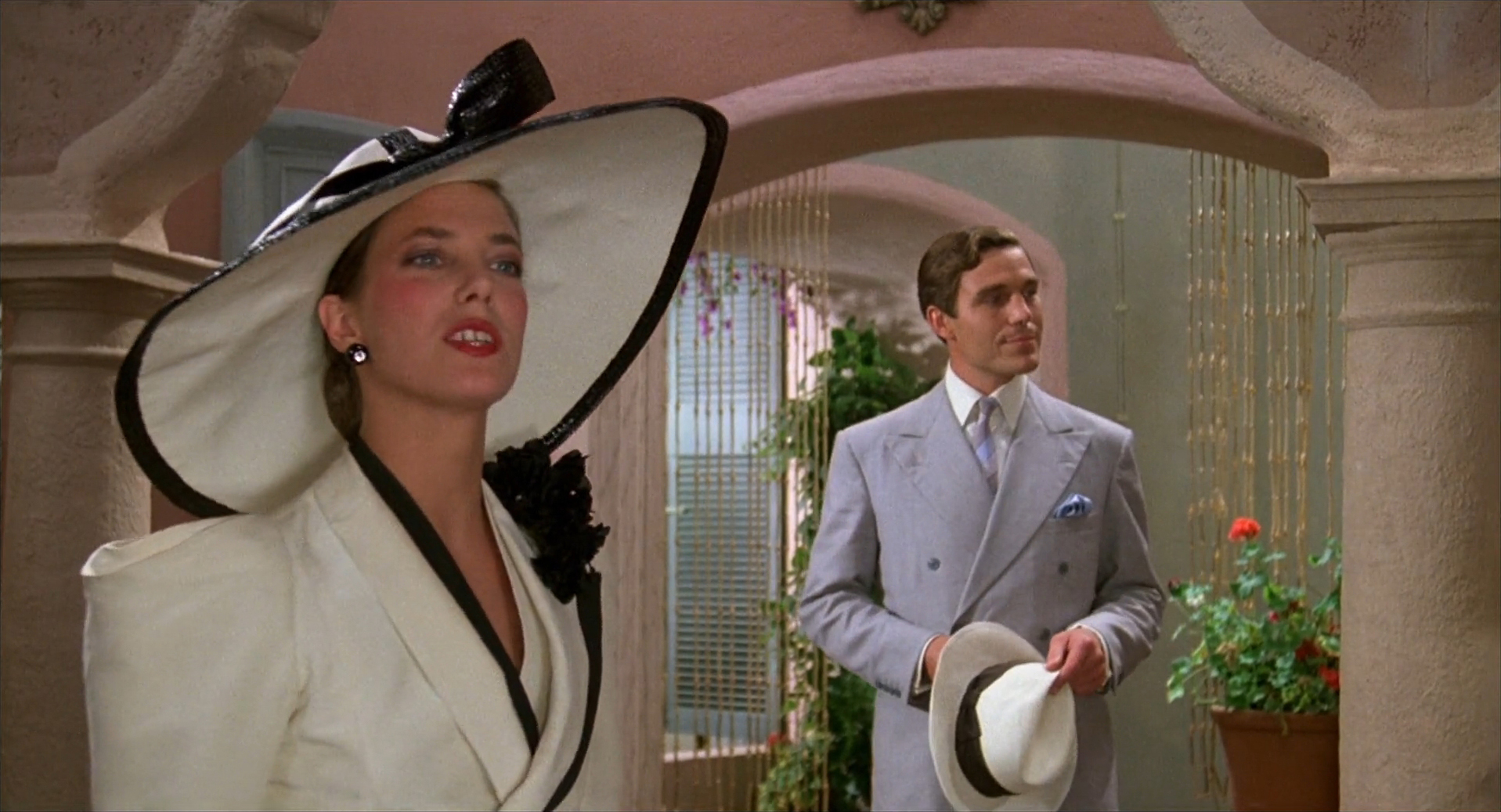
Two bitter rivals at the same holiday resort?
Let the bitchy exchanges commence!

Granted, it can come off as contrived at times, but the former category plays into a viewer's sense of anxiety, fear, and dread, as one's mind already tilts towards the negative. Coincidences to get characters out of trouble, conversely, will threaten to cheapen their journey towards their goals.

#20: Exercise: take the building blocks of a movie you dislike. How'd you rearrange them into what you DO like?

'Nuff said.

Admit it, you (and countless others) already do this, especially if a given bad film is lazy and lends itself to so many better story possibilities.

#21: You gotta identify with your situation/characters, can’t just write ‘cool’. What would make YOU act that way?

Confidence? Ability? Security? Safety? Support? Maybe this character is genuinely who you would be if you just had enough confidence. 

By gleefully acting with confidence and sticking it to the stuffier O'Brien, Thompson, and Kincaid, 
"Whiplash" Willie Gingrich lets the audience live vicariously through him.

#22: What’s the essence of your story? Most economical telling of it? If you know that, you can build out from there.

Streamline, streamline, streamline! But also, does it tap into a universal truth? What parts does your story have to have, and what parts can it de-emphasize or do without? Know what your story is, right down to the bare bones of it.

Superman (the film and the character) is best approached on the basis
of humanity and the world still being innately good at heart.

Copyright © Chynna Moore

January 31, 2020

SCREENWRITING: MY TIPS AND TIDBITS


I've been meaning to write this post for a while, in a way that distills what I've found practical in my own screenwriting without coming off as boring or dry as paste. Obviously, I don't claim to be an expert by any means, and much of this I've learned through studying other films (hence this blog), especially when films with the money to do so much so well still get it wrong when it comes to their stories. But here are at least some things to think about when you're convinced you have a story worth telling to an audience.

HAVE SOMETHING TO SAY

This should be a no-brainer, right? That's why you've decided to write to begin with. But is your story able to sustain 80-120+ pages? Screenplays aren't usually one-track pieces. Even in comedies, there are themes, subjects of discussion, etc. that (at least should) tie thematically into the main story. You don't want your audience to feel like they've gotten nothing out of your film besides the spectacle and style. Even in films where style is the substance, there's usually an attempt to at least try to keep the audience's attention through characters and dialogue, i.e. Suzy as the audience surrogate in a child-like position of eventual power in Suspiria, or its remake thematically tying the story to Cold War-era Berlin.

"I am not a crackpot!"

TONE!

Even before starting, it's probably best to nail down your film's tone right away, since this will affect everything in your script, from "the big picture" to the "little details", etc.

For one, are you aiming for an outright light comedy? A dramedy? A dark comedy? Some might not see much difference between the three, but it makes all the difference in the world when pertaining to what even happens in your script and how it's going to be framed.

That's not to say you can't induce mood whiplash if it's in service to your story, but you have to be damn careful to do it with consideration to everything that came before it, as you don't want to leave your audience continually unsure how to react.

This is also a large indicator of studio interference or "writing by committee" in many shows and films, since no two people's idea of a certain tone or interpretation is exactly the same. This is why the James Bond franchise can have such varying degrees of successful scripts despite many of the same people writing them.

Sadly, we never got to see Poochie belt it out as Dr. Scrivello.

SUBTEXT (AND CULTURAL CONTEXT)

What cultural factors, dynamics, roles, etc. do your characters represent? Do they have a universality to them? Are they relatable? How do they reflect real life? Are they idealized, or meant to be bitingly satirical?

This too is related to tone (see above), but your characters are also your instruments for your message and what they represent. Is your characters' business relationship played like a romantic one? Does your male protagonist buy a fancy new car while in the midst of a mid-life crisis? One of your protagonists might be keeping a secret, but is it the secret everyone's expecting it to be? How do you update older archetypes, when their old cultural reference points and societal factors have become literally obsolete?

Superman / Clark Kent is an old-fashioned, salt-of-the-earth farm boy
transplanted into the then-modern day late-70s, with all of the
contrast, subtext, and symbolic meanings intact.

In regards to setting, this can be a tad tricky. In large countries like the U.S. and Canada, where areas can be so diverse geographically and politically, it's important to establish the setting so audiences can easier buy into the story's subtext and context. (See "Little Details" below.) After all, if you set your story in 1940s Quebec, it's going to be quite unbelievable if a schoolhouse there is being run by the Mormons.

All in all, once you know what your story's subtexts and contexts are, how do you go about subverting expectations on that deeper level? (See below.)

SUBVERT EXPECTATIONS

Related to the next section below, audiences aren't stupid. They've all become somewhat savvy to the ins, outs, and old and new cliches of a genre or subgenre, whether with story or execution. Going to what's been done before runs the risk of boring your audience, unless you put a new spin on it. The Closer Look goes into more detail about the use of cliches here.

This also comes into play when writing contradictions for your characters. Everyone has them, however large (hypocrisy) or small (quirks and flaws), but knowing what you are going to do with those contradictions can help your script go in new directions and deal with new emotions that can be rare in other works with similar subjects.

Basically, know the tropes so you can subvert them.

Alison Sudol as Queenie Goldstein
Fantastic Beasts' mind-reading blonde is kind, sweet, and
empathetic, but also quick-thinking and highly self-aware.

RESPECT YOUR AUDIENCE

Had I titled this section Don't Treat Your Audience Like Idiots, you'd probably be a bit offended at its condescending tone. Hence why it's not all that good an idea to put that into screenplay form. No one likes to be lectured or treated like someone lesser when they typically go into a film wanting to have a good time. Sure, not everyone goes in wanting pure escapism, but even the best-intended film "with a message" can leave a bad taste in their mouths if executed without respect, nuance, or (even rarer) subtlety.

Similarly, if you do want escapism in your script, it's important to include enough grounding elements of realism, naturalism, etc. for your audience to grab onto. Escapism is not an excuse to leave logic, emotion, and the element of "cause and effect" at the door.

Lois Lane reacts as you'd expect when told by Superman with a straight face 
that he's here "to fight for truth, and justice, and the American way".
Taking oneself too seriously typically spells doom for a superhero movie,
but Superman avoids that pitfall beautifully.

STREAMLINE, STREAMLINE, STREAMLINE!

A problem of many newer "tentpole" films is stuffing far too many characters, subplots, and events into one film, thus preventing most of them from having any semblance of depth or development. This writer may have a short attention span, but too many things to keep up with will always be worse than too few things with a chance of time devoted to them.

For example, Fantastic Beasts: The Crimes of Grindelwald devotes so much time to the setup of new characters and subplots that it throws off its own structure, doubly so since several plotlines have zero relevance to the film they're in, and only function as setup for the next film in the series. With extended sequences of backstory and explanations, audiences can be bored by all these detours in the film's pacing, with little hope of recovery.

You may have an interesting line, twist, character dynamic, scene, or event for a script, but if you can't make it work organically, it's best to cut it altogether. That way, you'll have more time strengthening, elaborating on, and beautifying the elements that do work and are so top-to-bottom important to what you want to say.

LITTLE DETAILS

So you've decided what tone to strike, what setting to evoke, and what themes you want to tackle. Now you want to build on what you want to see. This, for me, is one of the most fun parts in screenwriting.

Going back to the setting, how do you make it stand out from all the other similar settings in film? Average small towns with nothing to do have gotten boring on film, so delve into its history. Real or fictional, all places have a history. Nanaimo, for example, started as a town tied to both coal mining and the Hudson's Bay Company. Eventually, it stood out for its Nanaimo Bars, Bathtub Races, and the image of longtime mayor Frank Ney (1918 - 1992).

Frank Ney and Bathtub Race exhibit at the Nanaimo Museum

Even the little things done to set your setting apart will be much appreciated by your audience, and show the degree of effort you've put into your story. After all, a setting can inform your characters more than you might think.

In terms of the characters themselves, little dialogue details can really do some heavy lifting in showing the audience who your characters are.

Cleveland Ohio, everybody.

Not every script has to have "realistic" dialogue. In real life, people misspeak, hesitate, hem, haw, and everything in between. But knowing your characters' "voices" will go a long way in informing their personalities, behavior, and motivations. While there's certainly a place for on-the-nose, unsubtle dialogue in a satire, for example, if you're aiming for realistic, slice-of-life dialogue, you're better off sticking "closer to earth".

Needless to say, The Simpsons is not a work known for its realistic dialogue.

TIME

This is a painful one, folks, but it's reality. No script is at its best in its first draft. Even Steven E. de Souza, who did so well rewriting the script for Die Hard, visibly struggled with 1994's Street Fighter (writing the first draft literally overnight) due to the tight deadline imposed on him by Capcom.

Totally worth it.

An upside to more time (provided one actually has it, of course) is that you''ll not only add more of the logical story elements that didn't occur to you before, but you might occasionally turn out a section even better than how you originally planned it, due to knowing your characters and letting their emotions "sink in" longer.

And hopefully, you'll grow to love your script enough to want to spend as much time as possible on it. In my experience, that love always comes through on the page.

TIDBITS AND SUCH

E.M. Welsh's post on crafting complex characters (among other posts) can be found on her blog here.

The Crimes of Grindelwald's story and script flaws are well-covered in these videos by Filmento, The Closer Look, Stephan KroseczPosh Prick Reviews, and Super Carlin Brothers.


Copyright © Chynna Moore