Showing posts with label Leonardo DiCaprio. Show all posts

January 12, 2021

ROOMS IN A VIEW: DECIDING YOUR SETTINGS


It can be easy to take for granted the importance of setting in a scene. Setting, however, is one opportunity of many to deepen the overall story. Here are a few useful pointers to keep this setting from being boring on paper and onscreen.

WHAT IS GOING ON IN THE SCENE? WHO IS IN IT?

Action and plot come first if you're undecided on a setting for your scene, or the setting you currently have just isn't working. Let your eventual setting choice accommodate those first, of course, before deciding on the multitude of factors below.

For Rick Dalton to simply be told what kind of character he's playing on Lancer would be boring. 
In the show's hair and makeup trailer, however, he's confronted with the aesthetic aspects of 
his villainous character as well as those of the currently-popular stars of 1969,
driving home just how "out of time" he truly feels.

WHAT IS THE SPACE?

Is it wide open? Claustrophobic? Old, decrepit? Or new with the plasticky smell still present? What are the sounds? If your scene takes place indoors during the summer, it's likely the A/C will be heard in the background. Outside, you'll likely hear birds and passing cars. Is it a setting that's loose and laid-back? Or uptight and solemn?

Lex Luthor repurposes an abandoned subway station into his lair, which is large and grand
in nature, but still possesses his means of villainy and "hiding in plain sight".

WHAT PROPS WILL BE THERE?

No props would be fine if your scene in question is about two characters merely verbally sparring, but especially in comedies, it's important to remember that props can be your friend. After all, a character's stern point can be undercut by a considerably sillier prop.

This would not be an example of the above.

HOW WILL THEY INFORM YOUR CHARACTERS (AND VICE VERSA)?

Is the setting intrusive enough to affect the characters' conversation? Or so deadly quiet that they feel exceptionally nervous and self-conscious? It may not even influence their conversation directly, but perhaps it's not as secure as they think. Like props, let the room be your friend.

The claustrophobic, bustling courthouse press room in The Front Page (1974) influences
Hildy Johnson's tension in hiding Earl Williams from his fellow press men.

ARE THERE PARALLELS OR THEMATIC CONNECTIONS?

Similar to the above, the room in question can be indicative of a character's personality, past, present, and future. Is it as stifling as their nature? Open and barren? Or just there because the character is barely in there to begin with?

Despite being one of the smaller spaces in Luthor's lair, this map room is spacious, with plenty of room
for Luthor's various computers (because 1978), furniture, and distance between him and
Miss Teschmacher, signifying their opulent, but emotionally cold dynamic.

ARE THEY REAL? FICTIONAL? 

Real locations can be enhanced with regional and other details (see in my "Screenwriting" tag), but a fictional setting can still parody a real one to hilarious effect. What are its further surroundings? Is the larger setting the Mojave desert? Or Churchill, Manitoba with polar bears?

Three words that strike fear into the hearts of animal lovers
and lovesick old folks alike.

Copyright © Chynna Moore

December 16, 2020

PIXAR'S 22 RULES OF STORYTELLING: ILLUSTRATED

Pixar’s 22 Rules of Storytelling, as originally brought forth by story artist Emma Coats, serves as a litany of "tests" for really any story from a writer's perspective. Here are the 22 rules (in bold) and my examples and takes on applying them.

#1: You admire a character for trying more than for their successes.

Any teacher (or other professional) will tell you how important effort is to the final result. Comedies in general make fodder out of failure, but while humor can certainly be mined from a character not trying or failing epically, a character is far more endearing if they act with effort, earnestness, and the best of intentions, regardless of failure or success.

Bless him for trying (no pun intended), but Father Maurice's attempt
(and the next ones) to ditch Giuditta in Il Piccolo Diavolo ultimately fails.

#2: You gotta keep in mind what’s interesting to you as an audience, not what’s fun to do as a writer. They can be very different.

After all, you may be fascinated by the idea of a sprawling epic with long shots and landscapes, but this may not get such a warm reception from you, the viewer. Or you want to tackle a topic you have some insight in, but you find your starting point preachy to listen to. Keep the overall writer/audience dichotomy in mind.

#3: Trying for theme is important, but you won’t see what the story is actually about til you’re at the end of it. Now rewrite.

Fortunately, themes are in everything, regardless of the work's actual quality. By the time you've finished your first draft (or even before), you'll already have a fair idea of what parts of your script to revise.

#4: Once upon a time there was ___. Every day, ___. One day ___. Because of that, ___. Because of that, ___. Until finally ___.


"Once upon a time, there was Charley Varrick. Every day, he and his gang would rob banks to survive in a post-crop duster world. One day, they robbed a bank that was a money laundering front for the mob. Because of that, Charley had to go on the run from both the mob and the cops. Because of that, he hatched a slow-burn plan to leave his old life, make a clean break, and dispatch his pursuers. Until finally, his plan's final phase comes together, and he successfully gets away."

#5: Simplify. Focus. Combine characters. Hop over detours. You’ll feel like you’re losing valuable stuff but it sets you free.

Having read In the Heat of the Night in ninth grade, I was disappointed at the time to see the 1967 film skip over a lot of things I appreciated about the book, but in hindsight it was best for the film to focus on the more contrasting partnership of Virgil Tibbs and Bill Gillespie instead of the developing friendship between Tibbs and Sam Wood. And of course, Stirling Silliphant's screenplay rightfully updates Tibbs from a smart but only subtly snarky character to his equally accomplished but (understandably) firmer and more straightforward film version.

#6: What is your character good at, comfortable with? Throw the polar opposite at them. Challenge them. How do they deal?

Exactly as it says.

And in this case, not well.

#7: Come up with your ending before figuring out your middle. Seriously. Endings are hard, get yours working up front.

Relating to my previous post on plot twists, foreshadowing and "breadcrumbs" will generally come to you after deciding your twist and end result. Therefore, aim for the twist/ending first, and try to build the rest around it.

#8: Finish your story, let go even if it’s not perfect. In an ideal world you have both, but move on. Do better next time.

Whether it's giving yourself a break from your hard work, seeing a project through, or letting your finished work be after any possible chance of revision.

#9: When you’re stuck, make a list of what WOULDN’T happen next. Lots of times the material to get you unstuck will show up.

"I told that idiot to slice my sandwich!"

It's all about contrast and playing on viewer expectations (within logical, in-universe reason, of course).

#10: Pull apart the stories you like. What you like in them is a part of you; you’ve got to recognize it before you can use it.

What do you like about your favorite movies? Is it a performance? A twist? The cinematography? The subverted archetypes? This is one of the more fun rules from this list.

In addition to warmth and charm, I am also a sucker for epic death glares.

#11: Putting it on paper lets you start fixing it. If it stays in your head, a perfect idea, you’ll never share it with anyone.

First rule of anything: get it out of your head. If it's good, putting it out will help it develop. If it's bad, it won't be taking up valuable space in your mind anymore (and won't come back to drag down any of your good ideas).

#12: Discount the first thing that comes to mind. And the second, third, fourth, fifth – get the obvious out of the way. Surprise yourself.

Again, subverted expectations (see Rule #9). As a viewer, you are definitely experienced enough to know what the above would be in your favorite genre.

#13: Give your characters opinions. Passive/malleable might seem likable to you as you write, but it’s poison to the audience.

Granted, you could write around this, in that your passive character does have opinions, but simply chooses not to share them. However, to not give a character any opinions at all could seriously doom them to being a blank slate.

Charley Varrick's mouthy, greedy, and trigger-happy Harman (Andrew Robinson)
is a serious liability to the title character's chances of escape.

#14: Why must you tell THIS story? What’s the belief burning within you that your story feeds off of? That’s the heart of it.

In short, what is your story's "something to say"?

The world (or at least NYC in 1974) is full of snarky, cynical people,
but at least this guy still cares a little.

#15: If you were your character, in this situation, how would you feel? Honesty lends credibility to unbelievable situations.

This is certainly an aspect where the emotional side of things comes into play. What emotion is present in a given situation? How would you handle it vs. how a given character would handle it? 

When his wife Nadine bleeds to death from a gunshot wound, Charley Varrick
is crushed emotionally, but mourns her death only somewhat briefly before
getting down to business in escaping with cohort Harman.

#16: What are the stakes? Give us reason to root for the character. What happens if they don’t succeed? Stack the odds against.

Too many films nowadays make the mistake of building up the objective, physical, world-at-risk stakes at the risk of sacrificing character, emotions, and the human elements. Don't make the journey easy, but also don't forget to give your audience a reason to care.


Superman has both the catastrophe element and the human element
in showing the countless people impacted by Lex Luthor's missile strike.

#17: No work is ever wasted. If it’s not working, let go and move on - it’ll come back around to be useful later.

Remember to save all of your ideas, after all.

#18: You have to know yourself: the difference between doing your best & fussing. Story is testing, not refining.

Because sometimes, being too finicky will bite you in the ass.

If you're prone to overanalyzing and perfection-obsessed anxiety like me, it's imperative to know the difference between revising and fueling your anxiety. You can worry too much about what your audience will think, especially if you have zero evidence to back it up.

#19: Coincidences to get characters into trouble are great; coincidences to get them out of it are cheating.


Two bitter rivals at the same holiday resort?
Let the bitchy exchanges commence!

Granted, it can come off as contrived at times, but the former category plays into a viewer's sense of anxiety, fear, and dread, as one's mind already tilts towards the negative. Coincidences to get characters out of trouble, conversely, will threaten to cheapen their journey towards their goals.

#20: Exercise: take the building blocks of a movie you dislike. How'd you rearrange them into what you DO like?

'Nuff said.

Admit it, you (and countless others) already do this, especially if a given bad film is lazy and lends itself to so many better story possibilities.

#21: You gotta identify with your situation/characters, can’t just write ‘cool’. What would make YOU act that way?

Confidence? Ability? Security? Safety? Support? Maybe this character is genuinely who you would be if you just had enough confidence. 

By gleefully acting with confidence and sticking it to the stuffier O'Brien, Thompson, and Kincaid, 
"Whiplash" Willie Gingrich lets the audience live vicariously through him.

#22: What’s the essence of your story? Most economical telling of it? If you know that, you can build out from there.

Streamline, streamline, streamline! But also, does it tap into a universal truth? What parts does your story have to have, and what parts can it de-emphasize or do without? Know what your story is, right down to the bare bones of it.

Superman (the film and the character) is best approached on the basis
of humanity and the world still being innately good at heart.

Copyright © Chynna Moore

May 20, 2020

RUNNING GAGS, "CHEKHOV'S GUN"S, AND THE RULE OF THREE


When it comes to the smaller "setups and payoffs" of your script, the role of a running gag, "Chekhov's Gun", or the "rule of three" will be dependent on how much of the same or similar thing an audience will allow until they tire of it.

Introduce an important prop (the "Chekhov's Gun") without ever coming back to it later, and your audience will feel shortchanged. Go back to the well of a running gag too often, your audience will become tired and irritated.

You can call him Ray, or you can call him Jay,
he's just a visual aide, folks, that's all he is today.

Among other story factors, here are a few things to think about when implementing your little "repeat touches".

YOU DON'T HAVE TO DRAW LOTS OF ATTENTION TO THEM

A common mistake in writing has to do with a lack of subtlety in learning to weave detail into a story. To combat this, you could conceivably make a running gag out of something very minor, or introduce a "Chekhov's Gun" with even more subtlety than others.

While Rick Dalton is established early on as being handy with a flamethrower,
one could easily miss said flamethrower also being present in Rick's shed on first viewing.

Chekhov's Flamethrower

Good, nuanced screenwriting makes use of more than one sensory level for its details. Don't confine your running gags or "brick jokes" (seemingly-irrelevant gags or details that do have an unexpected callback or payoff) to just dialogue or story events. Audiences may expect certain types of props, jokes, or subjects to be not-so-subtle, so if you need to, don't hesitate to try scaling back your gag in question.


The running (done at least twice) gag of Otis and Eve's "I said that / I said it" back-and-forths 
is stated merely in dialogue, and wasn't very funny in this writer's opinion. 
Tellingly, this repetitive gag was cut entirely for Superman's theatrical cut.

GO WITH YOUR GUT (AND THINK LIKE A VIEWER)

How often will you implement your running gag? Will you adhere to the "rule of three" limit? Or scale back a bit and stop at just two instances? This is where (as if you haven't already) you should think like a moviegoer. Only you will know how this will all fit tonally and with what else your script is going for, but the attention of an audience is admittedly quite fickle. Unless you put a spin on it, writing a fourth instance of a running gag past the rule of three is a massive risk (and even with said spin on it). In the hyper-realistic medium of film, the human attention span has its limits, on both ends of the speed spectrum. Keep in the mind the eye of the viewer.

As of 2007, Homer Simpson has jumped or fallen down Springfield Gorge only
three times, with only the second time immediately following the first.

USE THEM TO BUILD YOUR CHARACTERS

For example, different characters will react differently to the same gag. Character S might react very differently than Character I, or they will give the same answer to two different, yet similar ideas or gags. Ideally, your gags or jokes shouldn't always just be there for the sake of having a joke (and pushing the story forward, important as that is).

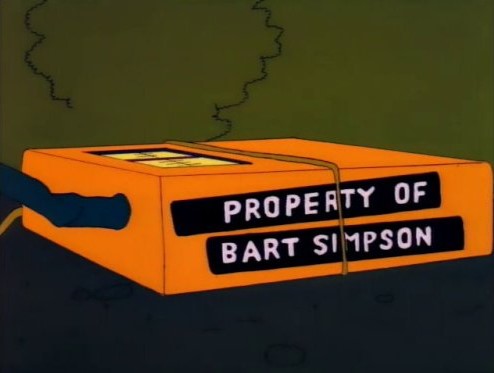
Bart's propensity for labelling everything with his new labelmaker
comes back to bite him in the ass in "Radio Bart".

Leaving aside character humor itself, since the "Chekhov's Gun" definitely needs a payoff and cannot be there for the sake of needing a prop, you could use it towards character as well. Who ends up using the now-important prop? Is it a surprise? Is it part of a twist even? Are they skilled at using it? Terrified of it but forced to use it now? Everything in your script should have a purpose, and ideally more than one purpose.

"I said, hop in."
The reemergence of Mr. Burns' Spruce Moose model plane
caps off his deteriorating mental state in "$pringfield".

DON'T FORGET THE "BAIT AND SWITCH" CARD

This is a good "cheat" to put a new spin on an old gag, or to switch up the third instance of a running gag. Is your running gag a condition or misfortune that is now affecting an unexpected character? Is a last instance of a gag now used in a more serious tone? Is the least likely character presumed to be qualified for a situation actually the most qualified for some absurd, but logical reason? Basically, you should always remember the power of subverting expectations.

The titular "Bart's Comet" breaks up into the size of a chihuahua's head, 
exactly as predicted by (of all characters) Homer.

Running gags and the like are an aspect that will vary considerably and will (or should) be unique to their respective scripts, so hopefully with the above, I've gotten you to really think about how not to overdo a gag or underdevelop a "Chekhov's Gun", in the hopes of keeping your audience invested.

"Oh, dear god, no!"

Copyright © Chynna Moore

February 28, 2020

DOING "THE TWIST"

Er, retroactive spoiler alert?

I've written in the past about the role of subverting expectations and how doing so requires the writer to know said expectations first. But when it comes to executing a plot twist, such a device has the power to make or break your entire story and how your audience comes away from it.

So here are some important reminders when doing your plot twist...

KNOW (AND ESTABLISH) THE EXPECTATIONS


What are the genre expectations of your script? Character expectations (through archetypes)? Cliches? Have expectations changed? Have they changed through other films? Other twists?

Do you want to subvert the expectation? Avert it entirely? Go in a new direction without alienating the viewer? Contrast is a good "cheat" here, whether it's to drive your script or your characters into a new, unique direction for the genre. Chances are, you know the expectations already and want to write your script to put your own spin on it.

In terms of establishing said expectations within the internal logic of your script, this doesn't have to be done bluntly or with force. Perhaps a character implies the expectations you plan to twist on, subtly "conditioning" your audience, or you could do it in a similar fashion through dialogue or visual associations and cinematic shorthand. Let the format of film be your friend.

DECIDE YOUR TWIST (AND HOW IT PLAYS INTO YOUR THEMES)

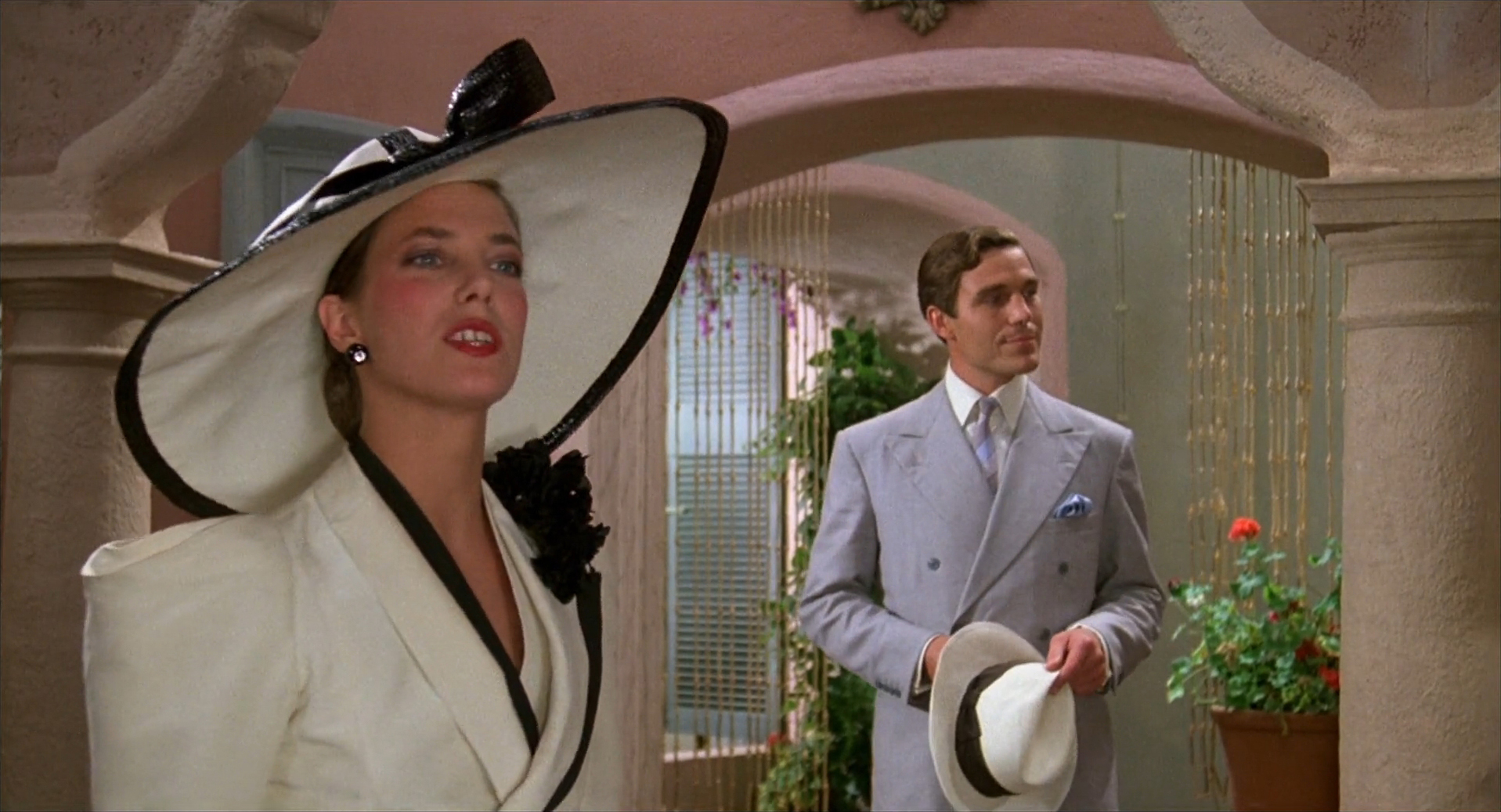
The first and best example of the ironically-used "sin of Envy".

Again, contrast is an easy way to brainstorm possibilities for your twist, to "turn things on their heads", as it will. Another "cheat" is through updating if you're writing an adaptation. Say you subtly "influence" your audience that a character is a more old-fashioned archetype, only for your twist to be that said character is actually more progressive or transgressive than the source material could ever conceive of.

What will your twist mean thematically? Does it serve as the "other side of the coin" to another theme or character? Is it an added contrast? A "monkey wrench" thrown into the rules of the genre? Will your twist serve to reinforce your story's message or show it in a unique way? There are, of course, a million ways to go about this, but you'll know when you've found your twist if it deepens even your understanding of what you want to write. Themes typically "just happen", after all, and similarly, like other great ideas, a good twist can sometimes just "click" into place.

GIVE AMPLE (BUT AMBIGUOUS) FORESHADOWING

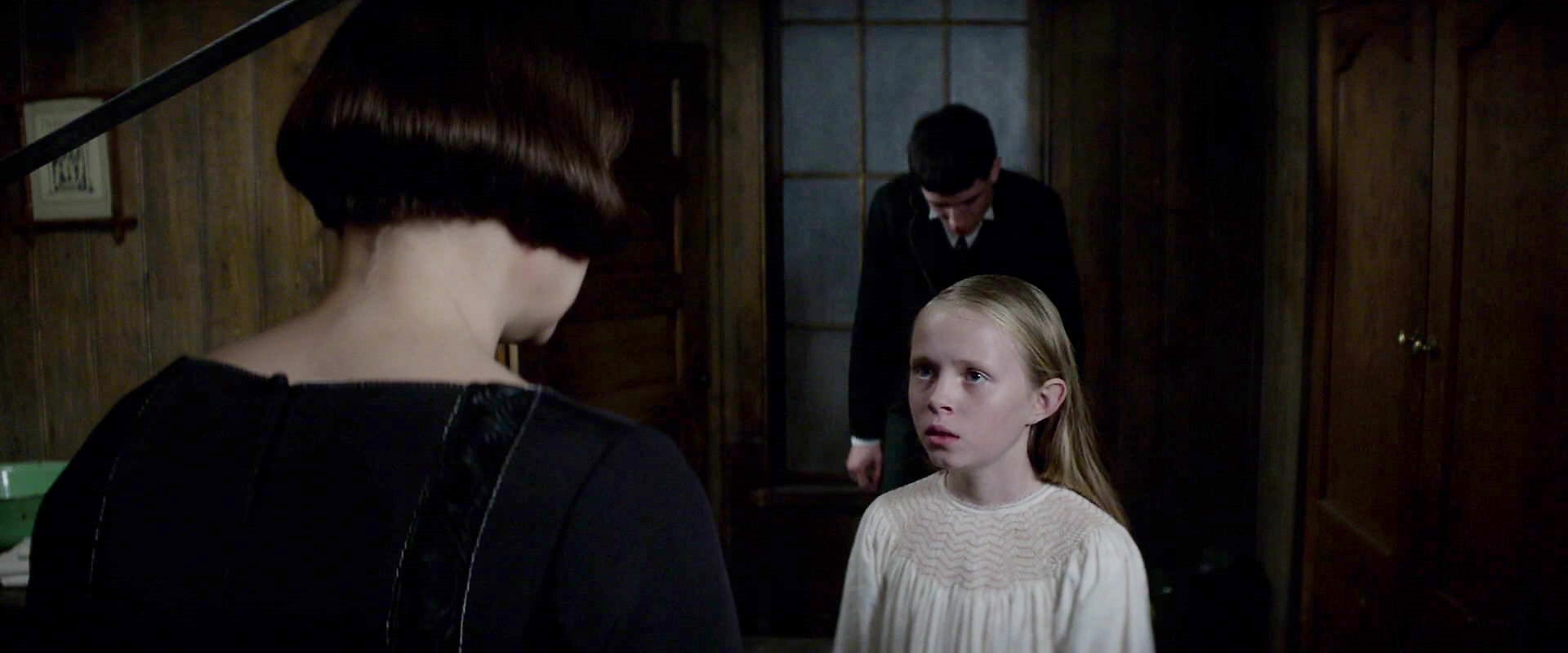
Fantastic Beasts and Where to Find Them is a film that does a fine job in setting up what the audience thinks will happen. Throughout the first two acts, the abusive home and horrid treatment of Modesty Barebone by strangers, coupled with her reactions, body language, and closeness with her shy adoptive brother Credence, suggests that she is the source of the highly destructive Obscurus power.


Indeed, all "signs" point to her without being too obvious, over-the-top, cliched, or "told". If she were indeed the Obscurial, it would be hard to blame her for being so angry.


Even right up to the last second, when she hides in fear after Mary Lou Barebone's killing, it could easily go the way that's been suggested. But...


Credence, having finally unleashed his Obscurus on Mary Lou after doing so to various places in NYC, is at his angriest and most terrifying, frightening even the adoptive sister he was so close to.

Fantastic Beasts' has a twist that works thanks to the acting, direction, and writing working hard for Modesty and Credence's "signs" to be seen as "going either way". Introducing a twist completely out of nowhere without any rhyme, reason, support, or natural behavior from the characters can be frustrating to the audience, if not downright infuriating.

For your clues, it's a matter of writing, "testing", and thinking over just how much information to include and how much to leave out. In a sensitive medium such as screenwriting, the difference could be as little as a single word and how it is said.

HAVE IT MAKE SENSE

"Luke's father is Chewbacca!"

A good twist should follow the logic and "rules" of your story up until that point to serve as a satisfying payoff for your audience. They're the ones who have taken in the clues, the "breadcrumbs" you've left for them throughout the story. To botch this process could easily leave said audience feeling shortchanged.

Any script or film serves as "audience manipulation" to an extent, but it's imperative not to abuse this power, or the trust the (non-hate watching) audience puts into your story. Mere shock simply can't compare to a twist with shock, internal logic, careful execution of the clues, and an ability for the audience to enjoy the effects of it on the story the more they think about it, the "rule of ramifications" and whatnot.

In short, a good twist should make logical sense in-universe, and enhance your story out of it. For your audience, this effect can spur them to go back and try and make a game out of spotting all the "breadcrumbs" you wove into your script. Which brings us to...

THE REWATCH FACTOR

After you've executed your clues, your twist, your themes tied to it, and the rest of your script's "skeleton", a fun part will be adding not only more clues (if you feel you haven't given enough information or need to refine it), but also some other "touches" and details that take on a whole new meaning with your twist in mind.

For example.

This is certainly true if you're writing a comedy. Comedy depends highly on context and irony, two factors that your twist will "gobble up" in the best way. Jokes can serve as momentary humor to a first-time viewer, while being retroactive foreshadowing for a rewatcher.

In any case, a good twist should deepen the audience's understanding (and enjoyment) of your story, and hopefully make it better for them the next time they experience it.

TIDBITS AND SUCH

Just Write, The Closer Look, and Now You See It have excellent videos on writing and executing a great plot twist.

Of course, I can't vouch for a twist if it's revealed to you this way.

Copyright © Chynna Moore