Showing posts with label Marc McClure. Show all posts

March 4, 2020

THE SPARK, THE "EVEN BETTER", AND GOING WITH YOUR GUT


The emotional side of screenwriting often proves to be a flurry of feelings, instincts, and syntheses of ideas with time. You'll find yourself pouring your pain, joy, suffering, and even relief into your script (depending on the story), realizing its emotional honesty, and elevating it well beyond your initial idea.

Three of these (related, but not necessarily consecutive) signs are important to identify, since for me, they've proven to be valuable in knowing when a script I'm writing is resonating with me.

THE SPARK


Have you gotten an idea that's led you to endlessly scribble down other ideas, details, and plot points? Has it revved up your creative motor to such a high degree that you can't think of anything else?

Then inspiration has struck.

It has grabbed you, like a good story just grabs its audience, and it simply won't let go. You have to write it now, and even if you don't yet have every detail nailed down, you know enough of the "skeleton" for it to keep your interest, well enough for you to see this story through.

The story could be based on something that happened to you, or not. Or its outcome is the total and more dramatic opposite. Or it's an older idea you had filed away that has now gained new life combined with another old or new idea.

Whatever it is, if it has grabbed you, don't ignore it.

THE "EVEN BETTER"


At this point, you have a good idea of where your story is going to go. Say you've had some time to let said story, its characters, and their own emotions "sink in", especially if they're based on parts of yourself. Now you've gotten to the script's emotional climax (though this "even better" could be at any point in the scriptwriting process).

Suddenly, you may find your own emotions (channeled through your characters) taking over. One character lets out their anger even more because you've "grown attached" to them and want them to express themselves further. Another character might feel greater remorse than you initially planned, whether it's in direct reaction to the first character or not. (Oftentimes, it is, like two great actors playing off each other.) Or alternatively, your two characters, while upset and just as angry as the previous examples, are both remorseful afterwards and want to be friends.

The key, of course, is the role of emotion. If these characters and events are rousing up your own emotions as a screenwriter, then chances are, they'll do the same (if not moreso) for your audience.

Now when I call this the "even better", I mean the end result of this heightened emotional component is the "oomph", the "gusto", the improved version of what you had planned before. Your characters have now come alive in a more emotionally honest way that hadn't been guaranteed. They've "paid off" your own emotional investment in a "2+2=5" manner.

Of course, it's best not to go seeking out this "even better" as you're writing. Creativity cannot be forced, remember, so let it all happen naturally.

GOING WITH YOUR GUT


Now, you might be at the stage where you've long refined, rewritten, dissected, shaded, and colored your script. It has life, a heartbeat, and a spirit of its own.

One day, you might think of changing a small part of your script, be it a sentence, a character action, or even just one solitary word. So you make that change.

But then, you feel that something doesn't sit quite right with it. It might not be terrible, but perhaps now it doesn't flow so naturally with the rest of the language you've chosen. It might imply something else that you never intended to allude to. Or maybe, you just can't formulate a reason at all why it doesn't feel natural. Perhaps you had simply "fixed" what hadn't been broken. So you change it back to the way it was, and all is right with the world.

That is your gut speaking.

You've become so attuned to your script's "heart" (emotional core), and how your characters and their dynamics truly are, that you can now sense when even the smallest detail feels "off", no matter how slight it is. This knowledge is quite powerful, and informs everything you visualize with said script. It also means your script is emotionally consistent enough for you to almost "predict" how these factors will be, even for situations that never actually happen in your script.

At the end of the day, only you will know what feels "right" for your script, and as a result, it will be as individual as you.


Copyright © Chynna Moore

February 23, 2020

EXTENDED OBSERVATIONS: SUPERMAN III


Superman III is an anomaly in every way. The premise, its tone, the "good with the bad", and it being the Salkinds and Pierre Spengler's idea of what "their" Superman movie is.

Christopher Reeve as Superman...

...a.k.a. Clark Kent

Richard Pryor as Gus Gorman

Annette O'Toole as Lana Lang

Robert Vaughn as Ross Webster

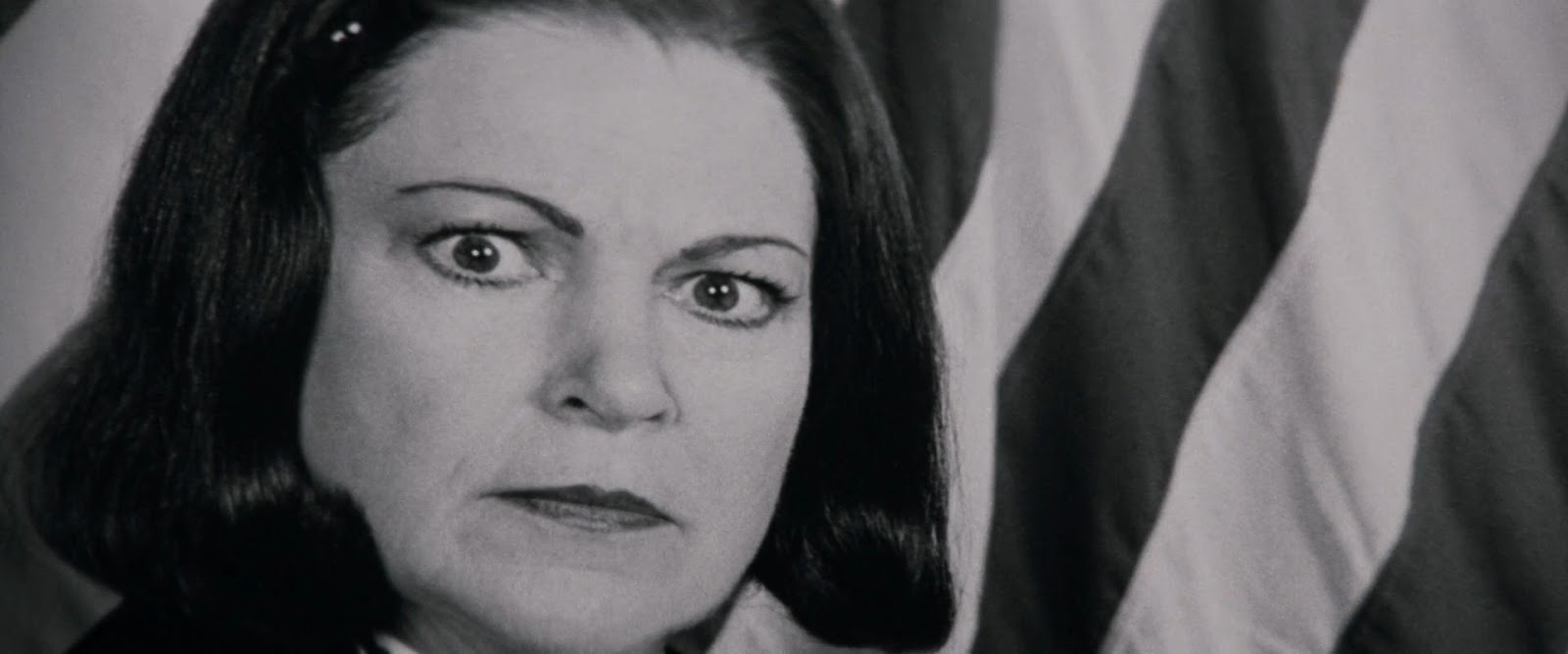
Annie Ross as Vera Webster

Pamela Stephenson as Lorelei Ambrosia

Gavan O'Herlihy as Brad Wilson

Margot Kidder as Lois Lane

Marc McClure as Jimmy Olsen

Jackie Cooper as Perry White

Wacky as hell or downright forgettable (or before now for this viewer, both), Superman III has a sizable share of fans (surprising even me back when I first saw it) due to its similarities to the Superman comics, all while battling Superman IV for worst of the series, similar to how Clark battled Evil Supes.

And yes, this is the best scene of the movie by far.

Much of my movie dissection is in the form of "the good and the bad", but Superman III is one of those films that's so "split down the middle" (if moreso two parts bad, one part good), that it lends itself to a post like this all too well.

Again, the purpose of "Extended Observations" is not to diverge from the (however-divided) overall reception, but to scribble down my reactions to the Supes installment that's chock full of general whatthefuckery, in contrast to its attention-stealing sequel, which is so full of headache-inducing plot holes and poor execution that it would make the Earth spin back again (or, as of 2006, for the third time). But I digress...

Few openings have dashed the hopes of moviegoers like this film's.

Calgarians will love the city standing in for Metropolis, 
even if it is the site of such a cringey opening.

Aaron Smolinski (toddler Kal-El in the first film) as the boy at the photo booth.

Graham Stark (Alfie, Casino Royale, the Pink Panther series) cameos as a blind man.

Few photographs sum up a character like this one of Vera Webster.

Because an American movie filmed in the U.K. wouldn't 
be complete without an appearance by Shane Rimmer.

Seriously though, what the hell is this guy's dance?

David and Leslie Newman's script doesn't embarrass itself as much as Superman IV
and progresses Clark into a more confident guise.

As much as I miss Jeff East, it is nice to see baby Christopher Reeve here.

Even though it's retroactive, I'm adding Superman III as yet another
fictional property ruined by the cultural stench of E.L. James.

Ever since I saw this movie on T.V. as a kid, Vera Webster's
character, look, and mannerisms have always fascinated me.

I mean...

She wears a suit, has two-toned hair, and calls her own brother "Bubba".
What the heck am I supposed to make of that?
(I think Ross moves his lips.)

Though she pulls off this disguise quite well...

...is a competent henchwoman with excellent machinery skills...

...and has her own video feed (pretty advanced stuff for 1983).


Pryor is clearly trying (and it's not that he can't do cleaner material),
but anyone would have trouble with the often-painful comedy in this film.

Like in the first film, Alberta stands in for Smallville.

So that's where The Tragically Hip got their song from!

It's no surprise that kids took to Lana when they first saw this film, 
as Lana's sweeter charm likely appealed to them over Lois' neuroses.

Having Brad work at Webscoe-owned WheatKing is a bit contrived, 
but then again, his old man is the chairman of OCP.

It's unsurprising that Pryor's at his best whenever Gus has to take on a different persona.

Before Batman and Roger RabbitSuperman III led the way for 
mistakenly using U.K. spellings on American items and facilities.

Back when companies like American Express were more than happy
to feature their brands as a means for crime.


Ironically, these two still fared better than the couple who went to South Park's Cow Days.

By simply adding tar in place of the unknown ingredient...

...Gus pretty much invents the Superman equivalent of "tomacco".

Reeve is still pitch-perfect as Supes, and gets to have much fun playing him as a jerk.

"Otis, take his glass."
...
"I don't think he wants me to, Mr. Luthor."

"It's good to be the Man of Steel."

Vaughn is having fun as Ross Webster, but the character is so
vaguely defined and uninteresting, that it emphasizes how
Trading Places did pretty much the same plot (and better).

No explanation is given as to why Lorelei pretends to be a shallow airhead
when she's easily capable of being the series' smartest henchperson to date.

Say it with me now, "Still better than Superman 64!"

The scene that scared many kids back in the day, though for me,
this pales in comparison to the flame-throwing Evil Irona from 
Richie Rich's Christmas Wish.

If this scene above doesn't encapsulate what the 80s meant for
crossovers and absurd movie premises, I don't know what does.

This scene actually works in playing the rom-com "misunderstanding" trope
with a character so attuned to the "Cary Grant" archetype as Clark Kent.

An awesome setup for a sequel plot that never happened.

TIDBITS AND SUCH

I cannot pass up the opportunity to feature this photo of Reeve (with his Supes hair) visiting the set of Octopussy.


JoBlo.com's "Awfully Good Movies" series covered Superman III in 2016.


As did Oliver Harper in 2020.


Copyright © Chynna Moore