Showing posts with label Jane Birkin. Show all posts

December 16, 2020

PIXAR'S 22 RULES OF STORYTELLING: ILLUSTRATED

Pixar’s 22 Rules of Storytelling, as originally brought forth by story artist Emma Coats, serves as a litany of "tests" for really any story from a writer's perspective. Here are the 22 rules (in bold) and my examples and takes on applying them.

#1: You admire a character for trying more than for their successes.

Any teacher (or other professional) will tell you how important effort is to the final result. Comedies in general make fodder out of failure, but while humor can certainly be mined from a character not trying or failing epically, a character is far more endearing if they act with effort, earnestness, and the best of intentions, regardless of failure or success.

Bless him for trying (no pun intended), but Father Maurice's attempt
(and the next ones) to ditch Giuditta in Il Piccolo Diavolo ultimately fails.

#2: You gotta keep in mind what’s interesting to you as an audience, not what’s fun to do as a writer. They can be very different.

After all, you may be fascinated by the idea of a sprawling epic with long shots and landscapes, but this may not get such a warm reception from you, the viewer. Or you want to tackle a topic you have some insight in, but you find your starting point preachy to listen to. Keep the overall writer/audience dichotomy in mind.

#3: Trying for theme is important, but you won’t see what the story is actually about til you’re at the end of it. Now rewrite.

Fortunately, themes are in everything, regardless of the work's actual quality. By the time you've finished your first draft (or even before), you'll already have a fair idea of what parts of your script to revise.

#4: Once upon a time there was ___. Every day, ___. One day ___. Because of that, ___. Because of that, ___. Until finally ___.


"Once upon a time, there was Charley Varrick. Every day, he and his gang would rob banks to survive in a post-crop duster world. One day, they robbed a bank that was a money laundering front for the mob. Because of that, Charley had to go on the run from both the mob and the cops. Because of that, he hatched a slow-burn plan to leave his old life, make a clean break, and dispatch his pursuers. Until finally, his plan's final phase comes together, and he successfully gets away."

#5: Simplify. Focus. Combine characters. Hop over detours. You’ll feel like you’re losing valuable stuff but it sets you free.

Having read In the Heat of the Night in ninth grade, I was disappointed at the time to see the 1967 film skip over a lot of things I appreciated about the book, but in hindsight it was best for the film to focus on the more contrasting partnership of Virgil Tibbs and Bill Gillespie instead of the developing friendship between Tibbs and Sam Wood. And of course, Stirling Silliphant's screenplay rightfully updates Tibbs from a smart but only subtly snarky character to his equally accomplished but (understandably) firmer and more straightforward film version.

#6: What is your character good at, comfortable with? Throw the polar opposite at them. Challenge them. How do they deal?

Exactly as it says.

And in this case, not well.

#7: Come up with your ending before figuring out your middle. Seriously. Endings are hard, get yours working up front.

Relating to my previous post on plot twists, foreshadowing and "breadcrumbs" will generally come to you after deciding your twist and end result. Therefore, aim for the twist/ending first, and try to build the rest around it.

#8: Finish your story, let go even if it’s not perfect. In an ideal world you have both, but move on. Do better next time.

Whether it's giving yourself a break from your hard work, seeing a project through, or letting your finished work be after any possible chance of revision.

#9: When you’re stuck, make a list of what WOULDN’T happen next. Lots of times the material to get you unstuck will show up.

"I told that idiot to slice my sandwich!"

It's all about contrast and playing on viewer expectations (within logical, in-universe reason, of course).

#10: Pull apart the stories you like. What you like in them is a part of you; you’ve got to recognize it before you can use it.

What do you like about your favorite movies? Is it a performance? A twist? The cinematography? The subverted archetypes? This is one of the more fun rules from this list.

In addition to warmth and charm, I am also a sucker for epic death glares.

#11: Putting it on paper lets you start fixing it. If it stays in your head, a perfect idea, you’ll never share it with anyone.

First rule of anything: get it out of your head. If it's good, putting it out will help it develop. If it's bad, it won't be taking up valuable space in your mind anymore (and won't come back to drag down any of your good ideas).

#12: Discount the first thing that comes to mind. And the second, third, fourth, fifth – get the obvious out of the way. Surprise yourself.
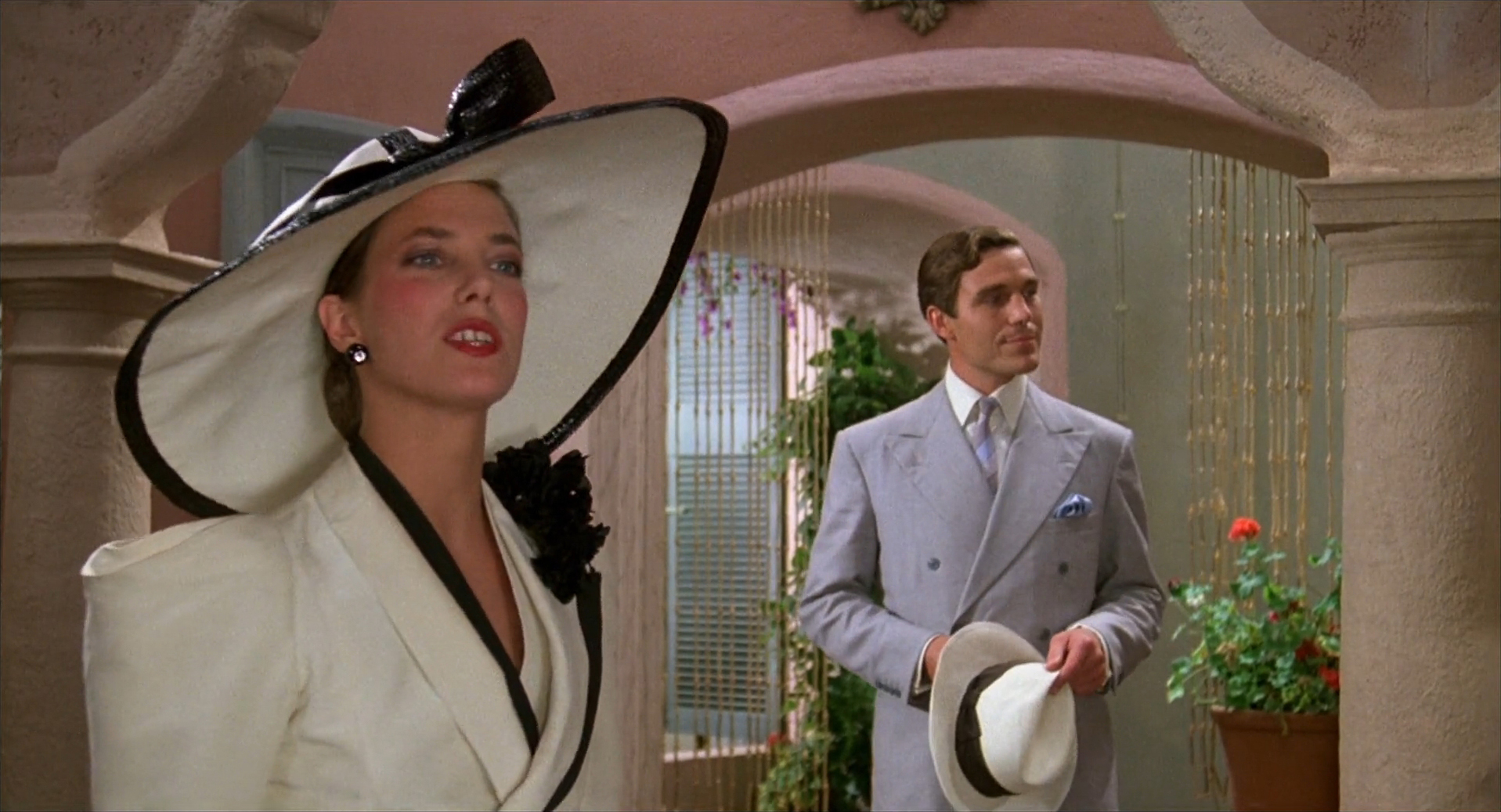
Again, subverted expectations (see Rule #9). As a viewer, you are definitely experienced enough to know what the above would be in your favorite genre.

#13: Give your characters opinions. Passive/malleable might seem likable to you as you write, but it’s poison to the audience.

Granted, you could write around this, in that your passive character does have opinions, but simply chooses not to share them. However, to not give a character any opinions at all could seriously doom them to being a blank slate.

Charley Varrick's mouthy, greedy, and trigger-happy Harman (Andrew Robinson)
is a serious liability to the title character's chances of escape.

#14: Why must you tell THIS story? What’s the belief burning within you that your story feeds off of? That’s the heart of it.

In short, what is your story's "something to say"?

The world (or at least NYC in 1974) is full of snarky, cynical people,
but at least this guy still cares a little.

#15: If you were your character, in this situation, how would you feel? Honesty lends credibility to unbelievable situations.

This is certainly an aspect where the emotional side of things comes into play. What emotion is present in a given situation? How would you handle it vs. how a given character would handle it? 

When his wife Nadine bleeds to death from a gunshot wound, Charley Varrick
is crushed emotionally, but mourns her death only somewhat briefly before
getting down to business in escaping with cohort Harman.

#16: What are the stakes? Give us reason to root for the character. What happens if they don’t succeed? Stack the odds against.

Too many films nowadays make the mistake of building up the objective, physical, world-at-risk stakes at the risk of sacrificing character, emotions, and the human elements. Don't make the journey easy, but also don't forget to give your audience a reason to care.


Superman has both the catastrophe element and the human element
in showing the countless people impacted by Lex Luthor's missile strike.

#17: No work is ever wasted. If it’s not working, let go and move on - it’ll come back around to be useful later.

Remember to save all of your ideas, after all.

#18: You have to know yourself: the difference between doing your best & fussing. Story is testing, not refining.

Because sometimes, being too finicky will bite you in the ass.

If you're prone to overanalyzing and perfection-obsessed anxiety like me, it's imperative to know the difference between revising and fueling your anxiety. You can worry too much about what your audience will think, especially if you have zero evidence to back it up.

#19: Coincidences to get characters into trouble are great; coincidences to get them out of it are cheating.


Two bitter rivals at the same holiday resort?
Let the bitchy exchanges commence!

Granted, it can come off as contrived at times, but the former category plays into a viewer's sense of anxiety, fear, and dread, as one's mind already tilts towards the negative. Coincidences to get characters out of trouble, conversely, will threaten to cheapen their journey towards their goals.

#20: Exercise: take the building blocks of a movie you dislike. How'd you rearrange them into what you DO like?

'Nuff said.

Admit it, you (and countless others) already do this, especially if a given bad film is lazy and lends itself to so many better story possibilities.

#21: You gotta identify with your situation/characters, can’t just write ‘cool’. What would make YOU act that way?

Confidence? Ability? Security? Safety? Support? Maybe this character is genuinely who you would be if you just had enough confidence. 

By gleefully acting with confidence and sticking it to the stuffier O'Brien, Thompson, and Kincaid, 
"Whiplash" Willie Gingrich lets the audience live vicariously through him.

#22: What’s the essence of your story? Most economical telling of it? If you know that, you can build out from there.

Streamline, streamline, streamline! But also, does it tap into a universal truth? What parts does your story have to have, and what parts can it de-emphasize or do without? Know what your story is, right down to the bare bones of it.

Superman (the film and the character) is best approached on the basis
of humanity and the world still being innately good at heart.

Copyright © Chynna Moore

February 7, 2020

EVIL UNDER THE SUN (1982)


This essay contains spoilers. Be forewarned.

Despite having seen Murder on the Orient Express and Death on the Nile over a decade prior, it would only be in the last few years when I finally saw its less-remembered follow-up. Did the relative lack of Old Hollywood stars (and distributor EMI Films' then-ongoing financial troubles) keep audiences from fully embracing Evil Under the Sun? Does it have its own wit and style to offer in the shadow of its predecessors? We shall see...

Peter Ustinov as Hercule Poirot

Maggie Smith as Daphne Castle

Diana Rigg as Arlena Stuart Marshall

Denis Quilley as Kenneth Marshall

Emily Hone as Linda Marshall

Sylvia Miles as Myra Gardener

James Mason as Odell Gardener

Roddy McDowall as Rex Brewster

Nicholas Clay as Patrick Redfern

Jane Birkin as Christine Redfern

Colin Blakely as Sir Horace Blatt

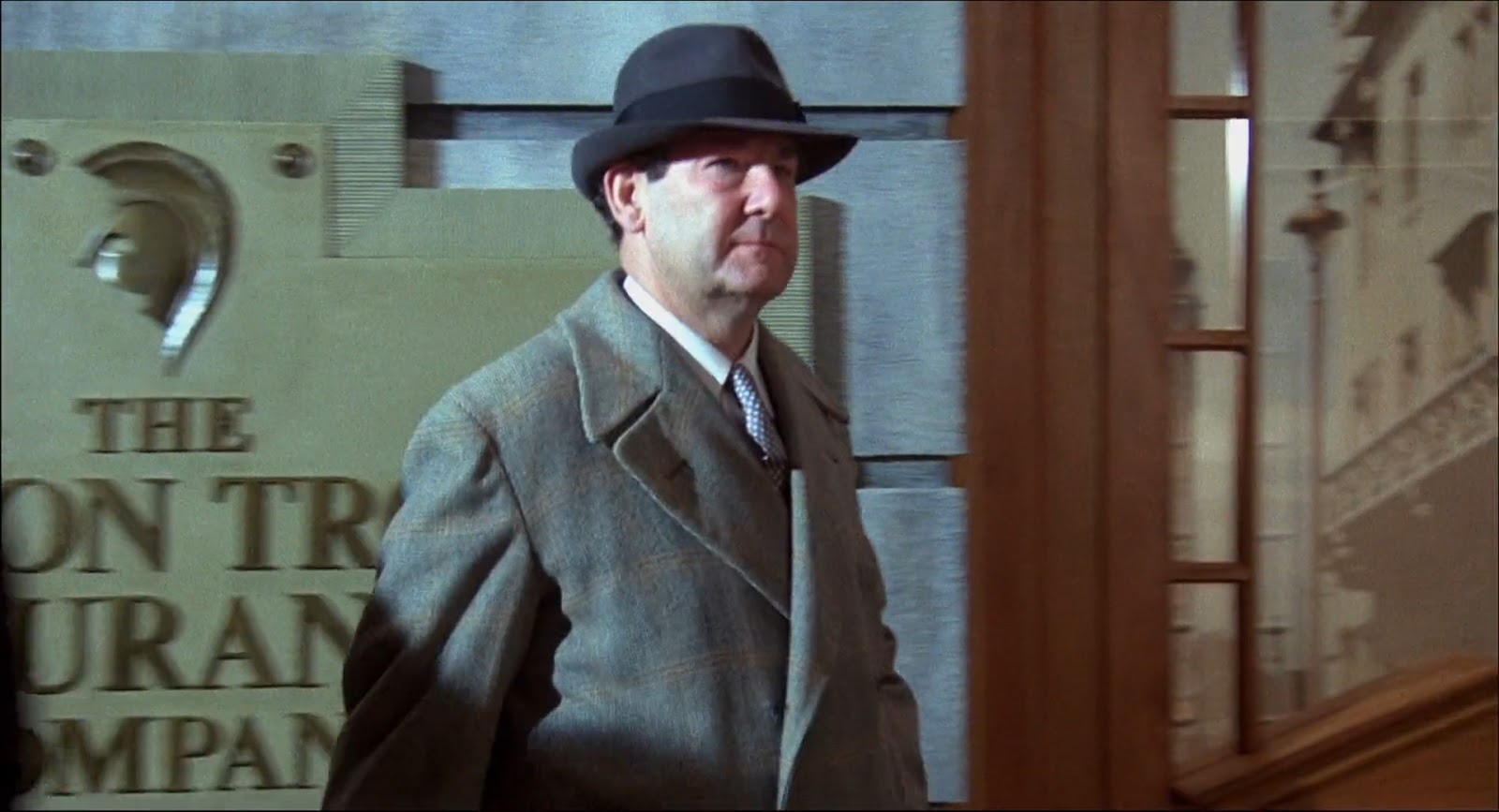
Tasked by the insurance company of millionaire Sir Horace Blatt to recover a jewel absconded by former Broadway star Arlena Stuart, Hercule Poirot follows her to an Adriatic island that was once the summer palace of the fictional King of Tyrania.

Taking cues from Cole Porter and mystery comedies such as The Thin Man, director Guy Hamilton splendidly avoids the pacing pitfalls and tonal thorns of DOTN as he brings the style and energy that helped his James Bond films to Agatha Christie. With Anthony Shaffer on hand with the script, the two bring a much-needed snappiness to the island setting, with all the attitudes, idiosyncrasies, and contrasts afforded by the characters on it.

Tension soon arises, as Daphne knows both Kenneth
and former rival Arlena from separate occasions.

As great as EUTS's cast is, this is pretty much Maggie Smith's movie. Whether she's trading dry barbs with Rigg, kindly offering solace to Quilley and Hone, or assisting Ustinov's Poirot with the investigation, Smith shows that her Daphne is anything but a one-note HBIC. (More on that later.)
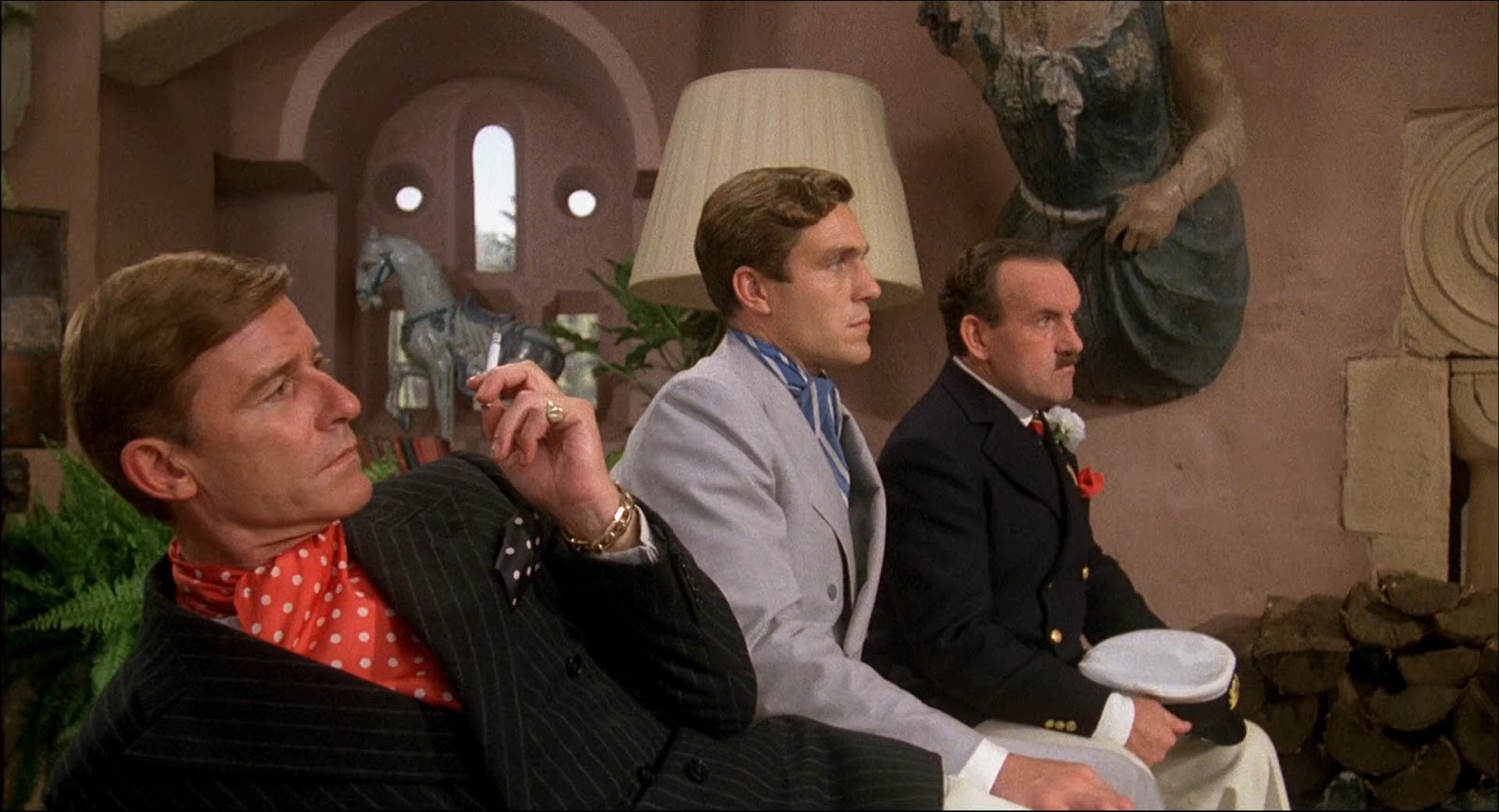

Daphne doesn't take kindly to Arlena's treatment
of stepdaughter Linda.

Underneath Daphne's directness and strength
lies a very big heart.

Taking on a motherly role with Linda almost immediately, 
Smith's quieter moments practically outshine her barbs and put-downs.

But it's no secret that a lot of the movie's credibility would be out the window were it not for its casting of two important roles: Arlena Marshall and Patrick Redfern.

In most other movies, this use of fanservice would be gratuitous,
but in EUTS it plays a vitally important role.

Clay (Excalibur) is perfectly cast as Patrick (whose M.O. literally banks on his good looks), bringing easy charm and charisma, without seeming like Arlena's "victim" before we find out about their prior relationship.


Diana Rigg shines with what has to be a difficult role. Arlena has to be fun, vivacious, and flirtatious, without coming off as completely unlikable given her actions. Rigg also brings that little bit of a "puppy dog" quality, which is key, given what later happens to her. (More on that also later.)

Rigg and Smith's rendition of "You're the Top" shows
their characters, as well as Arlena's charm 
that makes so many men fall for her.

While it's great that bis, straight women, and gay men 
have Nicholas Clay to lay eyes on, Evil Under the Sun,
for putting Diana Rigg in a slip, this lesbian thanks you.


*throws perfume bottle*
My biggest laugh from this movie.

Miles plays the token "Ugly American" to a T.

McDowall is so much fun, you'll wonder why
he didn't do more mystery comedies in general.

Mason is once again the "henpecked husband",
which isn't too far off from his character in Bloodline.

Blakely (returning as a different character from MOTOE)
is highly amusing as Poirot's cantankerous client.

Peter Ustinov is back as Poirot, and his "having fun" with the character really gets its time in the sun here (no pun intended). 

Designing your character's monogrammed swimsuit?
Now that's acting!


Any surprise he and Smith are great together?

And a nice hat too.

Hamilton's direction and Christopher Challis'
cinematography mark it a cut above DOTN.

I'd be foolish not to mention Anthony Powell's Wonder Bread
-themed follow ups to DOTN's impeccable costumes.

With Cole Porter songs moving the film along, EUTS really strikes me as an attempt to avoid some of the mistakes DOTN made (the film is nearly half an hour shorter than its predecessor). At no point did I feel tonal whiplash (intentional or otherwise), and Hamilton balances all the elements beautifully. As much as it often feels like a 30s film with an 80s color scheme slathered over it, it's not overwhelming to the point of parody or disbelief. These characters are on vacation, and by gum, they're gonna act like it!

That lean is both in-character and cinematically pleasing. 

THE ROLE OF ADAPTATION

A complaint I had with DOTN was how despite excising several characters and combining several others, these moves yielded little result in terms of character. Thankfully, Shaffer's script here remedies that with Daphne Castle.


Combining the characters of hotel proprietor Mrs. Castle and Rosamund Darnley from the novel, Shaffer expands Smith's role in this film, providing ample opportunities for her to do more than just put down her guests (as great as she certainly is at doing that).

Daphne's putting forward of shaky theories shows
that even top-notch hotel heads can stumble a bit in sleuthing.

Wanting to protect Kenneth with an alibi, 
knowing full well how Arlena treated him,
brings further shading to Daphne's character.


As Arlena wasn't nearly as vitriolic to Linda (or to Kenneth, for that matter) in the book, changing her character could have gone too far in the other direction, snuffing out what little sympathy she garners due to the circumstances of her death. Thankfully, however, Shaffer's script and Rigg's performance make her as "love to hate" as one can be in an Agatha Christie story.

Notably, Arlena's song gets smiles and admiration
even from people who actively despise her.

The novel (from what I could look up about it) treats Arlena's murder as ultimately a tragedy, since despite her impulses and disrespect, she is no match for Patrick Redfern, who, with his wife Christine, are so cunning, ruthless, and greedy that just about anybody could fall victim to them. Her waking up in the grotto, naked, disoriented, unaware, and yet so vulnerable to what's coming is capped emotionally with her greeting her eventual killer with a sweet, breathy "Patrick...", tugging at the viewer's heartstrings at the very last second possible.

On a lighter note, that's a real foreboding 
Speedo if I ever did see one.

THE STUFF OF TRAVELOGUES

Filmed in and around Majorca, Spain (Hamilton's place of residence at the time), EUTS's landscapes are a welcome change from the sand of DOTN.


OTHER OBSERVATIONS

While the corpse of Alice Ruber is obviously breathing,
as someone also living in a cool, wet climate, I can personally 
attest to the difficult task of keeping one's snot in their nostrils.

Rewatching this film shows it covered its tracks 
by dubbing Birkin over with another actress.

Paddleboating, the activity that looks fun at first glance
but is actually painfully slow, strenuous, and highly irritating.


In less than a minute, Myra gains massive 
confidence to drive an unfamiliar speedboat.

Director Guy Hamilton appears in a walk-on 
cameo before we first see Poirot.

TIDBITS AND SUCH


While EUTS's best-remembered poster is the U.S. one above (check out Brewster in the corner there!), I also have an affinity for the alternate U.S. poster (below), in all its early-80s 30s homage cheese, as well as the very colorful Thai poster (below that). 

(I also really like the Japanese poster, with its Amsel-esque painting of the cast, but I haven't been able to find a clear image to post as of this writing.)


The original trailer (below) and T.V. spots for the film have Poirot addressing the audience and detailing the film's plot. In the case of the former, I can't help but imagine the other diners (including Patrick and presumably Arlena) listening in on him the whole time he's speaking.


Copyright © Chynna Moore