Showing posts with label Clu Gulager. Show all posts

January 9, 2020

MCQ (1974)


My late father was, in retrospect, someone who belonged to that last generation that grew up with westerns being ubiquitous, and where darker westerns courtesy of Sergio Leone and others started creeping into the genre and what it meant to culture at large. 

In hindsight, I should have asked him more about his watching of John Wayne movies, especially during the 60s and 70s, which even the Duke's die-hard fans will admit was a difficult time for his career.

I, meanwhile, got quite into Clint Eastwood's filmography as a teenager and quickly deemed Dirty Harry as a favorite. Famously, Wayne regretted turning down the role of Harry Callahan, so McQ was a way of "getting with the times" (at least cinematically).

My view of McQ hinges a lot on its quality in comparison to a previous crime drama I had seen, 1973's The Laughing Policeman, so if this essay comes off as a comparative one, I apologize, but given the mediocre reception this film seems to have, imagine my surprise when I instead discovered a pleasant, enjoyable experience that largely holds up today.

John Wayne as Det. Lt. Lon "McQ" McHugh

Eddie Albert as Capt. Edward Kosterman

Diana Muldaur as Lois Boyle

Clu Gulager as Det. Franklin Toms

David Huddleston as P.I. Edward W. "Pinky" Farrow

Colleen Dewhurst as Myra

Julian Christopher (credited as Jim Watkins) as Det. J.C. Davis

Opening with a great credits sequence following Det. Stan Boyle (William Bryant) on the streets of Seattle, McQ's setup pulls the viewer right in as we see Boyle gun down two different officers, only to be later shot and left for dead by his unseen contact. 

Imagine this reviewer's surprise when a female cop was shown
guarding Boyle's hospital bed. You don't even see that in movies today.

After being phoned the news of his friend and former partner's shooting, Det. Lt. Lon "McQ" McHugh escapes and manages to take out an ambushing hitman. Quickly, he suspects that local shipping magnate and suspected dealer Manny Santiago is responsible.

Al Lettieri as Manny Santiago

Unlike in The Laughing Policeman, where the villain gets barely
any screentime or character, the first time we see Santiago, he's
talking with his lawyer about the heat now on him for a
crime he genuinely didn't commit.

While Wayne is no one's first choice for this kind of crime drama,
he brings an appropriately world-weary humanity to his character.

After tracking down and roughing up Santiago (which is par for the genre, but also amusingly slow-ish and awkward coming from the sixty-something Wayne), McQ resigns after being confined to desk duty and gets a P.I. license and later his own arsenal of firearms to catch the killers responsible.

A short, but amusing dialogue-free scene where Kosterman sees
Pinky helping McQ obtain his P.I. license.

All the while, McQ deals with his police contacts, informants, and his friendship with Boyle's widow Lois. Best known for L.A. Law and TNG, Muldaur's down-to-earth, subdued presence is a welcome asset to McQ.

Muldaur and Wayne are quite sweet together as their characters
share a refreshing "brother and sister" dynamic.

Viewers expecting the archetypes spoofed to no end in countless movies and shows (i.e. The Simpsons' "McGarnigle" spoofs) will be happily surprised at the characters in McQ, such as Elaine, McQ's ex-wife who, with her husband, is actually happy to lend him the money for his P.I. license.

Julie Adams as McQ's ex-wife Elaine
Best known for Creature from the Black Lagoon
I personally know her best as Eve Simpson on Murder, She Wrote.

Roger E. Mosley (Magnum, P.I.'s "T.C.") as local pimp and informant Rosey.

But the most endearing of these supporting characters is easily Colleen Dewhurst's Myra, a drug-addicted bartender informant of McQ's. A somewhat-love interest age appropriate for the film's star, Myra, with her raspy voice, lined face, and equally world-worn demeanor, still has great sweetness with McQ, making their relationship all the more interesting.


McQ's script, like its characters, subverts a number of genre cliches, and has some interesting twists even for those well schooled in the Dirty Harry vein.

While Santiago isn't responsible for Boyle's death, McQ's interference
with his operation (not to mention, you know, roughing him up earlier)
ends up seriously biting McQ in the ass.

McQ's status as an anomaly of sorts may be attributed to its place in John Wayne's filmography (between his Oscar-winning turn in True Grit and his last film The Shootist), its box office intake of only $4 million (Blazing Saddles, that year's top earner, took in nearly $120 million), and the admittedly-odd choice of Wayne in the wake of The French Connection and other films. But those expecting a totally cringeworthy experience will thankfully not find it here. Is it perfect? No, McQ's fights and shooting probably come off as a bit ridiculous, and the laundry truck chase might go on for too long. But is it better than its reputation suggests? Most definitely.

McQ wraps up with an awesome car chase on the beaches of 
Washington's Quinalt Indian Nation.


THE STUFF OF SEATTLE

McQ's secret weapon is undoubtedly its Seattle locales. Cinematographer Harry Stradling Jr. (Midway, Little Big Man) really outdoes himself, as a city rarely seen in crime dramas gets its time in the sun. (Or, more accurate to the Pacific Northwest, overcast and possible rain?). It led me to wonder, why isn't Seattle a more popular locale in these films? Is the weather prohibitive to film around, or does it not afford the subtext/contrast of either the sun of L.A. or the ice and permafrost of Alaska? Regardless, I immensely enjoyed McQ's scenery, as it's as close to my neck of the woods as a 70s crime drama is ever going to get.


The Seattle Center Arena (formerly the KeyArena),
which is undergoing redevelopment as of this writing 
to become the New Arena at Seattle Center.


Entrance I-5 North, with a sign for Vancouver, B.C.

OTHER OBSERVATIONS 


Okay, there is one extremely cringeworthy aspect of McQ that I have to get out of the way. When McQ goes to Elaine and her husband's house, we also meet his teenage daughter Ginger (Kim Sanford). Unfortunately, Ginger is saddled with some of the worst dubbing I have ever heard on film. What we hear is so obviously an adult woman trying to do a young boy's voice, that I have to think Sanford's actual voice could never have been unsuitable enough to warrant it.
TIDBITS AND SUCH


McQ was written by Lawrence Roman, who also wrote the play (and the later screenplay of) Under the Yum Yum Tree. Talk about whiplash!

Elmer Bernstein's score is exactly what you expect a 70s crime drama starring John Wayne to have, but in a good way, and it's still funky as hell with an irreverent edge. A soundtrack suite is below.


Before the Red Stapler, there was McQ's Red Thermos Cup.

Copyright © Chynna Moore

December 31, 2019

ONCE UPON A TIME IN HOLLYWOOD (2019)


This essay contains spoilers. Be forewarned.

First and foremost, OUATIH is a film that's going to depend a lot on what you take going into it. Not just culturally, but about the Tate/LaBianca murders and the people involved. (And don't get me started on the international trailer, which makes the film look like a buddy action rescue comedy. Cringe for a number of reasons.)

With my knowledge of the events, people, culture, and the TV/movies within it, coupled with my (before this film, total) inexperience with Tarantino films, here's my take on a film that's been much-written about and discussed. This is going to be less about the deeper themes and subtext (countless articles are out there about it), and more about my experience personally.

My mere addition to the "actor and double" thematic analysis: 
Note where the actors' names are placed on the screen.

Being "stuck in the past" when it comes to my influences and film-watching, OUATIH is about as "made for me" as a new film in the 2010s can get. Possibly the dream of any screenwriter is for them to be able to express their "memory piece" in a script, incorporating as many little details as possible to create (or partially re-create) a full-blown world in and of itself.

Leonardo DiCaprio as Rick Dalton

Brad Pitt as Cliff Booth

Margot Robbie as Sharon Tate

So, what did I take into OUATIH? Well, being a third-generation true crime buff helped with the historical elements, but of course, knowing the (regular and pop) culture of 1969, on the brink of inevitable change, probably put me at an advantage. It's not the same as actually being around then, of course, but knowing virtually all the names mentioned did make me feel good inside.

I also had an inkling on how the ending was going to go, so my first viewing was less filled with growing tension, but rather a calm, cool, "let's enjoy the slow ride" mindset.

Emile Hirsch as Jay Sebring

Al Pacino as Marvin Schwarz

(Side note: I imagine that if Rick and Marvin were having the above conversation a decade later, Marvin would say Rick wouldn't even be cut out for Mrs. Columbo. Ouch!)

The first time I saw the teaser trailer for OUATIH, I was hyped. Not only because of the music (opening gloriously with The Mamas and the Papas' "Straight Shooter"), but also for Mike Moh as Bruce Lee (more on that later).

Mike Moh as Bruce Lee, standing out in the teaser trailer
for all the right reasons.

But the subsequent main trailer emphasized the vulnerability of its main protagonist, one Rick Dalton.


As a perfectionist with a self-inflicted stubborn streak, I relate to this 
on a deep and spiritual level.

Full of fear for the future and little moments of honesty, Rick's role 
is that of both an audience surrogate and (one of) the film's heart(s).

Similar to Luke Skywalker in A New Hope (I know...), Rick Dalton is the main character, a role that would normally be filled by someone with Cliff Booth's personality in older films and shows. Constantly unsure of himself, albeit filtered through the ways of coping (alcoholism, heavy smoking, etc.) that would bat fewer eyes in 1969, Rick is not a man who keeps his feelings inside, and to its credit, the film never makes a big deal out of it. It's less "men shouldn't be afraid to cry" (though that's not a bad sentiment), and more "this is who Rick is, and Cliff is there for him and is his friend for who he is". 


Bright yellow Hawaiian shirts never looked so cool.

By intricate contrast, Cliff is a man whose actions speak louder than his light, languid words. 
Constantly visually framed like the western hero Rick only played on T.V., Cliff is equal parts loyal friend and morally-ambiguous spaghetti western gunman. We're given several reasons why we're not supposed to like Cliff, but he's just so cool that we can't help but envy him a little. And it's clear that this is completely intentional.

While I question a couple of QT's other casting choices, 
I seem to be the only person floored at the casting of Rebecca Gayheart
as Cliff's late wife. Talk about adding to the subtext of that scene.

It took me some time (okay, months) to think about why Cliff has this ambiguity on virtually all fronts. My answer has mainly to do with how this all plays in the climax. If we saw Cliff as totally friendly with no dark past whatsoever, it would have just made his later actions a lot more disturbing and come right out of nowhere. (Again, more on that later.)


Much has been made of Margot Robbie as Sharon Tate and how she figures in the film. Film is a visual medium first, and had this been a novel, Robbie's amount of spoken dialogue would've stood out far more, but seeing as she's not the main character, this never bothered me in the quantitative sense. 

By all accounts, Tate really seemed like the nicest woman you could ever meet. Seeing her go about her normal daily life allows the viewer to step back from how she died and instead see how she lived.

In contrast to Rick being hard on himself, Tate 
gleefully seeing The Wrecking Crew should remind us to 
take pride in and enjoy our own work. There is no shame in it.

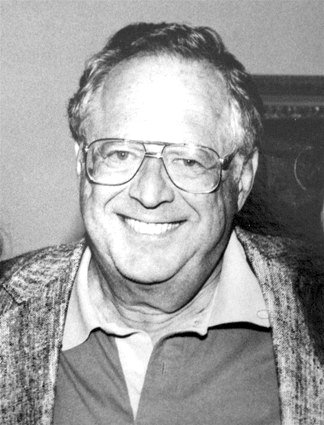
Character actor Clu Gulager (The Last Picture Show, McQ
appears as a bookstore owner.

Knowing Roman Polanski was cheating on her throughout 
their marriage, I interpreted that to be the reason for 
Tate's briefly-seen melancholy here.

AND THE REST...

Nicholas Hammond (Friedrich in The Sound of Music 
and the 70s Spider-Man) as director Sam Wanamaker.

Julia Butters as Trudi Fraser, 
rightfully praised by critics as a standout.

Margaret Qualley as spunky 
Manson "Family" member Pussycat.

Bruce Dern as a hilarious George Spahn.
(Also, Cliff's accent here reminded me of Edith Massey in Pink Flamingos.)

NOW, ABOUT THAT ONE SCENE...

Knowing what I knew going in and the historical fiction aspect, seeing Cliff's "flashback-within-a-flashback" scene with Bruce Lee...

The haircut seen above isn't what Lee actually had on The Green Hornet
but the 70s Enter the Dragon cut is so iconic, anyone would let it slide.

For the record, I'm a mixed Chinese-Canadian female who's white-looking enough to not get crap for being Chinese or mixed (yet), but here's my interpretation. 

For the most part, I understand what QT is trying to do, and I never thought this scene to be nearly as offensive as some others did. 

For one, the fictional aspect should be kept in mind. Two, this is Cliff's (ambiguous at best, unreliable at worst) recollection. Three, even in that version of events, Cliff is a condescending jerk to Lee, calling him "Kato" and treating him like a child. (And while I can see Lee boasting about his abilities, since, well, he could back it up, I can also imagine Cliff exaggerating Lee's claim that he'd "make [Muhammad Ali] a cr*pple".)


Four, outside that scene, in later separate flashbacks, Sharon Tate and Jay Sebring are seen training with a much nicer and more at-ease Lee. 

Further adding to the unreliability of Cliff's flashback is a factor that also clues the viewer in to the film's level of fiction:

One astute viewer online pointed out that a person would be seriously injured
from being thrown into a car door and leaving that massive a dent.

And while QT never struck me as someone who hated Lee (though I don't completely understand his original intent for the scene), he might have underestimated just how beloved Lee is by the Asian community. Would it have been better had Lee just totally kicked Cliff's ass? Maybe, if there was another scene for Cliff to show his skills, but I'm fine with the fight ending in a draw, implausible as that may be in and of itself. Hell, Lee would have probably been twice as fast as what we see here.


And Lee's battle cries here might be over-the-top, but...

(Hey, I love the guy too, but how can you not at least crack a smile?)

So that's my two yuan. If plans for a miniseries version of OUATIH come through, here's hoping we see more of Mike Moh. At least it wouldn't be this:


SO, THAT ENDING...

On first watch, again, I more or less guessed (correctly) how things would go, but the execution? (Pardon the term...)

Well first off, I certainly wasn't expecting the Manson "Family" members to change their plan while still in their car. 

"Sadie" (Mikey Madison) delivers a standout monologue about violence 
on television, while reminding the audience just how horribly warped
the Manson "Family"'s worldview was (and, well, is...).

No one in OUATIH gives a bad performance (well, okay, but Lena Dunham isn't called to do much, thankfully), but Mikey Madison's "Sadie" and Austin Butler's "Tex" both leave the audience thoroughly tense, but laughing from some of the screenplay's darker humor. (Think two twentysomething Tommy DeVitos, and you'll be in the ballpark of what I mean.)

"I'm as real as a doughnut, motherfucker!"
But as Binky Barnes would ask, is he more famous than a doughnut?

Like others, I felt some serious whiplash, considering what I'd been watching for the last two-plus hours. I knew enough about QT's filmography to know that's his style, and while it didn't quite gel at first, the final fight as a whole did eventually grow on me. That's partially due to its effort to take away the Manson "Family"'s power. 

Several have decried the climax for Cliff repeatedly slamming "Katie" (Madisen Beaty)'s head into a telephone receiver and a wall (similar, though intending the opposite effect, to ED-209 riddling the OCP executive with bullets for practically a minute in Robocop). While we're probably meant to be disturbed by how many times Cliff does it (and again, his ambiguity backs it up), and I understand that similar violence to both sexes in the same scene simply won't net the same reactions in the audience (for unfortunate and all-too-real reasons), at no point did these other reviewers at least acknowledge that right before it, Cliff had been brutally stomping on "Tex"'s head. (Perhaps if he did so repeatedly onscreen, that might have driven the point home.)

 Special props must be given to the makeup and effects people
for the utterly painful-looking effects. Though I have to laugh at the 
too-small head (or is it too-long neck?) of the "Tex" dummy being stomped on.

Once the chaos has cleared, and we're at the very end, hearing the first notes of Maurice Jarre's "Miss Lily Langtry" and seeing the gates of the Polanski house open for Rick, it dawns on the audience not only the meaning of the title, but also the "bedtime story" aspect and what it means for its reader. The "bad guys" are vanquished, the kind, loving person and her friends are saved (and were never in any danger), the hero makes several new friends, and the knight is battle-scarred, but may live to fight another day. (Again, though, the latter is (here I go) ambiguous.) Letting us enjoy this peace within the story, while sadly reminding us that's not what actually happened, is how you end a film full of melancholy and sentimentality like OUATIH.


LOGO (SCREEN) GEMS


OUATIH starts out with the 1968 - 1973 pink-draped variation of the 1936 - 1976 Columbia Pictures logo, which was featured on films such as Model ShopFunny GirlTommy, and seemingly one-third of Goldie Hawn's early filmography.

OTHER OBSERVATIONS

In a film full of accurate details, many have pointed out that LSD
breaks down when smoked and would not have made Cliff high off his ass. 
I, however, take this to be foreshadowing the film's true nature.

Gotta have my pre-2008 recipe KD. 
Yes, I'm that much of a mac-and-cheese freak.

QT has cited Cactus Flower (1969) as one of OUATIH's inspirations, which is odd,
because I don't remember Ingrid Bergman burning hippies with a flamethrower.

TIDBITS AND SUCH

Okay, so it's a cheap-plug-within-a-cheap-plug, but the QT-owned New Beverly Cinema's blog has some great articles by Kim MorganPeter Avellino, and Tim Lucas for further reading.

And if somehow, you haven't heard any of the songs from OUATIH's fabulous soundtrack, what are you waiting for? My personal favorites are Vanilla Fudge's cover of "You Keep Me Hangin' On", Neil Diamond's "Brother Love's Travelling Salvation Show", the aforementioned "Straight Shooter", and Los Bravos' cover of "Bring a Little Lovin'".

Inspired by this film, I once drove my car in Cliff Booth mode,
with my windows down and my aviators on, though knowing my radio, 
it was probably to Santana's cover of Ian Thomas' "Hold On" instead.

OUATIH clocks in at just over two and a half hours, so if you're like me, you'll best enjoy it in chunks, or better yet, with friends. 


Copyright © Chynna Moore