Showing posts with label Olivia Hussey. Show all posts

February 7, 2020

ADAPTATION: TO CHANGE OR NOT TO CHANGE


Adaptation, while a tricky subject, is necessary in bringing the written word to the screen. While the subjects tackled in my previous screenwriting posts are important for adaptations as well, you may find yourself in a bit of a corner, depending on how much freedom you have to make changes.

All in all, the only advice I can offer is what I've learned adapting older screenplays. So...

UPDATE! UPDATE! UPDATE! (AND BE AT LEAST A LITTLE P.C.)


Social mores change, and have changed fast, so stripping away dated societal "blankets" has always come first for this writer. If your adaptation is still a period piece, but set later than the source material, be familiar enough with the decade you're bringing it into, so you know just how much hurtful, racist, sexist, homophobic, ableist, etc. language still was normalized back then. (The latter two barely batted the white mainstream's eye well into the 2010s, if you remember.) Keep in mind, you're still bringing it to a modern audience, so if you're going to feature this behavior, at least frame it as wrong and hurtful to the vulnerable groups it's directed at.

One example is the subject of drunk and impaired driving. As recent as the late-90s, many jurisdictions didn't punish drunk driving causing death on a similar level as murder or other crimes causing death. But after that, the laws changed fast, and public perception, attitudes, education, and efforts did so in turn, turning what was once considered lighthearted comedic fodder (like in 1981's Arthur) into a notion downright horrifying (in, well, real life...). Many films before this time seemingly either didn't bother with the ramifications of driving impaired, or characters didn't take the dangers of it seriously. If this at all comes up in your source material regarding your "hero", my advice is to either frame it as wrong or cut it out entirely, since unpunished impaired driving is a real easy way for your audience to lose sympathy, no matter what era it's set in or how normalized it is.

CULTURALLY TRANSLATE (AND WITH DETAIL)


This is especially true if your adaptation is set in a different location. Even neighboring countries like the U.S. and Canada can have vastly different attitudes in many areas, from the large sociopolitical to the tiny, tiny, regional. For example, if a story set in the concrete jungle of N.Y.C. is transported to Nanaimo, B.C. (even barring a half-century of time and progress), the differences would be downright staggering.

For one, a population of millions is now whittled down to less than 100,000. That alone affects characters' habits, annoyances, social circles, the works. Also, while Nanaimo's business sector in many fields is growing, it's still a town of blue-collar, construction, forestry, fishing, and other industries. Being a "small city, with a small-town feel" will also inform characters' dispositions for a number of reasons.

And then there's the weather. Nanaimo, like much of B.C.'s rainforest, is mild and wet for much of the year. As attractive as the visual may be, a convertible is not terribly practical for this reason, so a hardtop Mustang it is instead. Spread out between the older "South End" and newer "North End", Nanaimo is a city that demands driving for most people, unlike many in N.Y.C., and the presence of forests, mountains, rivers, and other natural features would play into how the city presents itself to people.

Basically, with these two first headings, when you adapt, do your research first.

EXPLORE AND "FILL IN THE BLANKS" 


Are you curious about a character's personal life that didn't get much focus the first time? Are you wondering about an unexplained character detail that would be seen as a cause for concern today? Are you more aware of a societal issue or theme than the author and their time period were and want to incorporate that? If you're allowed to, this is a great way to flesh out your material.

Did your protagonist mention having a mother in your source material? You might then choose to create a backstory for your protagonist, where he grew up witnessing his mother being beaten by his often-absent, alcoholic father, and after said father's sudden death, your protagonist devoted himself to helping his mother rebuild her life. How much your new material plays into the story's main events is up to you, but it's a great way to inform a character beyond a mere archetype (or worse, a blank slate).

This can also apply to factors such as setting. For example, does your setting change require a longer distance between locations? Put that into the script, and see what happens. In a comedy, this could lead to new comedic possibilities with these new situations.

CHANGE THE PERSPECTIVE (IF EVEN JUST A LITTLE)


Similar to the above, does a deuteragonist feel "pushed to the sidelines" to you? A way to round out the story, should you choose, is to slightly alter the story's perspective to include this deuteragonist's for a more even-handed approach. This is often done if the deuteragonist was merely the inactive narrator in a novel, in an attempt to give them more to do onscreen.

Conversely, if you feel your source material is too crowded (especially in a novel), you might be better off streamlining the story to one main relationship, possibly with minor subplots, to keep focus, especially on the emotional core of the story you want to keep intact.

IF NOTHING ELSE, KEEP TO THE EMOTIONAL SIDE 


Film is made for the emotions that can't be stated in just words, so stated exposition, for example, is usually better off shown than told. Not everything has to be shown, if a given example can save time as just a single line of dialogue instead, but keeping to a story's emotional side is a good "cheat" for your audience to at least empathize with the characters. What looks do they give? What do they say? What don't they say? How do they feel? Avoid cold, bland, emotionless information when you can.

THINK ABOUT THE CORE MESSAGE (AND WHETHER IT SHOULD BE CHANGED)


This relates to all the other points above, but this is imperative when considering the direction you yourself want to take. How does the sentiment put forward by the author hold up? Is it tired? Dated? Problematic? Open to a dozen opposing arguments? Should it be flipped on its head to discover a new, more inclusive core message? Like in a new script and story, this should ideally be decided early on, in order to set the tone for your adaptation.

For example, 1997's Starship Troopers casts its more pro-military source material in such a darkly satirical way, it's virtually "ahead of its time" in using traditionally-fascist imagery to criticize America's military-industrial complex, among other things.

Sometimes, it's just a matter of reversing the argument put forward by the author that will yield some great potential.

IF YOU DO MAKE CHANGES, SUPPORT THEM

This will definitely take some time, and for good reason, since this is an aspect that the audience's suspension of disbelief can hinge on. Many film adaptations have "artifacts" of characters, plotlines, subplots, etc. that have been excised in the adaptation process. So with each change you do decide to make, think them through and consider their ramifications, which will likely run through the rest of the work.

In Death on the Nile, Rosalie Otterbourne falls for Tim Allerton, 
gaining the mother figure she never had in Tim's mother. 
The 1978 film adaptation excised the Allertons completely and 
paired Rosalie with Ferguson instead, but gave little support 
to their relationship at all.

In the novel, Linnet was well-meaning, had a sheltered upbringing 
due to her wealth, and eventually realized how much she had
hurt Jackie in stealing Simon from her. The 1978 film cuts virtually
all of this, likely souring any sympathy the audience would have for her.

Even through little character and dialogue details, you can fill any holes left in your script by your changes. Had Linnet been kinder to her household staff and those working on the Karnak (or expressed more concern for her maid Louise, given what the latter wanted to do), it would have opened her character up to interpretation like the novel did, while still showing the tragedy of her murder. 

Even if your changes are simply detail-oriented rather than quantity-oriented, think back, ahead, and thoroughly about how the rest of the work will be affected by it.

Should you take the approach of 1982's Evil Under the Sun and combine characters, it's important to think in terms of "dualities" rather than individual traits.

Combining two seemingly-opposite characters
from the novel was a brilliant move by Anthony Shaffer.

Daphne Castle in the film has a warm, gentle heart under her take-charge image, and putting her in different situations allows her to step outside her areas of expertise.

Being played by Maggie Smith also helps.

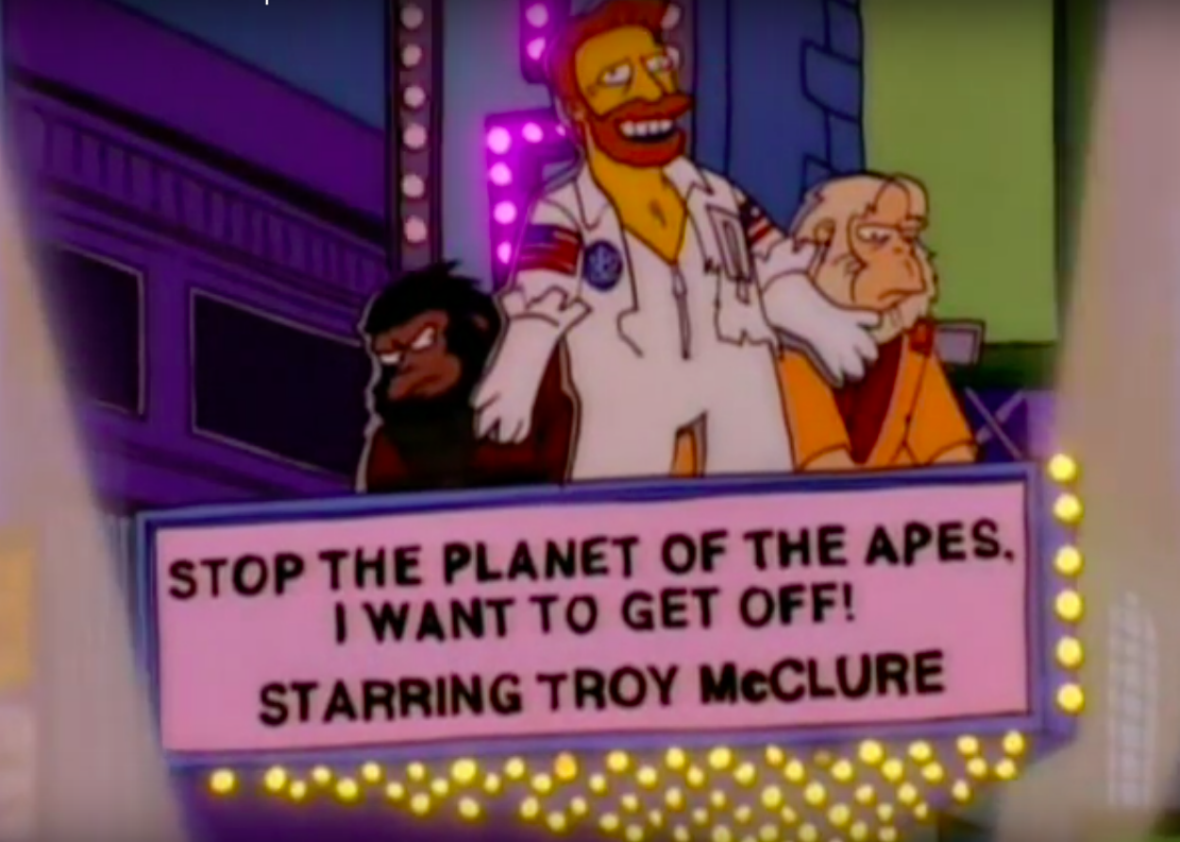
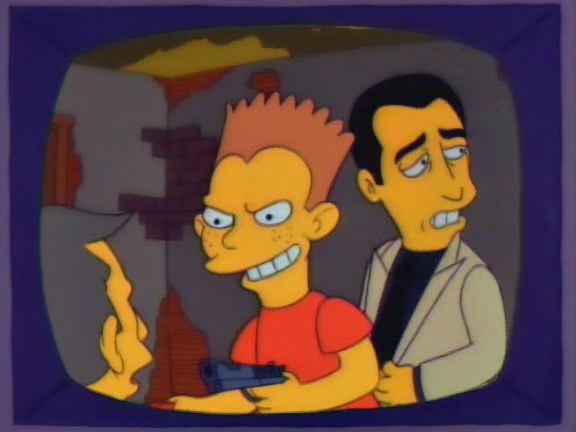
Now I say making changes and smoothing them out takes time, since this is likely the approach the original author took in writing the source material. Character traits/dualities/actions/dynamics inform everything they do, so it's best to dedicate time to "testing" all of your changes, in hopes of keeping any "seams" between the old and new material from distractingly poking through.

Poochie: A change not at all smoothed out.

Adaptations are an excellent way for writers to dissect works down to the last detail, to recognize what makes them work, and to recognize that (as stated by Pixar's "22 Rules of Storytelling") what they like about them is a part of themselves. This will not only sharpen your analytical skills, but also help you recognize the universally-appealing emotional cores you want to take into your own stories and scripts.

I didn't think this screencap fit under any of the
headings, so I thought I'd just stick it here.

Copyright © Chynna Moore

February 6, 2020

DEATH ON THE NILE (1978)


Gather 'round, kids, it's story time!

This essay contains spoilers. Be forewarned.

It's difficult to recall now how or when my taking in of Agatha Christie started. 

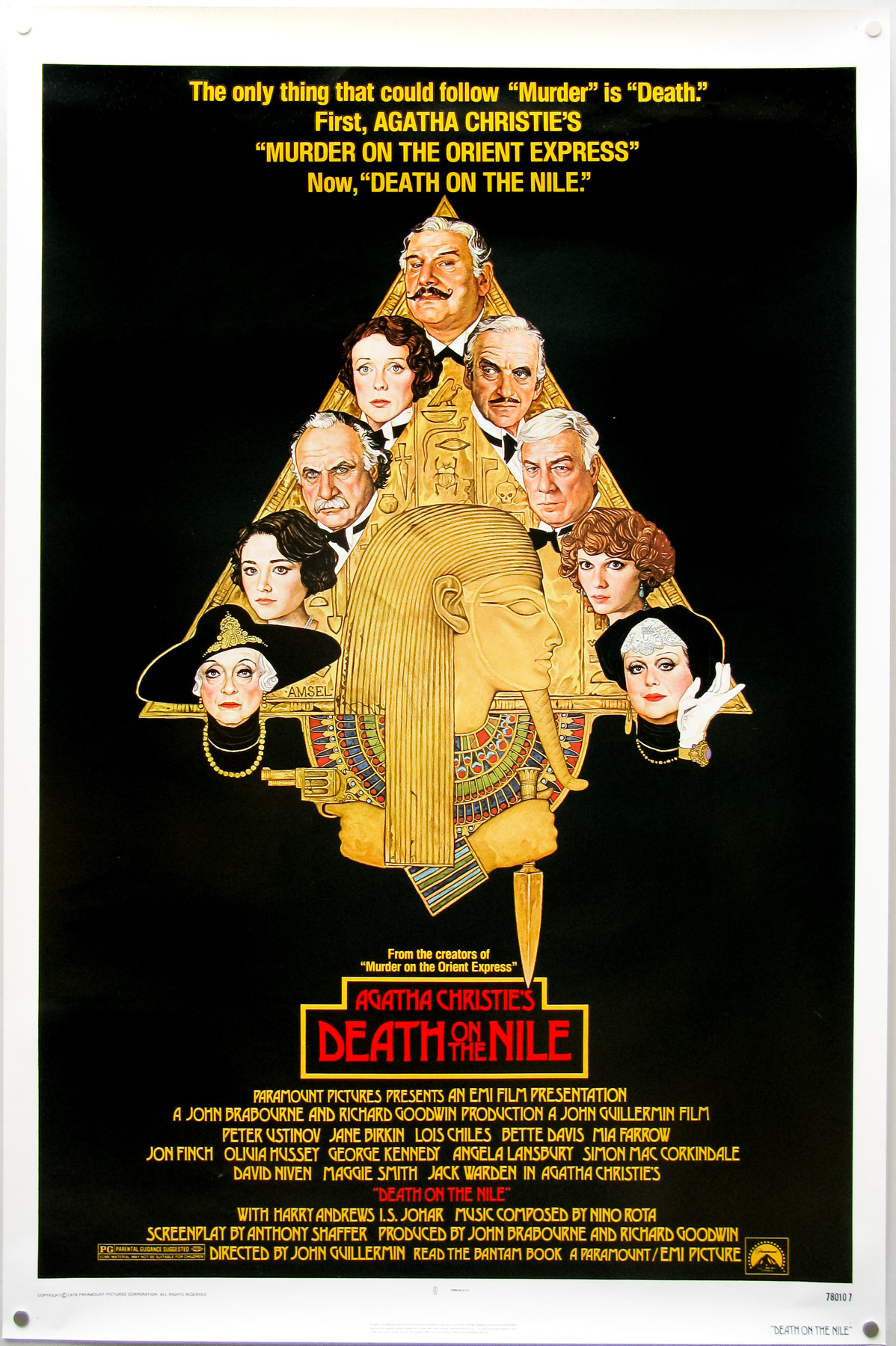
Was it twelve-year-old me buying the movie tie-in novel of Murder on the Orient Express (with Richard Amsel's cover art) with The Cat Who Lived High at Nanaimo's Good Old Book Exchange in the Terminal Park strip mall? (That bookstore is now a Bulk Barn, incidentally.)

Or was it me, having been over my head in writing my own mystery books (and "books" is a generous term for stapled copy paper with no research or realism whatsoever), trying to take in whatever mystery movies I could find on TCM or PBS to supplement my constant viewings of Murder, She Wrote?
...

Now that I've thought further, it was probably all of the above. 

Peter Ustinov as Hercule Poirot

Lois Chiles as Linnet Ridgeway

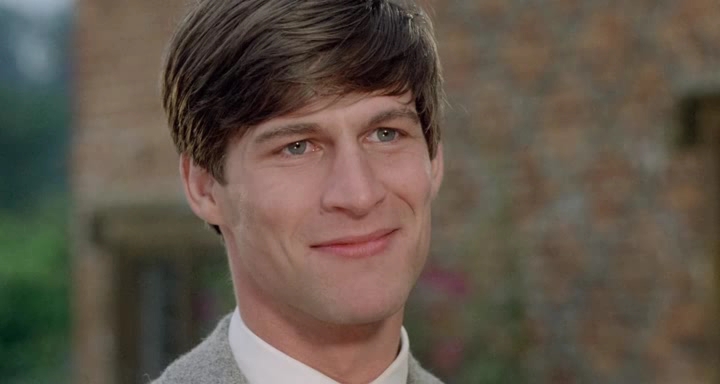
Simon ("Manimal!") MacCorkindale as Simon Doyle

Mia Farrow as Jacqueline de Bellefort

David Niven as Colonel Race

Bette Davis as Marie Van Schuyler

Maggie Smith as Miss Bowers

Jane Birkin as Louise Bourget

Jon Finch as James Ferguson

Angela Lansbury as Salome Otterbourne

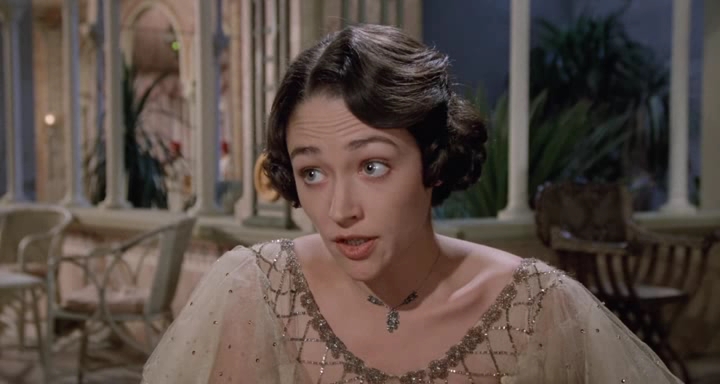
Olivia Hussey as Rosalie Otterbourne

Jack Warden as Dr. Bessner,
fulfilling the genre's "wacky doctor who 
may or may not believe in eugenics" quota.

George Kennedy as Andrew Pennington

In 2007, having caught Murder on the Orient Express on TCM earlier that year, I (like I often do nowadays) "cased out" Death on the Nile through reviews, images, and IMDB. (And yes, I often contributed to the latter's now-infamous message boards. The less we talk about that "Verily I say onto thee" guy, the better.)

At the time, I was lucky to find Anchor Bay's DVD release to rent, as much as its cover art (like many of their 2000s releases) left something to be desired, my guess being they didn't want to shell out for Richard Amsel's excellent U.S. poster art.


If you look at it close up, you'll too be wondering why
Hussey and Lansbury have brown eyes instead of blue.

Back then, it was difficult for me to properly articulate why DOTN didn't 100% gel the same way MOTOE (dramatically) and Evil Under the Sun (comedically) did. Perhaps at that time, the sadder, downbeat themes of the film's ending put a damper on the comedy and tone surrounding it. Was my hypothesis going to be proven right on my second viewing ten-plus years later?


Clearly, producers John Brabourne and Richard B. Goodwin strove to replicate the formula that made MOTOE the most successful British film at the time: An all-star cast, lavish locations, and Anthony Shaffer as a screenwriter.

Not only that, but also a former James Bond and 
one of the stars of Gaslight, but that's another story.

Since we start with her from virtually the first scene, (well, confronted is too harsh a word, but) we're face-to-face with Lois Chiles, who certainly looks the part of Linnet, but whose line readings make her seem constantly annoyed than anything else. Unsurprisingly, she fares best as a "straight man" to Farrow, Davis, and Warden, where scenes often require her to be understandably angry.


The first legitimate question we hear in this movie.

Had Shaffer's script stuck closer to the book, Linnet might have expressed 
more concern for Louise's well-being regarding the latter's choice of 
prospective husband, but tellingly, Linnet here coldly imposes her will instead.

Striking all the right tones, meanwhile, is Farrow's Jacqueline, DOTN's resident Prince Hamlet, toeing the line to insanity while driven by all-consuming revenge.

While her behavior would definitely raise more red flags today, 
Farrow's Jacqueline has enough moments of vulnerability 
to keep the audience from hating her completely.

Ustinov excellently balances his character as Poirot
navigates some murky territory in his first outing.

Long and often dismissed as not being a "real" Poirot and the character's equivalent of Margaret Rutherford, Ustinov is a real delight here. Unlike in 1982's Evil Under the Sun, his Poirot has to deal with a darker moral situation (regarding Jackie), while still maintaining the character's trademark charm, wit, and brilliance at all other times. Consequently, this results in a Poirot played less for laughs, but rather a much-needed calm in the craziness around him.


When it comes to the more-than-a-little-questionable 
racial humor written for the ship's manager (I.S. Johar), 
Miss Bowers is all of us.

Some might see Smith and Lansbury as getting short shrift
in this film, as the ensuing decades would see a massive
increase in their popularity via television.

As much as I prefer her turn in Evil Under the Sun due to her increased screentime, Smith is wonderful here as the "photo in the dictionary, next to the word "uptight"" Miss Bowers. Her scenes with Davis can only be best described as "Minerva McGonagall's early years with Margo Channing".

And they say Eve Harrington is the memetic queer female icon.

Basically a fan of her since the womb, I get such a trip from Angela Lansbury in this. This second viewing basically convinced me that either Salome Otterbourne is drunk 100% of the time, or she really sounds like that even when stone-cold sober.

Their dynamic in a nutshell.

Lansbury's eyes seem to be at their biggest ever in this film.


And speaking of second viewings, while he was a favorite of mine the first time, I absolutely love David Niven's Colonel Race now. Suave, snarky, and a total badass, he and Ustinov's chemistry pretty much exceeds everything else in the movie. (No surprise, given how Ustinov once posed as Niven's "batman" (personal attendant) in the British Army's Film and Photographic Unit during WWII). Niven's facial expressions here are worth the price of admission alone.


Same, Colonel. Same.

When Poirot is faced with a cobra in his bathroom, his Morse code message to Race is enough for Race to immediately grab his cane sword and swiftly dispose of the snake.


Roger Moore's Bond could never.

A favorite shot right here.

Despite being a composite character from the novel, 
Jim Ferguson gets little character development overall.

Despite what flaws there are in direction and editing (more on that below), DOTN's cast do excellent work and exhibit great chemistry overall.

SO, WHAT'S THE PROBLEM THEN?

While mysteries on film thrive on tension, DOTN's Achilles heel comes in the form of its editing and direction. Never have I watched a mystery so workprint-like in its pacing. 

The temple sequence. That is all.

Granted, the sequences at real Egyptian locations try to make up for the bulk of the film's two-hour-and-twenty-minute (!) runtime being on the Karnak (and its cinematic limitations therein), but more than once I wished for someone like Stuart Baird (Superman) to take a crack at it, rather than Malcolm Cooke, the future editor for 1984's Supergirl. The complete lack of musical score in large chunks of the film only emphasizes this further. (Though I will give credit to Nino Rota for not going the stereotypical-"Egyptian" route with his score.)

Another goal not met by this adaptation is the greater thematic statement (the "something to say", as my posts call it). The book had Linnet and Jackie be somewhat nicer, warmer, more vulnerable people, with Linnet being more innocently insensitive due to her lifetime of wealth. Cutting this out without supporting the new changes and how they tie into that "something to say" can leave viewers quite cold.

What's the tragedy of Linnet's murder? Sure, Simon and Jackie seem to be in love, but they still (and with little self-reflection) plotted to murder Linnet from virtually the beginning. And we can't feel all that bad for Linnet, since she (to her knowledge) completely stole Simon with no remorse, not to mention treated most of the other characters with little more sensitivity.

Even in other mysteries where both the murderer(s) and the victim(s) are assholes, there's usually a little more left for the audience to ponder, long after the mystery has been solved. (Indeed, Evil Under the Sun would handle this aspect much better, with its murder's inherent tragedy largely intact from the book.)

THE STUFF OF (LITERAL) NIGHTMARES

So folks, there is a reason why I avoided this film for over a decade until now. Because embarrassing as it is to admit now, my wimpy teenage self didn't take well to three of the film's graphic (for the time) deaths.

Yes, due to being used to 80s T.V. standards on blood and gore, I was not prepared in 2007 for the rather sudden deaths of Louise, Simon, and finally Jackie.

(My prior "casing out" alerted me to the suddenness of Salome Otterbourne's death, so that didn't have the same effect on me as the others. Also, the DVD print had the blood somewhat too bright to look real, if I recall correctly.)

The effect then was, a "playing over and over in my head", as if I had seen them happen in front of me in real time due to their suddenness (along with the shock of the other characters, but none of the psychological effects). The night I saw it, I unfortunately was unable to sleep that night and had to sleep with my mother in her bed instead.

Cut to the next night or so, when my family had friends over at our house. The rental DVD case was still on our kitchen island, and my mother, without so much as a look at me, proceeded to tell them all about my after-Nile experience.

Pictured: This writer's teenage reaction.

(I can't recall for sure whether she mentioned the "sleeping with her for the night" part, but I doubt it would have helped.)

Much like the chainsaw scene in Scarface (1983), a death is often more effective the less one sees of it. Going back to the deaths now, as a viewer much-better acquainted with the evolution of onscreen bloodiness, I realized the reason these struck me so hard then was, ironically, the editing. As in, Malcolm Cooke finally decided to give us a jolt three times, after all the slowness that came before it.

The problem was, they worked so well that they ended up "not working at all".

Consider this: given how long the viewer spends in this film following its "Point A to Point B" direction and pacing, the ensuing tonal whiplash of the deaths ends up working against everything leading up to them. At least enough to only emphasize the coldness of much of the denouement. (For an example of this method done right, see 1977's The Late Show.)

So basically, my initial hypothesis was proven correct, albeit in differing proportions than I previously thought.

AND THE REST...

Sam Wanamaker as Pennington's law partner Rockford
Wanamaker's daughter Zoe would later play Ariadne Oliver
on ITV's Poirot.

Saeed Jaffrey appears uncredited as the Karnak's towel servant.

Harry Andrews (Superman, Entertaining Mr. Sloane)
as Barnstable, Linnet's head butler. 

A young Celia Imrie appears as the brunette maid in the middle.

OTHER OBSERVATIONS

Err, Poirot, seeing as you're on a boat in a 70s film,
that's probably not the best choice of words.

"But that's none of my business."

Forgive me for wincing a little on that one.

Par for the course for these mysteries, 
Jim and Rosalie are engaged by the film's end 
despite little screentime together.

Showing the murder scenario with most of the main
characters drags the film down a bit. EUTS remedied this 
by cutting their (fewer) equivalent sequences down further.


This flashback is pure gold, however.

This shot, of course, takes on a whole new meaning on rewatch.

Presented without comment.

TIDBITS AND SUCH


As you probably expect, Murder, She Wrote parodied, referenced, and alluded to Lansbury's filmography constantly, and DOTN was no exception. Season one's cruise ship-set "My Johnny Lies Over the Ocean" (pictured above) has Jessica Fletcher pretend to be drunk in order to flush out a murderer. Olivia Hussey guest stars as a constantly concerned daughter once more in "Sing a Song of Murder", Lois Chiles guest stars in "The Return of Preston Giles" (no need to worry, her acting had much improved by then), and the later Egypt-set "Death 'N Denial" has a character named Sally Otterburn.

Ustinov was married to Lansbury's elder half-sister
Isolde Denham from 1940 to 1950.

In researching for this post, I discovered, to my surprise, that Angela Lansbury had never seen this film until 2018, when she attended its 40th anniversary screening at the Laemmle Theatre in Beverly Hills. As of this review, only Lansbury, Chiles, Farrow, Smith, Birkin, and Hussey are still alive.


It's strange to revisit a film like Death on the Nile after so many years and come away from it with an opinion that's changed, but not by much. Perhaps it struck me in my gut with what didn't work that first time, only for me to better articulate it now. Perhaps with the source material, it would have been difficult for anyone to put it to film without leaving the viewer with a slightly bitter taste.

Poirot and Race's faces sum up this viewer's feelings well.


Copyright © Chynna Moore