Showing posts with label John Wayne. Show all posts

March 22, 2020

BLOOD ALLEY (1955)


Here on this blog, I try to some extent not to go for the "classics" or the films everyone else remembers. In the case of John Wayne, while I do find him fascinating to read about, in terms of how his films and career influenced the culture at large, I'm not necessarily going to cover The Searchers, Stagecoach, or even (tempting as it is) The Conqueror, but rather one of his lesser-known 50s Cinemascope efforts. And since I do know something about Chinese history of that time, I thought I'd take a crack at its subject matter.

John Wayne as Captain Tom Wilder

Lauren Bacall as Cathy Grainger

Mike Mazurki as Big Han

Paul Fix as Mr. Tso

Joy Kim as Susu

Henry Nakamura as "Tack"

Berry Kroeger as Old Feng

Based on the novel (and adapted to film) by future Whipping Boy author Sid Fleischman, Blood Alley stars Wayne as American Merchant Captain Tom Wilder, who, after his ship is seized by Chinese Communists, is "shanghaied" (IMDB's words, not mine) into transporting the villagers of Chiku San to Hong Kong (via riverboat and without even a real map) through "Blood Alley" (the Strait of Formosa). All the while, he finds himself attracted to tough physician's daughter Cathy, who herself fights her attraction to the rugged captain.

Wilder not-so-low-key insults a Red Army prison guard
while talking to him about "Baby".

Just from reading the synopsis, you can probably guess Blood Alley is one of several anti-Communist propaganda-themed films Wayne headlined of the era (1952's Big Jim McLain had this ill-advised poster and him in Hawaii tangling with future Alfred Alan Napier), and in some respects, it is exactly what one would expect, while in others, there's some effort (to this reviewer's surprise) to try and show a fairer portrayal of the Chinese people for the time.

San Francisco Bay's China Camp stands in for the fictional Chiku San village.

Filling in for a fired Robert Mitchum, Wayne very much gives a "John Wayne performance", with a few exceptions.


Wilder learns the fate of Cathy's father. Awwww...

Wayne's chemistry with Bacall isn't non-existent, but the structure of the story, coupled with Wayne's Captain Wilder having an imaginary girlfriend named "Baby", brings an odd element to your garden-variety "slap-slap-kiss" sexual tension (albeit not in such quick procession). Whether as a result or not, Wayne and Bacall don't quite gel enough to elevate the material.


See what I mean though?

Wayne and Bacall later reunited for 1976's The Shootist.

Fans of Bacall might be disappointed in her reduced role in the second half of the film, preferring her disposition in the first half, though that's also largely due to the story's focus on the ship's journey and the villagers. I certainly wished she kept more of it up for the rest of the film.


They replaced me in Cactus Flower with who?!

For every aspect I like about Blood Alley (or can at least appreciate), there's another that's either rushed, inaccurate, badly dated, or singed by the "Yellowface" element.


As ridden with "Engrish" as her dialogue is, Kim is great as Susu. One of the few villagers who stands up to Wilder (and him hilariously submitting to her in turn), she pretty much steals the show whenever she's on, getting a chance to sing to the ship passengers later in the film.

Wayne's transformation into Oskar Werner on Columbo
would sadly be short-lived.


Less embarrassingly written is Nakamura's "Tack", an amusingly "Americanized" villager who's an expert marine engineer with an affinity for cigars. Nakamura is so charming in the role, that it just makes the Caucasian actors playing the other villagers stand out even more jarringly.

While I appreciate that Blood Alley doesn't employ "Yellowface" makeup
(for the most part), Fix is so clearly raising his eyebrows to "make slants"
that you wonder how he hasn't gotten a headache yet.

Believe it or not, Ekberg won the Golden Globe for Most Promising Newcomer that year.

Blood Alley moves along quite well, thanks to Wellman's solid direction and William H. Clothier's great cinematography. Given the image quality, you would be forgiven for thinking this was from a soft DVD transfer, but it's actually due to the technological challenges of restoring films made with Cinemascope lenses (seen in this film's panning shots), 50s Eastmancolor film stock, and the short-lived WarnerColor process.

Some of Blood Alley's scenes employ so much soft-focus that
you'd swear you were watching an Emmanuelle film.

The amount of extras in this film, coupled with the use of real ships, was undoubtedly 
a massive undertaking that should be credited for its execution.

Blood Alley has an excellent, dialogue-free sequence where members
of the Feng family try and take control of the ship, scored only by thunderclaps
(and at one point, the sound of a goat).

The sequence also provides a nice moment of chemistry between Wayne and Bacall.

THE STUFF OF SYNTAX (AND BEYOND)

Because the village of Chiku San is fictional (though the real-life Blood Alley is actually in Shanghai), Blood Alley may get around some scrutiny regarding accuracy, and I shouldn't expect total accuracy in a 50s propaganda movie, but needless to say, this Chinese-Canadian had a field day making fun of the "little things" in this film.

While I commend the white actors for learning a sizable amount of Chinese (all unsubtitled), 
their thick accents clash with the Chinese-American actors speaking Mandarin.
(And Betty, I love you, but girl, you sound Cantonese.)

For those who don't know, because China is such a large, diverse country, its dialects are regarded as mutually unintelligible. You could make the argument that the Communist soldiers might understand more than one dialect, but hearing the different accents in this film is like watching a film set in historical London (back when French was the official language), and its actors from Ireland, Wales, Scotland, and Northern England not even attempting to do a London accent (but even worse).

W.T. Chang as Mr. Han and George Chan as Mr. Sing
No real explanation is given as to why Chiku San's people want to flee
to Hong Kong, other than disliking the government in Beijing. In real life,
the rural villagers would more likely be focused on rebuilding after
the events of both WWII and the Chinese Civil War.

Neighborhood Gossip

Old Feng, patriarch of a large, "Peiping-friendly" family, is no one's idea of a "dyed-in-the-silk" Communist. Just from material obsessions alone, he's closer to the Communists' idea of what a Nationalist looks like.

"Yellowface" aside, Kroeger is (darkly) hilarious as Feng, hitting 
his own relatives for not adequately caring for his engine-less car.

Interestingly, this "token bad Commie" is a fan of the 
American national pastime of using a Viewmaster.

Also, little explanation is offered as to why the Fengs are taken along on the ship (other than for plot inconvenience), so one could infer that any major conflict could have been avoided had the Fengs just run off to Beijing.

LOGO GEMS


Blood Alley uses the 1953 - 1956 three-dimensional variant of the 1948 - 1967 Warner Bros. Shield, usually reserved for 3-D and some 2-D films.

OTHER OBSERVATIONS

An uncredited James Hong has a small speaking role as a Communist soldier.

Wayne bayoneting a lecherous soldier trying to assault Bacall is only 
slightly less funny than Wayne firing a too-small MAC-10 in McQ (1974).


Uh, yeah, no. I have zero issue with Bacall's scenes here.


Before Paul Sorvino in Goodfellas, there was "Tack" and his "magic cigar",
moving from his hand to his mouth between shots.

Chekhov's Throwing Knives

"Help! I'm being seajacked by a six-foot-tall monk
who keeps calling everyone "Pilgrim"!"

The other important Western Union telegram regarding
a disappearance in 1955.

Bacall reacts appropriately to the imaginary girlfriend who stole her real-life nickname.

After seeing all the real ships in the film, the finale's obvious models
will give the audience some real Theodore Tugboat flashbacks.

TIDBITS AND SUCH


Wayne promoted Blood Alley in the I Love Lucy episode "Lucy and John Wayne".


While Blood Alley has some gorgeously-colored posters, some of them also seemingly depict Bacall as either inexplicably black-haired or as Princess Leia. 

Blood Alley is an odd, "crossroads" depiction of how Hollywood saw the Asian community, nestled within your run-of-the-mill historical adventure movie, with a large dash of propaganda, and is best viewed as a historical artifact and a marker of the Cinemascope era.


Copyright © Chynna Moore

February 4, 2020

SCREENWRITING: A FEW MORE TIDBITS


Since my last screenwriting post, I've managed to put into words some more points of consideration in creating and fine-tuning a script. Since a favorite part of mine in this process is the visual aspect, i.e. set design, color, symbolism, character looks, etc., these points relate more to how you can "color" your story through the script process onward.

"STEAL LIKE AN ARTIST "


There is nothing wrong with taking a prior idea or concept and putting your own new spin on it.

So, I have a confession to make: I don't watch movies all the time.

I never go to the theater unless I'm with a friend, and I don't usually seek out a movie unless someone I know recommends it, I come across it reading about something else (rare logos, "cast reunions", etc.), or, in recent years, if I've watched a video review on it and it grabs my further interest.

So how do I bridge that little gap between new visuals and fewer movies?

Well folks, Google Images is your friend.

With just images, even if you know a film's general plot, if you haven't seen the film, a screencap can only tell you so much without its original context. This will make your brain "fill in the gaps", often with a new, different context entirely. So if you love a visual and can "plug it into" your script with a new "connection" to strengthen your story, all the more better.

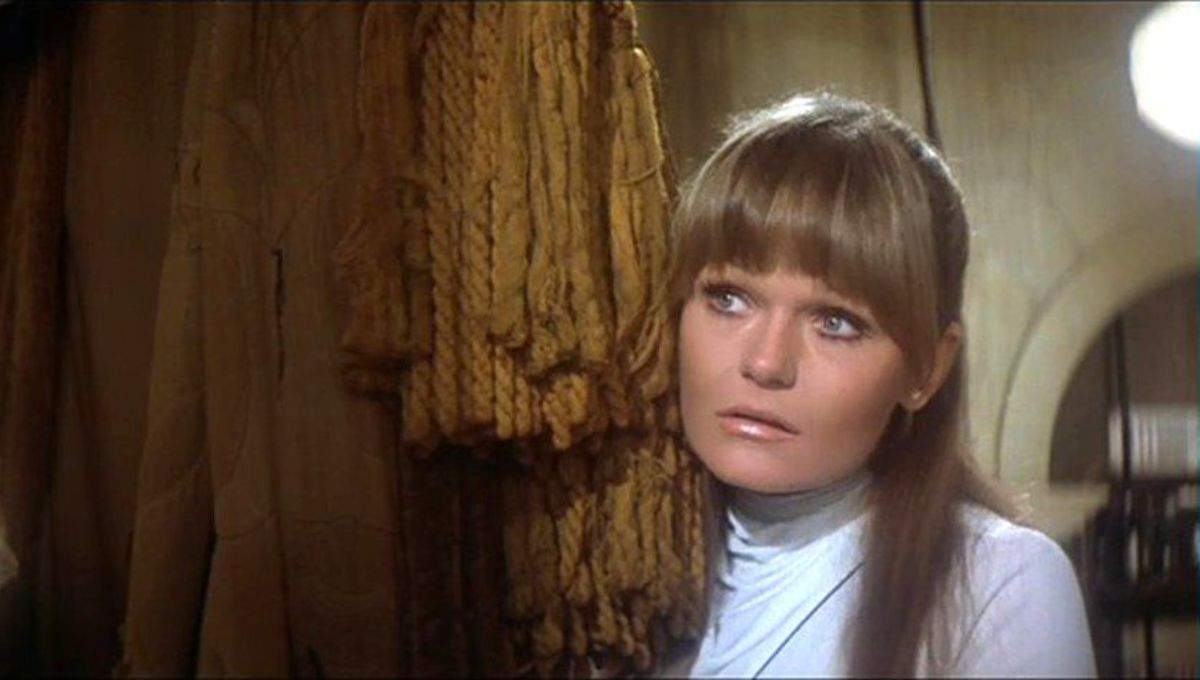
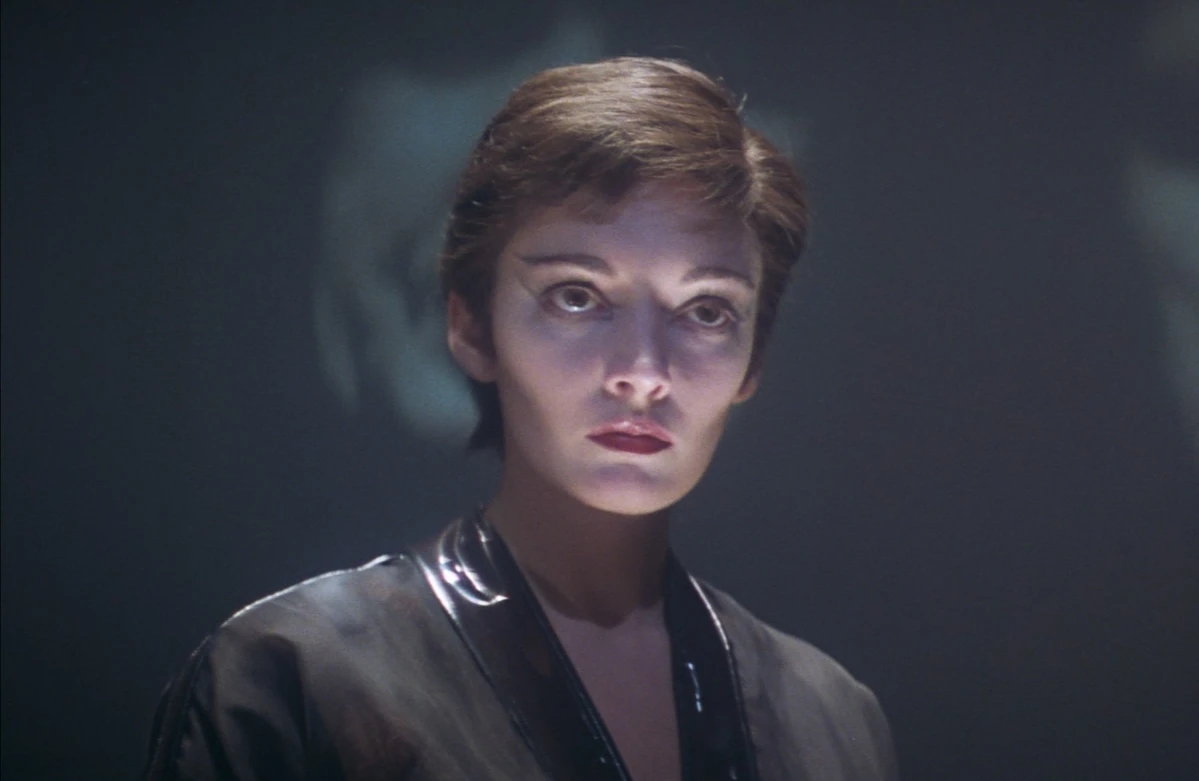
In Thunderball, Fiona Volpe simply stares at Bond as they dance.
I re-contextualized this in my script as "the girlfriend and boyfriend 
stand up from their table, her staring at him the entire time".

Alternatively, if you have seen a film and want to "borrow" a visual motif or other choice, subversion is also a good method. If black is traditionally seen (in the West) as a "bad" color, while white is seen as "pure" and "good", why not switch that up entirely for your hero and villain?


And that above is really just color theory subversion. Going deeper, if you want to enhance your script's "fish out of water" theme, for example, your protagonist will solidify that by dressing like he stepped out of a Rat Pack movie, while living in a town where most of the men dress in blue jeans, T-shirts, and baseball caps.

Knowing your inspirations this way also speaks to the use of (as stated elsewhere) detail, subtext, themes, and connections. What were they going for? And how will you flip that concept?

GET ON SOME MUSIC

"Put in Cream! Put in Cream!", Martin Scorsese told Mitch Pileggi, when writing Goodfellas' famous scene where Jimmy Conway (Robert De Niro) plans to kill Morrie Kessler.

I don't usually use gifs here, but admit it, you heard
"Sunshine of Your Love" playing just now, didn't you?

All movies, scenes, dialogue, and sequences have a rhythm, but music has the power to transform a dull series of events into an inspired, thematically-enhancing sequence. Even if you choose not to insert songs into your script, music can be an immense help in determining your script's tone, direction, and emotional core. (Nostalgia-wise, this also relates to the heading below.)

Goodfellas also uses music to show the progression of time over the course of its story. From the earlier Crystals and Shangri-Las to the later Cream and Donovan, Scorsese pinpoints the film's eventual emotional dissonance when Donovan's lush, sweeping "Atlantis" plays over the brutal beating of Billy Batts. 

USE YOUR ROOTS


It's another trademark of Scorsese, and it's easy to see why, as he attaches the emotions to his settings as well as details, a move demonstrably invaluable to the medium of film. I can still remember my childhood backyard, with its (steep for a child) downward slope, the smell of cut grass, and the sound of my dad's lawnmower reverberating through the neighborhood. Or your childhood experience of seeing a movie you've grown to love even more as you get older. Positive associations, like your fond past memories and associated nostalgia, can really fuel your passion for your story and your script.

SAVE ALL OF YOUR IDEAS


No matter how seemingly-insignificant a quote, joke, character look, or image might seem, you should still lock it away for future use. Or better yet, you could later adapt them differently from what you originally intended, "stealing from yourself" in a way. 

TRY FOR MORE OBSCURE INSPIRATIONS

No, not for hipster points, but if you're aiming for originality, it's imperative to not only be always taking in new content, concepts, media, etc. but also to do so from works that are less remembered, i.e. films that have fallen into obscurity, but have since gained a new life on Blu-ray and DVD-R releases.

McQ, while seen as a lesser entry in its genre and era, still features several twists 
in its story, and having John Wayne as its star brings up many cultural points 
of discussion, i.e. the thematic similarities between crime films and westerns.

That's not to say more popular fare can't yield any new ideas, but a few new wells to draw from never hurts, especially in the internet age.

After all, you don't want to solely reference works that are
so entrenched in pop culture, but are still "too old" for
the kids to know. (Sorry, Season One Jughead.)

To make it easier, try and go for works that star actors (or other talent) you already know and love. After all, you just might come up with a Canadianized First Monday in October, where the protagonists are both female and the older, more experienced one is also the Chief Justice. 

Yes, the latter has happened here.
(That's former Chief Justice Beverley McLachlin in the middle, by the way.)

This is especially potent if a "bad" or "mediocre" film has a sliver of pathos, creativity, subverted expectations, or a sentiment "ahead of its time" that's surrounded by otherwise dated, botched, or cringey material. You never know when your viewing of Bloodline might yield you some new creative sparks (even if only to pass the runtime).

Seriously, who wouldn't want to see a movie about a
lovable inspector who converses with a talking computer?

At least it would have better editing, that's for sure.

CONNECT EVERYTHING

So you've completed your first draft, the "skeleton" of your script. You might even have an idea of what "shading" you want to have. (Provided, of course, you have the time.) 

Now, this is the time to think over and reflect on the choices you've made in your script. How will you enhance them on an emotional level? What visual symbols will be around certain characters? What other works can you reference that are thematically similar to your own story? What dynamics in these other works are similar to the ones you yourself created?

Rick Dalton and Easy Breezy. That is all.

An important thing to remember is that you should ideally go all the way down to the last detail. Similar to my last screenwriting post's "Subtext" section, this attention will show your effort and love for your work in a deeply satisfying way. 

For example, if your "lovable a-hole" protagonist is watching something on T.V., make the connection and have him be watching a film or show featuring a similar character. This move also works double-duty in making thematic connections, while keeping obvious stated references out of your dialogue. 

(I will say, however, that this particular example runs the risk of "referencing a better movie during your own", so you should probably go with a more obscure work, as the previous heading discussed.)

Perfect!

This will take some practice, especially in terms of keeping subtlety, and every script will be different. How prominent will a symbol be shown? How prominent is it to the characters? Is your visual metaphor too obvious, and if so, how much should you de-emphasize it? Will you use it to subvert expectations instead?

Yah, no. This one's as obvious as a brick wall.

Will your song choices be on-the-nose? Or more abstract? Will it provide dissonance in your scene, or foreshadow things to come? 

This one, even more so.

In short, everything in your script, story, and concept should work to service your characters, atmosphere, setting, emotion, and payoff. If your inspiration(s) has brought you enough confidence and spark to finish your script, then chances are, it will be the gift that keeps on giving in bringing you new ideas to strengthen and visualize your story. 

So forgive me if the points I've made have overlapped a lot, but with so many ways to go in the visual language of film, hopefully, they have gotten you to think about how your script is (and should be) more than just a standalone series of events. 


Copyright © Chynna Moore