Showing posts with label Rod Steiger. Show all posts

December 16, 2020

PIXAR'S 22 RULES OF STORYTELLING: ILLUSTRATED

Pixar’s 22 Rules of Storytelling, as originally brought forth by story artist Emma Coats, serves as a litany of "tests" for really any story from a writer's perspective. Here are the 22 rules (in bold) and my examples and takes on applying them.

#1: You admire a character for trying more than for their successes.

Any teacher (or other professional) will tell you how important effort is to the final result. Comedies in general make fodder out of failure, but while humor can certainly be mined from a character not trying or failing epically, a character is far more endearing if they act with effort, earnestness, and the best of intentions, regardless of failure or success.

Bless him for trying (no pun intended), but Father Maurice's attempt
(and the next ones) to ditch Giuditta in Il Piccolo Diavolo ultimately fails.

#2: You gotta keep in mind what’s interesting to you as an audience, not what’s fun to do as a writer. They can be very different.

After all, you may be fascinated by the idea of a sprawling epic with long shots and landscapes, but this may not get such a warm reception from you, the viewer. Or you want to tackle a topic you have some insight in, but you find your starting point preachy to listen to. Keep the overall writer/audience dichotomy in mind.

#3: Trying for theme is important, but you won’t see what the story is actually about til you’re at the end of it. Now rewrite.

Fortunately, themes are in everything, regardless of the work's actual quality. By the time you've finished your first draft (or even before), you'll already have a fair idea of what parts of your script to revise.

#4: Once upon a time there was ___. Every day, ___. One day ___. Because of that, ___. Because of that, ___. Until finally ___.


"Once upon a time, there was Charley Varrick. Every day, he and his gang would rob banks to survive in a post-crop duster world. One day, they robbed a bank that was a money laundering front for the mob. Because of that, Charley had to go on the run from both the mob and the cops. Because of that, he hatched a slow-burn plan to leave his old life, make a clean break, and dispatch his pursuers. Until finally, his plan's final phase comes together, and he successfully gets away."

#5: Simplify. Focus. Combine characters. Hop over detours. You’ll feel like you’re losing valuable stuff but it sets you free.

Having read In the Heat of the Night in ninth grade, I was disappointed at the time to see the 1967 film skip over a lot of things I appreciated about the book, but in hindsight it was best for the film to focus on the more contrasting partnership of Virgil Tibbs and Bill Gillespie instead of the developing friendship between Tibbs and Sam Wood. And of course, Stirling Silliphant's screenplay rightfully updates Tibbs from a smart but only subtly snarky character to his equally accomplished but (understandably) firmer and more straightforward film version.

#6: What is your character good at, comfortable with? Throw the polar opposite at them. Challenge them. How do they deal?

Exactly as it says.

And in this case, not well.

#7: Come up with your ending before figuring out your middle. Seriously. Endings are hard, get yours working up front.

Relating to my previous post on plot twists, foreshadowing and "breadcrumbs" will generally come to you after deciding your twist and end result. Therefore, aim for the twist/ending first, and try to build the rest around it.

#8: Finish your story, let go even if it’s not perfect. In an ideal world you have both, but move on. Do better next time.

Whether it's giving yourself a break from your hard work, seeing a project through, or letting your finished work be after any possible chance of revision.

#9: When you’re stuck, make a list of what WOULDN’T happen next. Lots of times the material to get you unstuck will show up.

"I told that idiot to slice my sandwich!"

It's all about contrast and playing on viewer expectations (within logical, in-universe reason, of course).

#10: Pull apart the stories you like. What you like in them is a part of you; you’ve got to recognize it before you can use it.

What do you like about your favorite movies? Is it a performance? A twist? The cinematography? The subverted archetypes? This is one of the more fun rules from this list.

In addition to warmth and charm, I am also a sucker for epic death glares.

#11: Putting it on paper lets you start fixing it. If it stays in your head, a perfect idea, you’ll never share it with anyone.

First rule of anything: get it out of your head. If it's good, putting it out will help it develop. If it's bad, it won't be taking up valuable space in your mind anymore (and won't come back to drag down any of your good ideas).

#12: Discount the first thing that comes to mind. And the second, third, fourth, fifth – get the obvious out of the way. Surprise yourself.
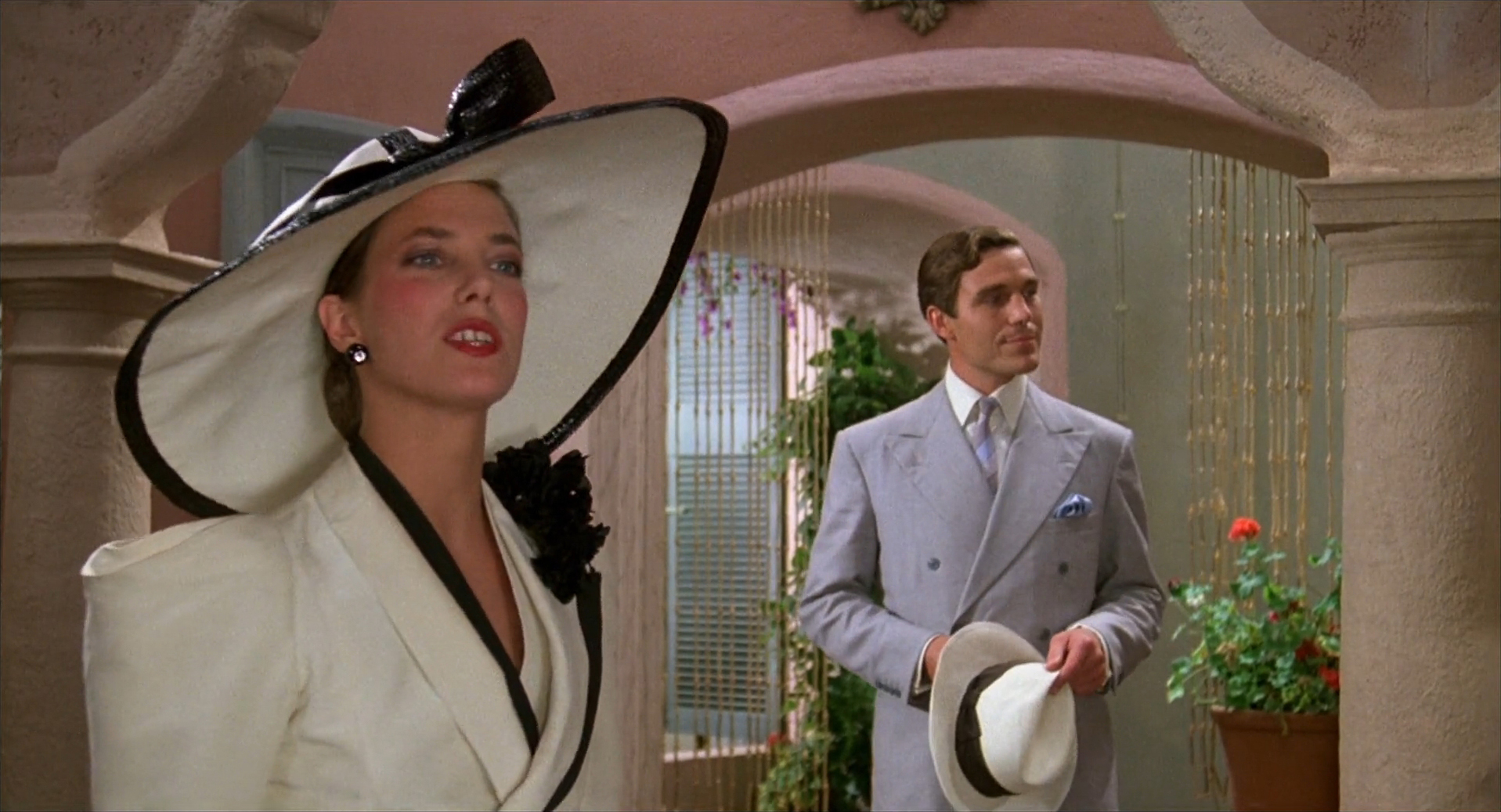
Again, subverted expectations (see Rule #9). As a viewer, you are definitely experienced enough to know what the above would be in your favorite genre.

#13: Give your characters opinions. Passive/malleable might seem likable to you as you write, but it’s poison to the audience.

Granted, you could write around this, in that your passive character does have opinions, but simply chooses not to share them. However, to not give a character any opinions at all could seriously doom them to being a blank slate.

Charley Varrick's mouthy, greedy, and trigger-happy Harman (Andrew Robinson)
is a serious liability to the title character's chances of escape.

#14: Why must you tell THIS story? What’s the belief burning within you that your story feeds off of? That’s the heart of it.

In short, what is your story's "something to say"?

The world (or at least NYC in 1974) is full of snarky, cynical people,
but at least this guy still cares a little.

#15: If you were your character, in this situation, how would you feel? Honesty lends credibility to unbelievable situations.

This is certainly an aspect where the emotional side of things comes into play. What emotion is present in a given situation? How would you handle it vs. how a given character would handle it? 

When his wife Nadine bleeds to death from a gunshot wound, Charley Varrick
is crushed emotionally, but mourns her death only somewhat briefly before
getting down to business in escaping with cohort Harman.

#16: What are the stakes? Give us reason to root for the character. What happens if they don’t succeed? Stack the odds against.

Too many films nowadays make the mistake of building up the objective, physical, world-at-risk stakes at the risk of sacrificing character, emotions, and the human elements. Don't make the journey easy, but also don't forget to give your audience a reason to care.


Superman has both the catastrophe element and the human element
in showing the countless people impacted by Lex Luthor's missile strike.

#17: No work is ever wasted. If it’s not working, let go and move on - it’ll come back around to be useful later.

Remember to save all of your ideas, after all.

#18: You have to know yourself: the difference between doing your best & fussing. Story is testing, not refining.

Because sometimes, being too finicky will bite you in the ass.

If you're prone to overanalyzing and perfection-obsessed anxiety like me, it's imperative to know the difference between revising and fueling your anxiety. You can worry too much about what your audience will think, especially if you have zero evidence to back it up.

#19: Coincidences to get characters into trouble are great; coincidences to get them out of it are cheating.


Two bitter rivals at the same holiday resort?
Let the bitchy exchanges commence!

Granted, it can come off as contrived at times, but the former category plays into a viewer's sense of anxiety, fear, and dread, as one's mind already tilts towards the negative. Coincidences to get characters out of trouble, conversely, will threaten to cheapen their journey towards their goals.

#20: Exercise: take the building blocks of a movie you dislike. How'd you rearrange them into what you DO like?

'Nuff said.

Admit it, you (and countless others) already do this, especially if a given bad film is lazy and lends itself to so many better story possibilities.

#21: You gotta identify with your situation/characters, can’t just write ‘cool’. What would make YOU act that way?

Confidence? Ability? Security? Safety? Support? Maybe this character is genuinely who you would be if you just had enough confidence. 

By gleefully acting with confidence and sticking it to the stuffier O'Brien, Thompson, and Kincaid, 
"Whiplash" Willie Gingrich lets the audience live vicariously through him.

#22: What’s the essence of your story? Most economical telling of it? If you know that, you can build out from there.

Streamline, streamline, streamline! But also, does it tap into a universal truth? What parts does your story have to have, and what parts can it de-emphasize or do without? Know what your story is, right down to the bare bones of it.

Superman (the film and the character) is best approached on the basis
of humanity and the world still being innately good at heart.

Copyright © Chynna Moore

March 18, 2020

THE NAKED FACE (1984)

Well damn, this is the first time the movie's title font
actually matches my post title font.

Adapted and directed from Sidney Sheldon's 1970 novel by Bryan Forbes (The Stepford Wives), The Naked Face is an odd movie on paper. Roger Moore as a psychoanalyst! And teaming up with Art Carney! With Golan-Globus producing!

Of course, hearing the latter (and the name Sidney Sheldon) would make one expect this film to be total melodramatic cheese. Does it fulfill that expectation? Or is it better than a film of its kind deserves to be?

Roger Moore as Dr. Judd Stevens

Anne Archer as Ann Blake

Rod Steiger as Lt. McGreavy
(And yes, he makes many faces like this throughout the entire movie.)

Elliott Gould as Det. Angeli

David Hedison as Dr. Peter Hadley

Frankie Hill as Carol Roberts

as Norman Z. Morgens, P.I.

Chicago psychoanalyst Dr. Judd Stevens, after unknowingly escaping an unknown assassin while visiting the grave of his wife and daughter, is drawn into the murder investigation of one of his patients, who was killed while wearing the doctor's raincoat.


Phillip Shaw's editing wastes no time in setting up Stevens' job
and the well-prepared, looming threat out for him.

On the case are Lt. McGreavy (Steiger) and Det. Angeli (Gould), who soon suspect Stevens when his secretary Carol is brutally murdered.

This Silent Partner / In the Heat of the Night crossover is really weird.

Things only escalate further when Stevens survives several more attempts on his life, and finds himself entangled in the life of his patient Ann (Archer).

With TNF being a result of Moore wanting to play a rare leading dramatic role (and Golan and Globus wanting to cash in on his popularity), it could have really gone south, but Moore enlisting the help of his friend Forbes (who also co-wrote the screenplay for Moore's 1970 film The Man Who Haunted Himself) turned out to be the most instrumental decision of all.

Joe D. Lauck as Mr. Boyd
A heartbreakingly-sympathetic bisexual character trying to make sense
of his sexuality while married with two kids was likely not a popular portrayal 
in 1984, but Forbes' script treats him far better than the book did, 
and his murder is portrayed as a terrible tragedy.

Stevens' response to McGreavy calling Boyd "a f** with a family".
Needless to say, this viewer cheered.

Moore may not look like anyone's idea of a real-life 
psychoanalyst, but his age helps the believability of this story.

Playing the obvious "red herring asshole", Steiger is so over-the-top eccentric as McGreavy that it borders on the absurd. His initial questions to Stevens are so wrong on an ethical level ("Do any of your patients love you?" and his ensuing tirades), but almost funny because of said absurdity and Steiger's delivery.

Steiger's "accent" and line delivery in this film
are so unusual that they make his character stand out even more.
(Steiger's recent plastic surgery at the time may not have been
the reason, but it sure as hell sounds like it.)

Hedison is great as Stevens' brother-in-law Hadley,
and his scene "diagnosing" McGreavy is downright amazing.

James Spinks (Car Wash, A Rage in Harlem, Mo' Money)
plays a prison supervisor who provides a vital clue to Stevens.

Casting Carney, in an ode to The Late Show (1977),
is highly appreciated. And yes, Morgens also has a cat.

Moore is a great lead, and Forbes' script and direction allow him to go in many directions to make him a likable, relatable hero. Kind, gentle, empathetic, and snarky to those who deserve it, Stevens as a character has aged a lot better than many male leads in these kinds of stories.

Given how Cannon slashed TNF's budget and filming schedule, 
it's truly a miracle how Moore, Forbes, and company 
delivered a film that comes through completely unscathed.

As a whole, TNF takes its time in letting us get to know the characters, letting their behavior and dynamics "sink in". It might be considered "slow" for those expecting a film closer to other Sheldon adaptations, but it's still a refreshing change in a film that should have gotten its due in 1984.

Moore once said that this film would have been successful
in the U.K. had it not been rated an "18" there.

THE ROLE OF ADAPTATION (AND THE SCRIPT)

I've said that Forbes is a pivotal force with this film, and the script is its largest indicator. Seemingly devoid of the melodramatic, sensationalist dialogue characteristic of Sheldon's work, Forbes' direction helps this along by providing a laid-back, natural energy, letting the actors relax and move things along, all the while not treating the audience like idiots who need everything explained to them.

Gould and Steiger are quite natural together,
and Steiger has an amusing bit where he addresses
an old lady listening in on their conversation.

Morgens "analyzes" Stevens in his own way, to make him feel at home.

Through shrewd thinking, Morgens saves Stevens from a car bomb.

Cynthia Baker Schuyler as Teri Goldman
Stevens' other patients do appear, but not for so long that
they come off as tangential or needless to the story.

"Showing" more than "telling", and its needed exposition not stilted or emotionless, TNF definitely rises above its genesis and treats its characters with dignity and respect, while showing just how ridiculous attitudes like McGreavy's truly are.

THE STUFF OF TRAVELOGUES

Filmed on location with many local actors, TNF shows Chicago in considerable glory. Cinematographer David Gurfinkel does so well, that I wish his filmography had more films like this one, rather than stinkers such as The Apple and Teenage Mutant Ninja Turtles III. Fellow Chicago-set psych-themed work The Bob Newhart Show would be proud.


OTHER OBSERVATIONS


Wait, what?
(And no, Steiger does not actually emphasize the word "as".)

The closest thing to a "Roger Moore Eyebrow Raise" in this film.

No, Steiger's not ripping off David Wayne in The Front Page (1974).
His clothing is just diametrically opposed to his personality, that's all.

Hah?

Having exhausted all my crossover and Late Show jokes,
one can easily think of more with the help of this scene.
(Also, kitteh!)

Moore's "Barney Martin on Murder, She Wrote" glasses
deserve a spot all their own.


*pauses movie*
BAHAHAHAHAHAHAHAHA

Not getting its due praise on initial release, The Naked Face is a great non-Bond film for Roger Moore fans, and a surprise for those expecting an exploitative Cannon film or a melodrama typical of the Sidney Sheldon name.


Copyright © Chynna Moore