December 29, 2019

IL PICCOLO DIAVOLO (THE LITTLE DEVIL) (1988)


Or, How I Learned to Stop Worrying and Love Exorcised Demons.
(Subtitle by me.)

My familiarity (Versedness? What's the word?) with foreign film is sliver-like at best. (My knowledge of Canadian film isn't much better either. Certainly To Catch a Yeti wouldn't count, would it?) 

But sometimes, whether it be through an actor, director, genre, or, in The Little Devil's case, a logo (see below), my path to a film, obscure or not, can come from and lead me to some unusual places.

Roberto Benigni as Giuditta, the titular "Little Devil"

Walter Matthau as Father Maurice/Maurizio

Nicoletta Braschi as Nina

Stefania Sandrelli as Patricia/Patrizia

In several ways, The Little Devil is an unusual film, not just in its concept and execution, but also in its cast. Sure, Italian comedies with American stars were nothing new. (See Bette Davis and Joseph Cotten in 1972's The Scopone Game (a.k.a. The Scientific Cardplayer).) But seeing Walter Matthau of all people having to deal with an exorcised demon is unusual by any stretch of the imagination.

One of Matthau's many faces in this film. And it is just glorious.

The Little Devil is not a film that's huge on plot, and that's fine. It is a story that largely rests on its characters and their interactions with the titular devil, ironically the most innocent and childlike of them all. It's this charm, personality, and light-hearted narrative tissue that holds the film together, as embodied by Benigni (who also directed).


At the North American Pontifical College in Rome, Father Maurice has been given an ultimatum by Patricia, the woman he's fallen in love with, to make up his mind regarding leaving the church for her. However, when he exorcises a demon from a woman, Giuditta the demon, with nowhere else to go, chooses to tag along with Maurice instead. Hilarity ensues.


Matthau and Benigni's buddy cop prequel to The Couch Trip
would sadly be short-lived.

After several failed attempts at ditching Giuditta, as well as Giuditta's mischief getting him in trouble, Maurice is urged by his superiors to take a vacation, where he tries to win Patricia back.

At dinner with Maurice and his peers, Giuditta relates the story 
of being "inside" the woman he was possessing. 
The other guests react accordingly.


Yes, Giuditta's doing exactly what you think he's doing.

Again, Benigni's childlike wonder and Giuditta's total innocence keeps the events described above from coming off as totally crass or grotesque.


Inspired by an outdoor fashion show with model Nina,
Giuditta turns a solemn Mass into a fun runway show.

Driving the first half of the movie is the odd but lovable pairing of Benigni and Matthau. They are pure joy to watch together, and their contrasts play well off each other, resulting in a 2+2=5 for the film.


Matthau and Benigni's chemistry is The Little Devil's
biggest and best surprise.

Matthau is in fine comedic form here, whether by himself or playing off Benigni, and he's greatly missed when he's gone for the film's second half. Even a movie with just the two of them would have been great.

The film's second half sees Giuditta, now on his own, explore the world around him further and interacting with other characters, including Patricia herself after her first attempt to leave Maurice.

Giuditta is fascinated by the digital watch
of a fellow train passenger (Giacomo Piperno).


Soon, however, Giuditta falls for Nina, the model he saw earlier, and tries to learn how to woo her, with mixed results, to say the least.

Giuditta seeks love advice from hotel guest Cusatelli (John Lurie).

Braschi's Nina is hot-and-cold, impulsive, and temperamental, the opposite of sorts to Giuditta. Her behavior only fascinates him further and it's clear eventually that he also fascinates her. 

Benigni and future wife Braschi's characters engage
in a more intricate tennis match of contrasts.

Nina's regular stunt of pretending to be the girlfriend of 
random strangers is questionable at best, but Giuditta 
repeating the stunt verbatim brings it into absurdity.

Under normal circumstances, Nina's characterization would not age well, but the movie's twist near the very end does explain at least some of her behavior (even if it also makes the preceding events more complicated than needed for the big "goal" to be met). 

Near the end, Maurice returns, and it seems Patricia has left him for good, since we never hear of her  again. Given she wanted him to leave the church, but left him for showing up to Giuditta's mass sick in a bathrobe, he's probably better off without her anyway.

The conspiracy theorist in me likes to think the blue bathrobe from 
The Love Machine returned for a one-time appearance.

Seeing this shot: Totally worth it.

The Little Devil is a film that surprised me in several ways. Not being familiar with Italian society and Catholicism (or most religion in general, to be honest) and missing some of its satire didn't keep me from still enjoying the film and its inherent charm. In terms of its themes and execution, it's quite an accessible film and I think just about everyone will get something out of it.

BUT NOW, HERE'S THE BAD NEWS...

Unfortunately, there is a reason why you've probably never heard of this film or knew it even existed: The Little Devil was never given an official wide release in English. While a fully-English version was theatrically shown in Australia and select cities in Canada, and released on home video (subtitled) in countries like Greece, DVD and Blu-ray copies only have the film in Italian.

The Italian version is fully dubbed (with the main Italian actors dubbing themselves), including Matthau, with the exception of his brief singing. So the best chance you have right now of seeing it in English is a VHS quality copy on YouTube with Greek subtitles.

Between the two, I did notice several of Braschi and Benigni's scenes filmed in English and some different camera angles, but nothing substantial. The Italian dub copy I had is missing a later scene where Maurice tries to talk with Patricia to win her back, indicating it was sourced from a German master that originally cut the scene (ironically it's intact in both the English and Italian versions).

Maybe Kino Lorber can help us North Americans out, like it did with Charley Varrick, hm?

LOGO GEMS


The Columbia Pictures Italia logo is the "80s Torch Lady", but in all red. From what I could find, this is the normal version and not a variant done for this film. I also suddenly feel really bad for sensitive-eyed moviegoing Italians in the 80s.

TIDBITS AND SUCH

Evan Lurie (brother of John)'s music from the film is available on YouTube and is catchy as hell. Good luck getting "Devil Tango Casino" out of your head for the next week.


I'm not a huge fan of the original Italian poster, since its perspective always throws me off. I actually prefer the German poster, which has a great painting of Matthau and Benigni, even if it makes the film look racier than it actually is.


Also, this magazine cover looks like they just woke up poor Matthau, huh?


There are plenty of worse ways to spend an hour and a half than The Little Devil. It's a spacious, gentle film that's a breath of fresh air and is sure to open your mind a little, if you're a bit averse to foreign films.


Copyright © Chynna Moore

December 28, 2019

DENNIS THE MENACE (1993)


Having never seen the 1959-63 T.V. series starring Jay North or read the comics, my first experience with Dennis the Menace was catching the tail end of Dairy Queen's promotional tie-in with Hank Ketchum's characters, seen painted for years on the side of our local DQ. Soon after, curiosity and the film's tie-in storybook (more on that later) compelled my tween-aged self to check out one of countless T.V. airings.

Mason Gamble as Dennis Mitchell

Walter Matthau as George Wilson

Joan Plowright as Martha Wilson

Lea Thompson and Robert Stanton 
as Alice and Henry Mitchell

Christopher Lloyd as Switchblade Sam

Revisiting it a decade-plus later with a better mind to dissect it (and seeing a similar adaptation approach taken with Riverdale in more ways than one), Dennis the Menace has proven to be a time capsule in and of itself. And not just in the way of aesthetics.

Burgundy interiors, oomph, right in the 90s!

One of several big-screen remakes penned by John Hughes in the 90s (the others included Flubber and Miracle on 34th Street), Dennis the Menace is yet another indicator of Hughes' growing reliability on the ingredients that made 1990's Home Alone a smash, though thankfully that's not in full force here. (Well, sort of, see below.)

For me, however, being better schooled in this era of Hughes than his 80s teen comedies, Dennis the Menace is a look at the early 90s that was seeing the 80s finally end, but that I was still far too young to remember. 

Five-year-old Dennis Mitchell is out of school for the summer, and in between building a treehouse with friends Margaret and Joey and terrorizing several babysitters (one of them a young Natasha Lyonne as Polly), he tries his best to help his neighbor George Wilson, who eagerly anticipates the blooming of his 40-year-old orchid (no guesses as to what later happens).

Being too young to have lived in the earlier eras the film tries to emulate, but being all too familiar with how slapstick-laden later live-action kids movies would become, it's easy to see how Dennis has one foot in the past and one in a transitional then-present. The setting is exactly how you'd imagine an all-American "friendly neighborhood" transported to the 90s would be (albeit a hair more racially diverse), presented as a utopia in contrast to Switchblade Sam to the furthest extent (aesthetic, visual motifs, etc.) possible.

Still, within this framework, John Hughes' script delivers warm characters who (for the most part), are not complete idiots for the slapstick formula to work (see Just My Luck for proof of the opposite alone). Even Alice Mitchell knows exactly how Mr. Wilson will react once he finds out Dennis has to stay at their house for the orchid blooming party.

This, coupled with Nick Castle's (yes, Michael Myers) excellent direction and Alan Heim's (All That Jazz, American History X (?)) editing, helps make Dennis a watchable, largely enjoyable slice of 90s "informed nostalgia" (my term). 

Matthau and Plowright's interplay help to further elevate 
some of the best parts of Hughes' script.

Dennis the Menace boasts a cast worthy of a John Hughes film (and maybe then some), who all do wonderful work and help bring added personality to the characters on the page. With lesser actors and a lesser director, some of the more cheesy dialogue could ring empty or worse, call further attention to the silliness of the story (at least until the climax). It also helps that the script, while dealing in archetypes, doesn't adhere fully to the cliches expected of them.

The ever-reliable Matthau personifies perfect casting
nearly a decade before J.K. Simmons as J. Jonah Jameson.

Paul Winfield as the Chief of Police. 
The City Confidential jokes are difficult to avoid.

Melinda Mullins as Alice Mitchell's (one-note but love-to-hate) co-worker,
who I imagine would still be treated terribly in the 90s workplace.

The honor of most compelling character, however, goes to Joan Plowright's Martha Wilson. We learn in this film that having been unable to have children, she treats Dennis and the other kids with a kindness born out of immeasurable love rather than simply out of being the foil to her "old grump" of a husband. Plowright's buoyant voice and big brown eyes give much-added life to a character Dennis deems "the nicest old gal on the block".

George and Martha's marriage in one shot 
(though he does try to apologize later).

Like most people my generation, Dennis the Menace was my introduction to Walter Matthau. Giving great nuance and range to a character that could easily fall to one-note in less capable hands, he all but steals the show. And, like most grumpy adults in kids movies, he proves to be more and more sympathetic as the viewer gets older (or nowadays, viewers only in their twenties).

Presented without comment.

The scene in the study, arguably Gamble and Matthau's best together.

Rather than yell at Dennis when the orchid's blooming is missed, 
Hughes' script has Mr. Wilson use stern but harsh words, 
a brilliant choice that is no less heartbreaking.

Faring better than he did with a similar premise in Little Miss Marker (1980), I find Matthau's performance in this film is often overlooked by others, and that shouldn't be the case. It's almost too good for this film.

Dennis the Menace is not perfect. Gamble might be too shrill and annoying for some (at least in early scenes), and the slapstick before the climax might be a bit much to boot.

But the biggest flaw this movie has going for it... Well, folks, we have to talk about Switchblade Sam...

Switchblade Sam would kick-start the circle lens craze 
in the Asian beauty world.

The "Chemical X" of the story, if you will, fairly maligned by critics as walking tonal whiplash, not to mention the weight that drags down the film in direct correlation with the peak of its childish slapstick.


Ticking all the boxes of what kids were told regarding "stranger danger", Sam (unnamed in the film itself, wonder why...) perhaps works too well in presenting a threat to the idyllic Illinois neighborhood, so much so that he almost dismantles the film itself. With his treatment at the hands of Dennis at the film's climax, it's less of a trainwreck (though it does involve a train, funny (?) enough), since you likely can and want to look away from it. Basically, much of the grounded realism, pacing, and suspension of disbelief is taken back in the same manner as Sam's stolen loot.     

While he's written as merely a thief (albeit a terrifying one), Sam's scene of hanging around the neighborhood playground to case out the unattended purses likely came off as quite unsettling even to viewers in 1993.                           

And now we all know what it would look like 
if Captain Terrell arrested Commander Kruge.

I can't speak for how the film would go if Hughes stuck closer to the T.V. series, but at least the tone would be a touch more salvaged.

Dennis the Menace might be considered a step down even next to previous John Hughes' kids films, but at least until the climax, it has a lot going for it, and has endured even after 25+ years and several direct-to-video sequels.


BACK IN THE MOVIE STORYBOOK...

WB must have been feeling as uneasy about Switchblade Sam as the rest of us, because eagle-eyed viewers will notice Margaret's doll (stolen by Sam earlier in the film) is inexplicably back in her arms when Dennis is being searched for. Having read the storybook years earlier, I remember seeing a scene (filmed but now cut) where Sam visits Dennis, Margaret, and Joey at their refurbished treehouse, bribing them with candy and Margaret's doll in exchange for info on their houses' valuables. Notably, Dennis lets slip about Mr. Wilson's gold coins in his bookcase safe, hence Sam knowing to look there in the final cut. The movie tie-in novel (from what I could look up) also retained the scene.

AND THE REST...
The film's colorful supporting cast includes (but is not limited to)...

Billie Bird and Bill Erwin (Home Alone's airport couple).

Devin "Buzz" Ratray as Mickey, babysitter Polly's boyfriend.

Arnold Stang (in his last film appearance) as a photographer
who's conveniently not around when Mr. Wilson's orchid blooms.

LOGO GEMS


Dennis the Menace is one of the few films to feature the long version of the 1992 Warner Bros. Family Entertainment logo, where Bugs Bunny attaches the company banner himself, before taking his usual spot beside the shield.

TIDBITS AND SUCH

True to the Hughes filmography, several oldies make their appearance here. Playing in the attic scene is Jo Stafford's 1963 rendition of "Whatcha Know Joe". And yes, several YouTube comments make reference to "G.D. garden lanterns".


The Simpsons' Homer Simpson famously started out with a Matthau-esque voice. In a nod to its past, the 2003 episode "Brake My Wife, Please" has a Matthau-modelled Mr. Wilson proclaim "Simpson, you're a menace!" before asking Martha for a divorce.


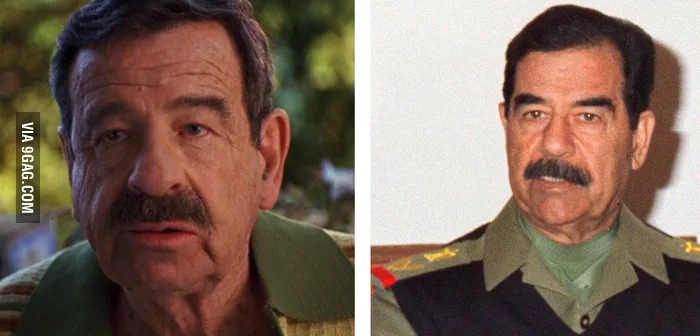
Not to be "that guy", but having now seen the above meme, it's become very difficult to unsee, (especially if you've seen Mr. Wilson in the video game).

Speaking of, many shots could qualify as memes in and of themselves.

Copyright © Chynna Moore