March 17, 2020

REVISITING COLUMBO: REQUIEM FOR A FALLING STAR (1973)


In writing on this blog, I've been able to really parse, sort out, and properly articulate what struck me in watching the old movies and shows I had known since I was younger. With the benefit of hindsight, I've come to realize that I really should have possessed some more self-awareness even ten years ago. Case in point, this 1973 episode of the poster series of "howcatchems", Columbo.

Peter Falk as Lt. Philip Frank Lt. Columbo

Anne Baxter as Nora Chandler

Mel Ferrer as Jerry Parks

Pippa Scott as Jean Davis

Frank Converse as Mr. Fallon

Kevin McCarthy as Frank Simmons

For the sake of keeping this post concise, I won't get too into the nitty-gritty of the plot, though spoilers ahead.

In the fall of 2009, I was a nerdy, nose-in-a-book teenager fighting a terrible cold when alongside my internet "digging" into giallo films and Leonard Nimoy's non-Star Trek filmography, I stumbled onto clips from the original 70s run of Columbo on YouTube.

And lo and behold, the reason for my "attachment" to this episode would soon show herself.

"Jean?"

Yes, folks, looking back at it now, it's fair to say that upon hearing that smoky voice for the first time, I developed the biggest crush on Anne Baxter. So much so, that for my Advanced English class's Greek Mythology newspaper projects, I drew her (naturally) as Aphrodite, complete with the backcombed 'do, cat-eye winged liner, and buttonish nose.

Parks' blackmail offer gives Nora, her hair, and winged liner an idea.

And all that time, I genuinely still thought I was straight.

Getting to the episode itself, when I saw it in full the first time in early 2010, it didn't necessarily hit as the "well-rounded" exercise in story, formula, and "cat-and-mouse games" like other episodes did. Thankfully, after a recent rewatch, I can better state why.

THE ROLE OF THE SCRIPT (AND THE ROLE OF FORMULA)

Columbo is a series so dependent on its "howcatchem" formula, that pulling one thread of it away is a serious risk for any writer. But perhaps what many can miss is how said "howcatchem" is not the only element to keep in mind.

Columbo's admiration for Nora is sweet, and
Falk and Baxter have great chemistry.

While "Requiem" handles its story ambiguities, minor twists, and changes of pace much better than the later "Last Salute to the Commodore" (also penned by Jackson Gillis), one can feel they've missed out a bit on elements that made the other Columbo episodes so memorable. Who wouldn't want to see Baxter as a more egotistical killer who's convinced she's smarter than Columbo and is onto his "act"? Who wouldn't want to know more about her and Jean's business relationship, or the relationship between her and Frank Simmons?

And this, folks, is what TVTropes would call "Les Yay".

Because there's more ambiguity than usual for this series, it left me wanting to know more, given how Columbo's rich, nuanced writing raised the bar leading up to it.

The other flaw that keeps "Requiem" from being great for me is, unfortunately, its main victim. Because given what we know about her, and I really hate to say it, but Jean Davis is kind of an idiot.


Having been Nora's faithful assistant for 18 years, Jean has begun a relationship with notorious gossip columnist Jerry Parks, someone who Jean knows Nora dislikes. Nora states later that Parks has three ex-wives and money problems, so taking that with Jean's age, years of experience in the industry, and what we later learn she had witnessed over a decade prior, you'd think Jean would at least be a little more careful.

Had she been portrayed as someone in her early twenties,
this behavior might have worked, but played by 37-year-old Scott,
Jean comes off as stubborn and immature for no discernible reason.

Couple those things with the lack of screentime, character detail, and being alongside the infinitely more interesting and better-written Nora, and you'll see why I have trouble sympathizing with Jean, even if for all intents and purposes, I should. And that's not getting into the fact that Jean witnessed Nora accidentally kill her husband Al thirteen years prior. You sure don't get the feeling Jean witnessed anything that serious when she tries to convince Nora that she would never spill Nora's secrets to Parks.

And one last thing, why didn't Nora just kill Parks in the first place? Sure, there's no guarantee Jean wouldn't go to the police (though given her behavior above, who knows?), but Nora would get many thanks and some extensive protection for it.

THE STUFF OF (STUDIO) DREAMS


As it turned out, "Requiem" was made at exactly the right time in Hollywood history, giving us a snapshot at the very last days of the studio system post-Easy Rider, but before the blockbuster era kicked off with Jaws in 1975. The studio in this episode is in dire financial straits, TV mystery movies are Nora's current bread-and-butter, and Nora is fighting young, "hip" studio head Fallon over her inherited studio property.

Of course, any tensions will be heightened
when R.J. Fletcher buys your studio.

To paraphrase my fellow film reviewer Ken's essay of Mel Brooks' Silent Movie, the joke about Engulf & Devour has lost its punch in the age of every major studio now being owned by a corporation. (Hell, nowadays, even the corporations are owned by bigger corporations.) At least this episode never mentions any parking lot or sugar cane operations, which would have badly dated it even just a decade later.

ALL ABOUT (THE MORE THAN THREE FACES OF) EVE

Biased as I am, it goes without saying that Baxter is the best thing in this episode. Nora is cold, calculating, and ruthless, but also charming, vulnerable, and wickedly funny. Baxter may get guff for often being a ham, but I'll take energy and enthusiasm over bored and lifeless any day.


OTHER OBSERVATIONS

"Male chauvinist at heart."
Ah, 1973, the last year you could say that
and absolutely no one would bat an eye.

This photo looks like Al and Nora crashed the photoshoot
for Carol and Company and I love it.

I always thought the two clues to tip Columbo off to
the similar heights of Nora and her husband came
just a little too easily (see above and below).

The trailer for this episode lied and put in this clip 
(in its original color form) as part of the preview.

I love those few moments in Nora's face that
look like she wants to kill Columbo herself.

Nora's tank top says what I think at least once a day.

One YouTube comment: "Anne Baxter...
the most elegant run to cover up a crime... EVER!"

Nora does her best Bela Lugosi impression.

Boom mike! (Dolemite would be proud.)

Subtle.

I wish I were this stylish when committing a major crime.

Awwww...

Edith Head as Herself
Baxter's daughter Melissa Galt said her mother 
had to talk Head into appearing in this episode.

TIDBITS AND SUCH

Columbophile's review of "Requiem" is a deep dive that is definitely worth a read, exploring the ambiguities of the story and script.

Watch Melissa Galt discuss her mother's films and friendship with Edith Head at the Decorative Arts Center of Ohio here.


Later on in 1973, Baxter guest-starred in the Mannix episode "The Deadly Madonna", once again as a faded actress with a dead husband and a loyal assistant (this time her character's own sister), but with the concept flipped in more ways than one. (Also, check out that Dora Hall-esque 'do!)


Pippa Scott was married from 1964 to 1983 to Lee Rich, co-founder and former chairman of Lorimar Television, which ended up buying the MGM studio lot in Culver City from Ted Turner in 1986. 


Still with us at age 84, Scott spent the decades after "Requiem" making sporadic T.V. guest appearances, delving into human rights work, and expanding into producing, screenwriting, and directing. And with that photo above, I can imagine her starring in a remake of The Snoop Sisters with Sharon Gless.


Copyright © Chynna Moore

March 8, 2020

THE IMPORTANCE OF SETTING (AND QUESTIONS TO ASK)


I've stated in the past how the role of setting is fundamental to your story and script. Thinking through your setting and its "connections" will also help further your process of "world-building". Here are a few questions to get you going.

WHY THIS SETTING?

What makes your setting the right one for your story? How does it fit, influence, and inform your characters? Do they like living there? Do they hate it? Do they feel the pressures of it? Is your setting typical for your story's genre(s)? Or does it serve as a creative contrast? Do aim for a place and setting not often seen on film.

Can't argue with that.

WHAT MAKES YOUR SETTING UNIQUE? WHAT IS IT KNOWN FOR?

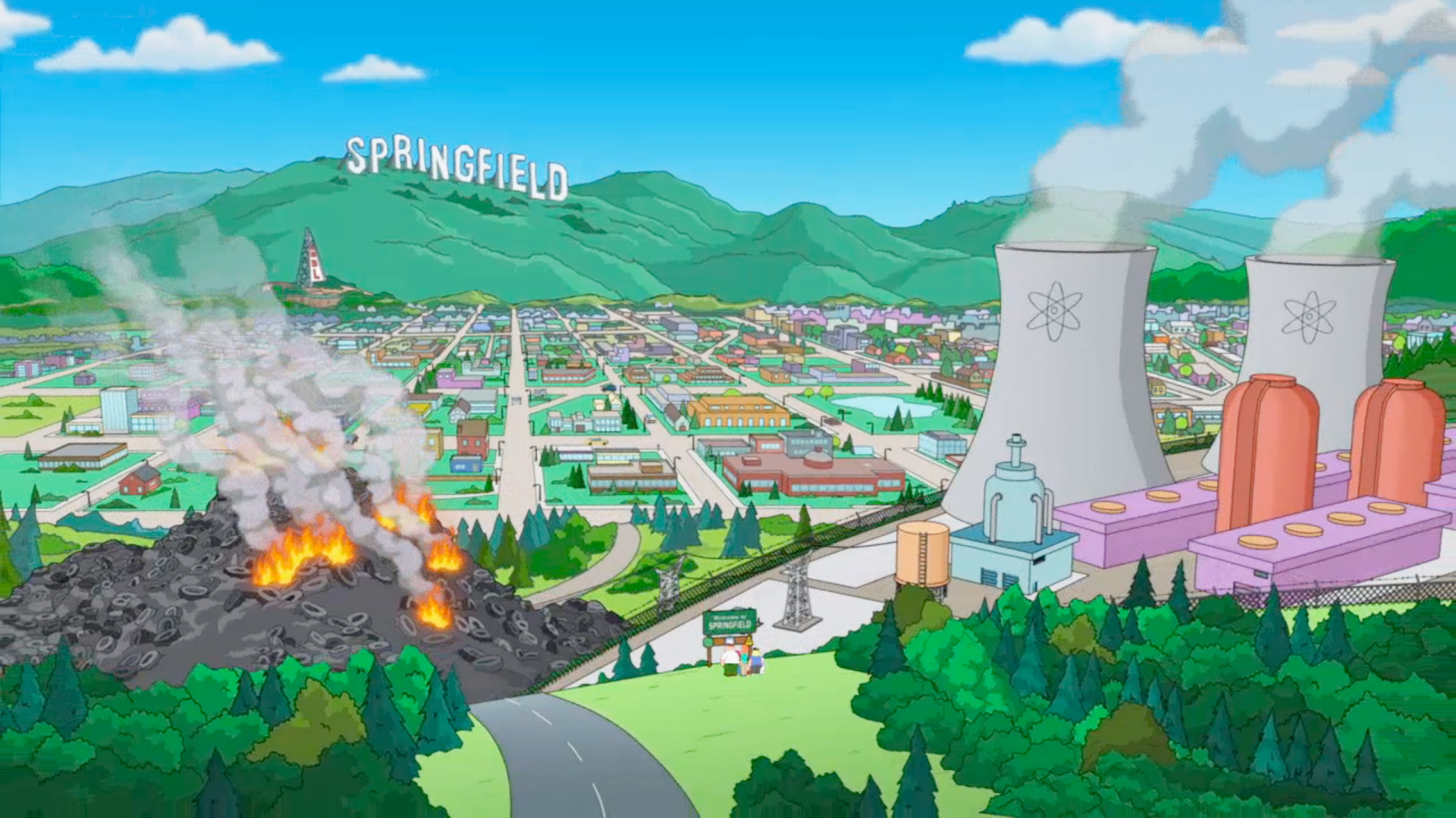
Is your setting the ______ capital of the world? Does it have a large senior population? Is it in close proximity to a landmark or a geographical feature? Is it known for a local delicacy (like a style of barbecue)? Did a disaster or major crime happen there? Is it blue-collar? White-collar? No collar? This is also a good way to think about those "little details" in even the most day-to-day activities.


SHOULD IT BE KNOWN FOR OTHER THINGS?

Does your setting have a thriving arts community? Is it a hot spot for small businesses? An accepting place for LGBT+ people? Is it a place for new ideas in community, recreation, the environment, etc. to take root? This is also useful for showing how your setting isn't just one state of mind or one set of ideas.

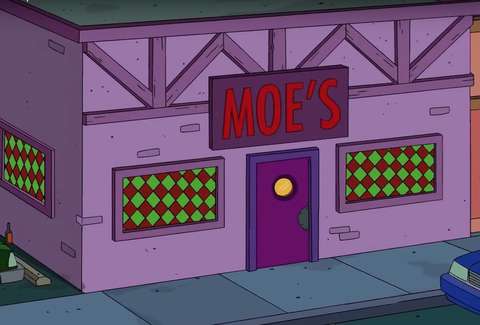
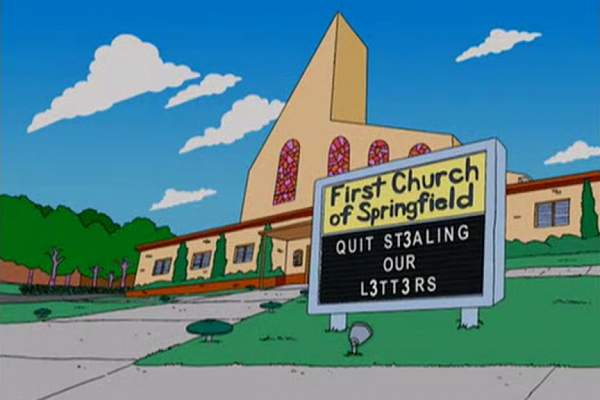
Thanks, Springfieldian barflies!

WHAT DETAILS DO YOU WANT TO INCORPORATE?

Most settings are actually quite multifaceted, so it's likely best for you to focus on the parts you want to thematically tie into your story. If you want to show your setting's nautical history and community, for example, keep an eye out for boat supply stores, marinas, tours, themed hotels, etc.

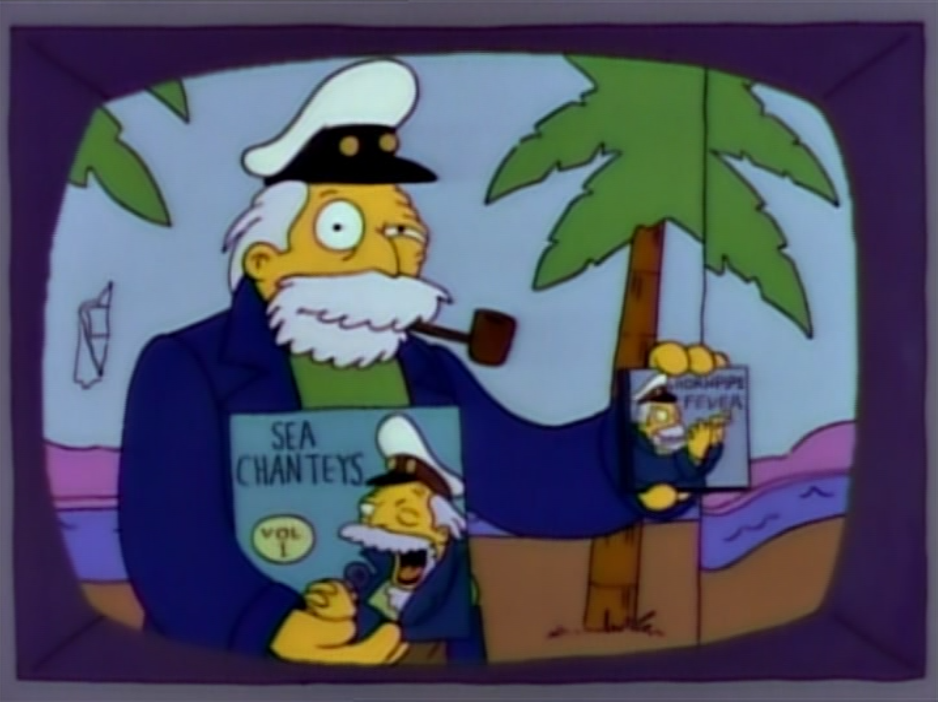
Unfortunately, not all cities will have a singing sea captain.

WHAT IS YOUR PERSONAL EXPERIENCE?

A great "cheat" to emotionally color your setting is your own memories of it, especially if a character is based on yourself or someone you know. Do your memories color your setting with nostalgia? Melancholy? Anger? Peace? A sense of unfortunate distance? This too is tied to tone, but it's a great starting point once you have an idea of your setting.

Some settings might really seem that idyllic and old-fashioned.

GET THE VISUALS

With all of the above points in mind, think about the visual aspects of your setting that will stand out on film. Is your setting vast and empty? Cramped and boxy? Picturesque with a sense of humor? There's probably a shot or a sign for that.

The world-famous neon sign for Nanaimo's Castaway Hotel.

As I said in my previous posts on details and fonts, the age, condition, and community attitudes toward these visuals can play a great subtextual part in your story and what you want it to accomplish.

I was going to suggest "Waiting for God(ot)", but this one's good too.

Perhaps your setting is a character in your story. Perhaps it isn't. Perhaps it's so dreary for your characters that it drives them to varying degrees of desperation. But the key, of course, is to know its importance so you can mold and shape it however you want.

Unless, of course, your setting is too bizarre for you to shape.

Copyright © Chynna Moore

March 6, 2020

THE ART IN BRAINSTORMING

Above: Not a brainstorm.
Also, comparing yourself to others will drive you nuts.

Brainstorming in forming your screenplay and its features can be a valuable tool in listing and categorizing ideas, details, impressions, viewpoints, etc.

Perhaps you're out of premise ideas at the moment and want to spend time expanding bits and chunks of a setting you'd like to portray in a future script. Perhaps you want to lay out your personal and emotional associations with the subject at hand.

You may find yourself digging up memories, details, smells, colors, and sounds that you might never have remembered had you gone a different route. Or, you want to give your brain a workout even towards ideas or concepts that have merely caught your eye.

A brainstorm is an excellent way to recognize the "parts of yourself" within the things you like, or the "cinematically appealing" parts of a setting, or find new routes within a genre you've chosen to dissect. Anything is possible.

Here are some examples of my own brainstorms and what they have "dug up".


By starting this off with a Riverdale brainstorm, you can hopefully get a sense of how my brain approaches the less-"connected" subjects in relation to my writing. Because Riverdale is so chock-full of references, visual cues, subtexts, "colors", etc. to other "retro" works, you can see this brainstorm here captures my impressions and what I latched onto more than anything else. 

(And of course Cheryl Blossom gets her own "branch". Of course she does.)


This "rom-com" brainstorm was more a "review" of what viewpoints I had previously applied to my own work. As you can see, the rom-com is extremely dependent on tone, as it's a genre so entrenched in the emotional side of film that even a small misstep can "pull one string" and have it all unravel. Also, note my considerable emphasis on "no illegal behavior", et al.


Moving onto settings, brainstorming is a great "cheat" to "color" your settings and make them stand out through the rounding up of details. Sure, other Nanaimo community centers (American spelling and it stays) may offer similar activities, but only Bowen Park has a duck pond, a rhododendron garden, lawn bowling, and a pottery studio. Not all of these details will make it into a script, but they will help stand out from being just a bland community center on film.


Because of my age and how many 60s and 70s building faces in Nanaimo remained well into the 90s, I was able to really fill this brainstorm on Terminal Avenue North. A good two-thirds of these "branches" are memories from my childhood. For example, the old KFC's lack of diners seating stood out to me in the late-90s/early-2000s, as every other KFC (and fast food franchise) in town had plentiful seating. 


I expanded my brainstorm "branch" on Nanaimo's now-demolished Civic Arena when I realized I had far more details buried in my mind than a single branch could cover. Turns out, I hadn't in years thought about the cold metal orange arena seats. Or about the walkup broadcasting booth. Or the time clock with the 90s Pepsi logo on the wall. I guess for a place I had to go to (being too young to stay home alone), my refuge at the time was to take in all the visual details and signs of the past.

Again, setting, genre, and visual influences are just some of the subjects you could brainstorm on. Who knows what you'll uncover for your project.

This hardcover sketchbook from Dollarama
has an excellent value at four dollars.
For all your ideas big and small, you should
keep them safe and preserved.

Copyright © Chynna Moore

March 4, 2020

THE SPARK, THE "EVEN BETTER", AND GOING WITH YOUR GUT


The emotional side of screenwriting often proves to be a flurry of feelings, instincts, and syntheses of ideas with time. You'll find yourself pouring your pain, joy, suffering, and even relief into your script (depending on the story), realizing its emotional honesty, and elevating it well beyond your initial idea.

Three of these (related, but not necessarily consecutive) signs are important to identify, since for me, they've proven to be valuable in knowing when a script I'm writing is resonating with me.

THE SPARK


Have you gotten an idea that's led you to endlessly scribble down other ideas, details, and plot points? Has it revved up your creative motor to such a high degree that you can't think of anything else?

Then inspiration has struck.

It has grabbed you, like a good story just grabs its audience, and it simply won't let go. You have to write it now, and even if you don't yet have every detail nailed down, you know enough of the "skeleton" for it to keep your interest, well enough for you to see this story through.

The story could be based on something that happened to you, or not. Or its outcome is the total and more dramatic opposite. Or it's an older idea you had filed away that has now gained new life combined with another old or new idea.

Whatever it is, if it has grabbed you, don't ignore it.

THE "EVEN BETTER"


At this point, you have a good idea of where your story is going to go. Say you've had some time to let said story, its characters, and their own emotions "sink in", especially if they're based on parts of yourself. Now you've gotten to the script's emotional climax (though this "even better" could be at any point in the scriptwriting process).

Suddenly, you may find your own emotions (channeled through your characters) taking over. One character lets out their anger even more because you've "grown attached" to them and want them to express themselves further. Another character might feel greater remorse than you initially planned, whether it's in direct reaction to the first character or not. (Oftentimes, it is, like two great actors playing off each other.) Or alternatively, your two characters, while upset and just as angry as the previous examples, are both remorseful afterwards and want to be friends.

The key, of course, is the role of emotion. If these characters and events are rousing up your own emotions as a screenwriter, then chances are, they'll do the same (if not moreso) for your audience.

Now when I call this the "even better", I mean the end result of this heightened emotional component is the "oomph", the "gusto", the improved version of what you had planned before. Your characters have now come alive in a more emotionally honest way that hadn't been guaranteed. They've "paid off" your own emotional investment in a "2+2=5" manner.

Of course, it's best not to go seeking out this "even better" as you're writing. Creativity cannot be forced, remember, so let it all happen naturally.

GOING WITH YOUR GUT


Now, you might be at the stage where you've long refined, rewritten, dissected, shaded, and colored your script. It has life, a heartbeat, and a spirit of its own.

One day, you might think of changing a small part of your script, be it a sentence, a character action, or even just one solitary word. So you make that change.

But then, you feel that something doesn't sit quite right with it. It might not be terrible, but perhaps now it doesn't flow so naturally with the rest of the language you've chosen. It might imply something else that you never intended to allude to. Or maybe, you just can't formulate a reason at all why it doesn't feel natural. Perhaps you had simply "fixed" what hadn't been broken. So you change it back to the way it was, and all is right with the world.

That is your gut speaking.

You've become so attuned to your script's "heart" (emotional core), and how your characters and their dynamics truly are, that you can now sense when even the smallest detail feels "off", no matter how slight it is. This knowledge is quite powerful, and informs everything you visualize with said script. It also means your script is emotionally consistent enough for you to almost "predict" how these factors will be, even for situations that never actually happen in your script.

At the end of the day, only you will know what feels "right" for your script, and as a result, it will be as individual as you.


Copyright © Chynna Moore

March 2, 2020

SO YOU WANT TO WRITE A REMAKE...


Coming from me, this notion might come off as a tad hypocritical, since my previous screenwriting post lambasted unnecessary remakes of well-known properties, but anything is possible, and you can write a remake that does something new, all while respecting where it came from and what it can mean to people.

Of course, I recommend you first read my previous posts on screenwriting tidbits and adaptations, especially when it comes to the focus, the "core", and distinguishing your work visually and textually.

Here are a few important "cheats" to supplement those tips, especially when remaking another film and/or its screenplay.

GO FOR A MORE OBSCURE ORIGINAL

Years and years ago, I read in an Uncle John's Bathroom Reader (yes, really) that the best thing to do regarding remakes is to remake a bad film. Clearly, this has stuck with me (leaving aside where I read it), as this, combined with my tendency to go for the more obscure anyway, has led several of my remake screenplays to go this route.

Even if the film you want to remake isn't "bad" by any means, you can avoid considerable pressure, pop culture osmosis, and "chatter" by setting your sights on a film that has much good about it and much potential, but may have missed its due reception or failed in one or two aspects. Ideally for me, a good candidate is a film that has good things about it, but could use a new voice or updating to really bring it to its full story, thematic, and emotional potential.

I'm not sure if that was the line of thinking for this remake,
but it has Anne Baxter in it, so it can't be all bad.

CONVINCE YOUR AUDIENCE

Whether your audience is familiar with the original or not, your remake should have "something to say" to convince them why it should exist.

Is the original's "core" more relevant than ever? Is there a lot more to say about the story, genre, and how society views it now? Have things progressed to such a point that the original may be seen as dated or obsolete and you want to prove that notion wrong?

Is there a new emotional view you want to put forward, and bring new possibilities to a property that you feel really needs it? Do you want to build on what was there before?

Basically, your "something to say" shouldn't be exactly the same as the original's, because, well, the audience could easily just go back to it should your remake just present "more of the same" to them.

The 1932 Scarface's themes of greed, power, and the "rise and fall"
are translated through the 1983 remake against the backdrop of
the Miami drug trade, the "immigrant's American Dream", 
and the increased violence of the 80s "drug wars".

RESPECT THE ORIGINAL (AND ACKNOWLEDGE ITS SHORTCOMINGS)

Building on the above point, your remake should respect its past and where it came from. After all, that's likely the reason why it attracted you in the first place. And chances are, you've dissected the original to a considerable degree (I know I certainly do).

So you should decide, what works? What resonates? What is timeless? What is dated? What is racist/sexist/ageist/ableist/homophobic/classist in a way that's not framed as wrong? Should you keep it and frame it as wrong? Or cut it out entirely? Are characters too insensitive? Too weak? Unlikable to a modern audience? What new routes can your story and themes take by making your changes?

Remember, you can respect the original, while still acknowledging that it's not perfect. As long as at least some of the spirit that attracted you to it remains, you won't leave your audience with an empty feeling. Preserve what works from the original, and address what doesn't.

Above: Not an example.

MAKE IT STAND (AND STAND OUT) ON ITS OWN

Adapting a screenplay may look "easier" than adapting a book, novel, play, or article, and in many ways, it is. The previous screenplay may have done all the heavy lifting in bringing a source material from a vastly different medium to film. However, this can be a precarious trap, as that doesn't mean you as the screenwriter should be complacent in doing your work.

When in doubt, always assume the audience has seen the original, no matter how obscure it actually is. By keeping that in mind, you can make sure to avoid copying your original beat-by-beat.

While a modest hit, 1974's The Front Page was seen by many as an
unnecessary, "regressive" remake when set against 1940's 
His Girl Friday and that film's changes to the original 1928 play.

You may be a bit tied in having to preserve the original's story, but depending on the freedom you have, you can use the elements of context, subtext, irony, and others to breathe new life into your source material. You can update, combine, emphasize, de-emphasize, lampshade, etc. to your heart's content if you feel it will benefit your remake.

1978's Invasion of the Body Snatchers differentiates itself 
from the 1956 original by re-contextualizing its story 
against the backdrop of the "Me Decade", and the
ironies, contradictions, and dark sides therein.

With even a change in setting, you can introduce a whole new world of possibilities for your characters to inhabit, do, say, and represent. Visually speaking, go for what will represent your vision best over specifically what the original went for. Remakes and adaptations depend a lot more on an individual's vision than people think. Batman may be the quintessential dark superhero, but Tim Burton's visual style still makes his Batman movies stand out among the others.

Not to mention Anton Furst's first-rate production design.

This is your chance to still put some of yourself and your soul into a story, even if that story was created by someone else.

TIDBITS AND SUCH

Filmento has a great video on what makes a film impossible to remake.

Georg Rockall-Schmidt has an excellent video on getting remakes right.

The Closer Look covers The Predator and how not to reboot a movie.


Copyright © Chynna Moore